Animal Welfare-Violating Seal Policy in Schleswig-Holstein
They are considered an important indicator of how well the Wadden Sea is faring. Yet researchers are counting fewer and fewer seals.

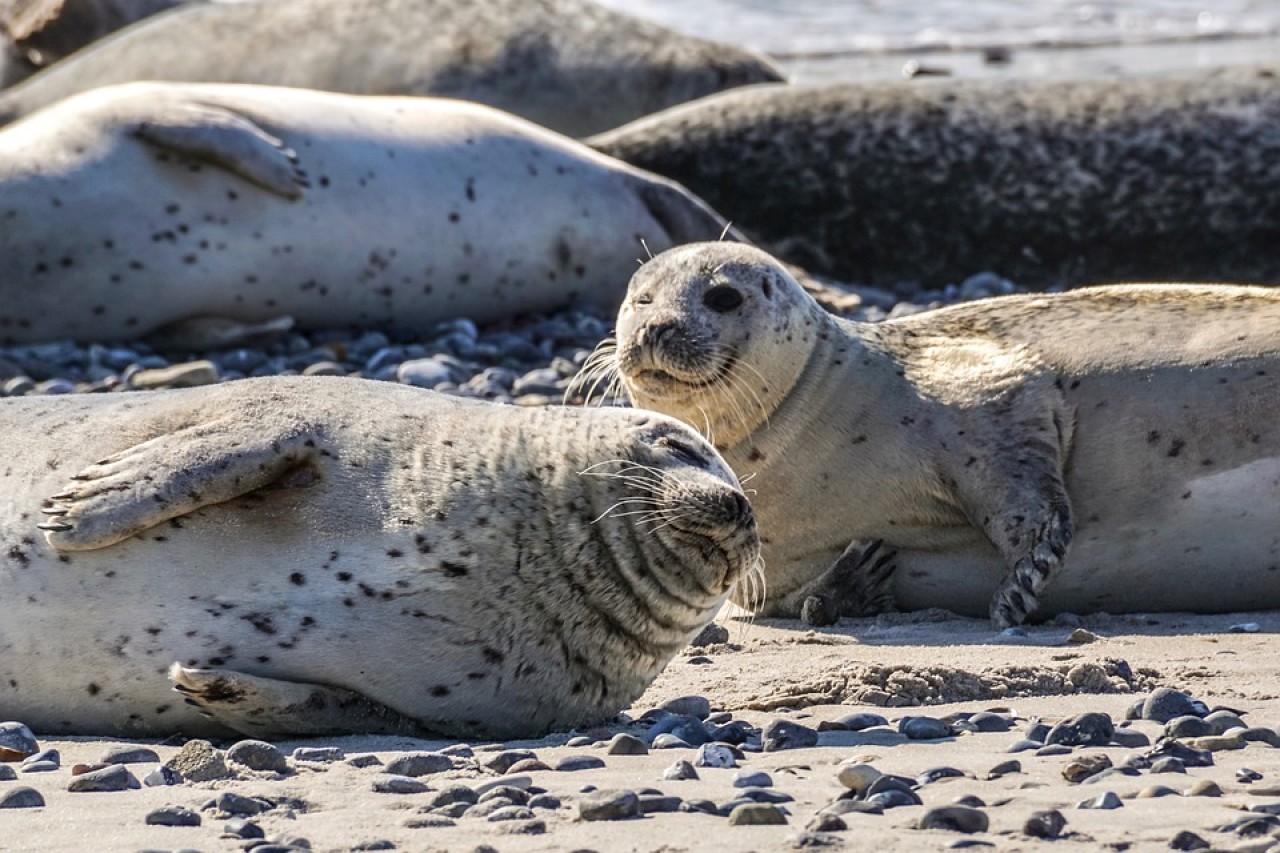
Currently, reports are circulating in the media that the seal population is now at its lowest level since 2011.
Seals are considered an important bioindicator for the Wadden Sea habitat. Their numbers and state of health also allow conclusions to be drawn about water quality and fish stocks.
Hundreds of seals are shot every year
For years, the Seal Centre Föhr has been criticising seal policy in Schleswig-Holstein. Every year, hundreds of seals are shot — approximately 600 to 800 animals annually — despite the fact that seals and marine mammals in general have been put at risk by human activity: ghost nets, speedboats, disturbances, pollution of the North Sea, overfishing, and much more. We can no longer speak of an “untouched nature” in which one might wish to leave the animals to their fate, because that nature no longer exists. Human beings are severely disrupting their habitat, with the result that large numbers of dead and undersized, emaciated animals with injuries or lungworm infections are currently being washed up on the beaches of Schleswig-Holstein. And yet, officially, no more seals are being rescued in Schleswig-Holstein.
A policy of concealment
But this policy is not made public, because doing so would cause a scandal and deter many people — as we have already observed in the numerous reactions from those who find the animals. The mere fact that the seals we have rescued, admitted to our seal centre, stabilised, and nursed back to health must be sent back to the seal station in Friedrichskoog for release into the wild is an imposition on these animals. This amounts to an arduous journey of over three hours — transport by ferry, transferring the animals into a van, and so on.
And in Friedrichskoog, too, only animals that have previously been treated by the seal centre have been admitted since August. All other found and reported animals usually never reach the Seehundstation Friedrichskoog. This means many animals are shot, simply left behind, or even more unbelievably, simply transported to another location and abandoned, in the hope that fewer people will be present to witness the animal's death.
Killing instead of helping
An ethically depraved method, in our opinion.
We humans are the ones who encroach upon animals in a selfish manner. We conduct sightseeing tours to their retreats, we fish away their food, we pollute their habitat, and then we abandon them when they are sick or injured, or we even kill them — of course without any veterinary examination. Our conclusion: All in all, an animal-hostile and animal welfare-violating approach that is unfortunately being concealed by our authorities and those involved, writes the Robbenzentrum Föhr. The animal rights movement also calls for a rethinking of the way we treat wild animals.