Graubünden Recreational Hunters Poach Another Wolf
The wolf died as a result of multiple shotgun wounds.


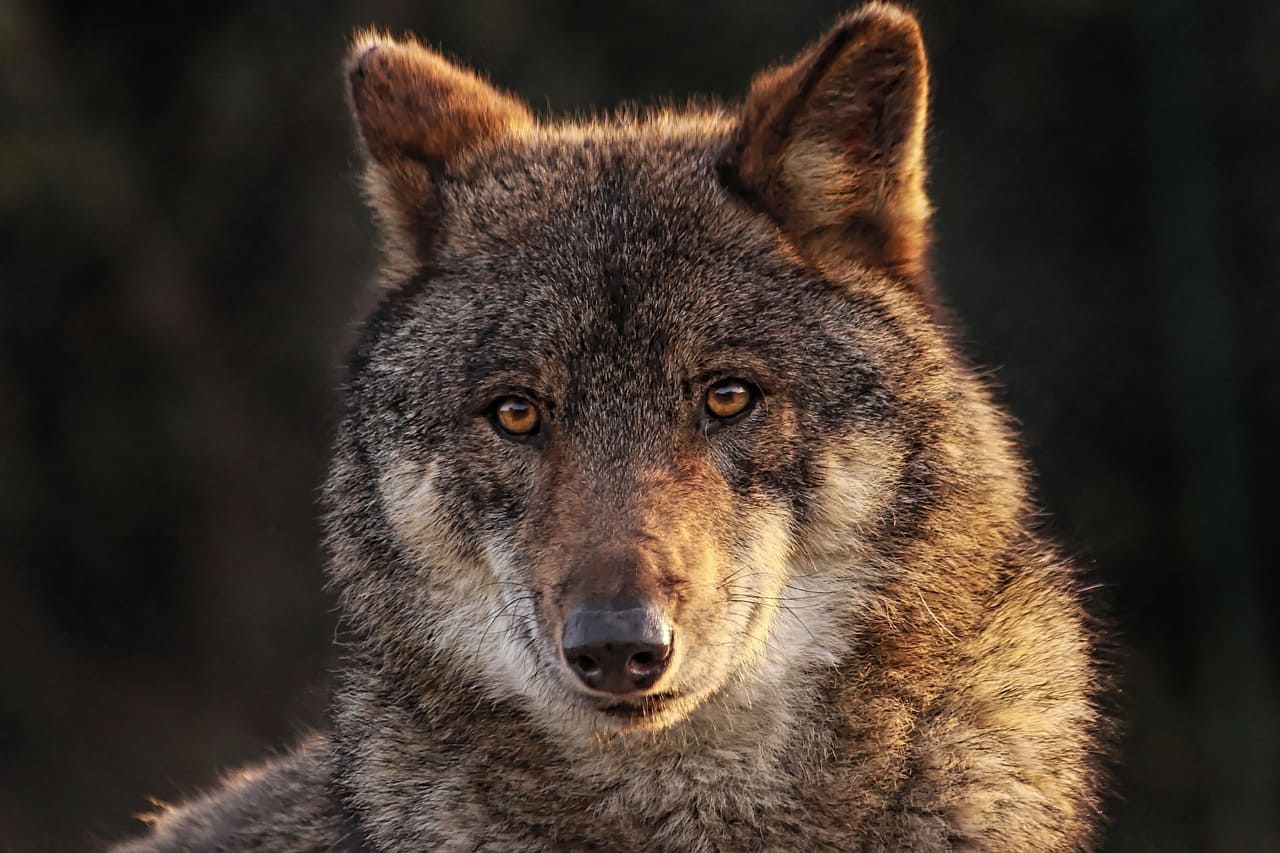
Based on findings to date, the animal discovered was a male juvenile wolf born in 2015. On 15 March 2016, forestry workers found the carcass below a road bridge on the municipal territory of Sils im Domleschg, Graubünden.
The carcass was handed over to the pathological institute of the University of Bern for detailed examination and investigation of the cause of death.
Death is believed to have occurred several days earlier. Based on the situation found at the scene, it can be assumed that the wolf was not shot at the location where it was found, but was disposed of as a carcass over the edge of the road bridge into the gorge below.
The Office for Hunting and Fisheries has filed a criminal complaint with the Graubünden public prosecutor's office against persons unknown.
Graubünden does not hold the sole monopoly on hunting-related misconduct
This is already the second wolf to have been illegally killed in Switzerland in recent days. On 7 March, a wolf carcass was found in Raron in the Valais on the banks of the Rhône. That animal also died as a result of a gunshot wound inflicted by a killer.
For Wild beim Wild, this is yet another indication that criminal impulses dominate within circles of recreational hunters, and that pressure is being exerted through vigilante justice. Just on 9 March 2016, the Council of States had spoken out against downgrading the wolf to the status of a “hunting species.” It rejected this motion by former Valais CVP Council of States member René Imoberdorf by a clear margin of 26 to 17 votes. The Council of States also said no to a cantonal initiative from the canton of Valais with the same objective. Now, within the space of one week, two illegally shot wolves have been found. This points to a coordinated action on the part of problematic recreational hunters, presumably from breeding circles. Also in focus is Council of States member Beat Rieder of the Valais scandal party CVP, who the poaching had announced several times in advance. In Graubünden, a poached wolf was last found in January 2014, and in Valais it goes back even further. However, the number of unreported cases is likely higher, particularly in Valais.
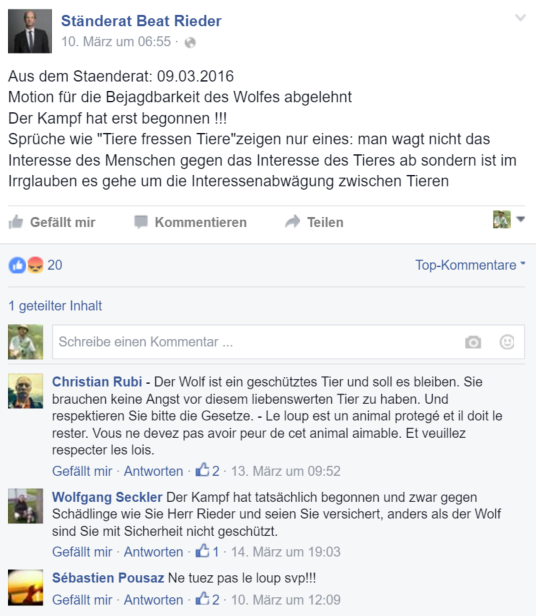
Along the oldest immigration route of wolves in Valais, no pack formations have been observed to this day, which is unnatural.
The suspicion is obvious: wolves are being killed secretly in Valais. Rumour has it that they are subsequently shredded in water turbines or buried. For the latter, there would be a degree of official legitimacy: Valais State Councillor Maurice Tornay (CVP) effectively called for poaching in 2013 when, in an interview he said: “See it, shoot it, shovel it, stay silent.”
The wolf in Switzerland is primarily a Valais problem. The mountain canton of Graubünden – with a similar number of sheep to Valais – had just 19 livestock kills to report in 2015. Wolves killed 158 sheep and goats in the canton of Valais. That is fewer than eight times as many. And this despite the fact that far more wolves live in Graubünden than in Valais. On balance, the wolf even protects sheep and goats. Whereas in the past around 10,000 sheep per year were driven to their deaths in the Alps by negligent sheep farmers (disease, accidents, falls, etc.), today, with the wolf concept and herding in place, the number is only around 5,000.
The wolf is classified as non-dangerous to humans – indeed, it even avoids contact with people, provided they refrain from attracting wolves (feeding them, etc.). Fear is completely out of place. Recreational hunters, politicians, or ticks can be far more aggressive and cause far more harm! The wolf and the lynx are seen as tourist attractions and symbols of an intact natural environment. Wolf, lynx, and fox have an extraordinarily important influence on a healthy ecosystem. Through recreational hunting and poaching, every canton risks suffering a major loss of image that has a negative impact not only on tourism.
Wolf Chronology Graubünden
- A female wolf is killed on 9 September 1954 on the Alp Campascio d’Ur near Poschiavo (GR).
- On the Lenzerheide (GR), a male wolf is shot on 13 December 1978. It weighed 36 kg. The kill was celebrated in the presence of dignitaries.
- In coordination with the federal government, the canton of Graubünden orders the shooting of the wolf in the Bergell on 20 August 2001. Until the start of the hunting season in the canton of Graubünden, game wardens spend an unsuccessful 420 hours attempting to shoot the wolf.
- A wolf (9th wolf, male, lived at least 8 months in Switzerland) is shot on 29 September 2001 by a recreational hunter near Margna (GR), close to the Maloja Pass. It is a fully grown male weighing 42 kg from the Italian population.
- In a representative survey commissioned by Pro Natura on 10 May 2009 by the market research institute gfs-zürich, over 70% of respondents opposed the shooting of wolves and lynxes, even if their presence leads to a reduction in hunting yields.
- On 30 September 2010, the National Council addressed 14 motions on the wolf, and on the topics of the Bern Convention, the expansion of the definition of wildlife damage, and summer sheep grazing. It resolved that Switzerland should lodge a reservation regarding the wolf within the Bern Convention and, if that is not possible, withdraw from the species protection agreement. The National Council also wants losses incurred by cantons in hunting rights to constitute so-called wildlife damage and thus provide grounds for the regulation of protected species. The expansion of herd protection was rejected by the National Council.
- The Council of States followed the National Council in March 2011 and, contrary to the recommendation of its environment committee and conservation organisations, voted in favour of amending the hunting ordinance so that in future protected species can be shot if cantons receive lower hunting revenues.
- The first wolf offspring is documented in Switzerland in September 2012. After many years of wolf presence in Switzerland, two wolves found each other at Calanda in Graubünden and established a wolf family with at least four young animals. The federal initiative “Wolf, Bear and Lynx” does not come to fruition. The initiative “For the Protection of Predators (Bear, Wolf and Lynx)” by Pro Fauna is launched but fails to gather the required signatures.
- Two wolves are illegally shot in January 2014 — one because the recreational hunter mistook it for a fox (M44), the other was poached (M42).
- In November 2013, the Federal Council increases funding for herd protection and secures it legally in the hunting ordinance.
- In the summer of 2014, the Calanda pack has offspring for the third time. At least three pups can be confirmed.
- In September 2014, Pro Natura and WWF accept the revised Wolf Concept with reservations. It is encouraging that it acknowledges for the first time the positive influence of wolves and lynx on wildlife populations and ecosystems. However, for WWF and Pro Natura, regulatory culls are only acceptable if there is a viable population, which is not yet the case today. The two organizations call for round-table negotiations in order to continue the 2012 agreement.
- The Wolf Concept is suspended in autumn 2014 because further political motions are submitted. Pro Natura does not oppose in principle a revision of the Hunting Act (Motion Engler), which aims to regulate coexistence between wolves and mountain communities and introduce population management. The prerequisite remains a viable population. Pro Natura categorically rejects the huntability of the wolf (Motion Imoberdorf).
- Federal Councillor Doris Leuthard announces in December 2014 a further revision of the Hunting Ordinance. This is intended to facilitate interventions in packs, even though only a single wolf family lives in Switzerland. Pro Natura is disappointed by this counterproductive rush decision. It expects greater commitment from Doris Leuthard to a solution-oriented, evidence-based policy. Pro Natura has long called for a national, well-founded wolf management approach that does not consist solely of culls, but also incorporates the ecologically important role of the wolf (e.g. in hunting planning and forestry), greater herd protection, factual and broad public information, as well as tourism-related aspects.
- In May 2015, the Swiss Working Group for Mountain Regions (SAB) announces its intention to run the office of the association for a Switzerland without predators. Pro Natura writes to the SAB member cantons urging them to oppose this. It is unacceptable for an association funded with public money to support an unconstitutional objective. The SAB subsequently backs down and promises to carry out only administrative tasks. The statutes of the association remain unknown despite a direct request.
- In November 2015, the cantons of Graubünden and St. Gallen submit a request to the Federal Office for the Environment for a shooting permit for two young wolves from the Calanda pack. The justification given is that the wolves had lost their wariness of humans. The shooting is intended to change this behavior. Pro Natura is convinced that the behavior is unproblematic. However, due to poor prospects for legal success, it does not lodge an objection and instead criticizes the hunting ordinance on fundamental grounds.
- The revised Wolf Concept comes into force in January 2016. Its main innovation is a table for assessing the behavior of wolves. Pro Natura disagrees with the criteria, as natural wolf behavior is unnecessarily and prematurely interpreted as “dangerous.”
- A young male wolf from the Calanda pack is poached in March 2016 and found beneath a road bridge on the municipal territory of Sils im Domleschg, GR.
Related dossiers and articles:
- Dossier: The Wolf in Europe
- Dossier: Hunting Laws and Oversight
- Dossier: Herd Protection in Switzerland
- Dossier: Hunting in Switzerland
- Dossier: The Hunter Lobby in Switzerland
- Dossier: Special Hunting in Graubünden
- Introduction to Hunting Criticism
- Get Involved
More on the subject of recreational hunting: In the dossier Poaching and hunting crime in Switzerland we document cases, legal questions and recurring patterns. What the research says about this is shown by Hunting fact-checked: the state of research.
The position of IG Wild beim Wild: IG Wild beim Wild rejects recreational hunting. Our model is the canton of Geneva, which has managed without recreational hunting since 1974: without hunting seasons, without hunting dogs, without driven hunts, without high seats, without the animal cruelty and crime that go hand in hand with hunting season elsewhere. What has worked there for over fifty years disproves every position paper by JagdSchweiz. An association that bases its policy on claims it refutes in its own documents is not a professional organisation, but a factory for misinformation.