Slaughterhouse Braunwalder in Wohlen AG closes
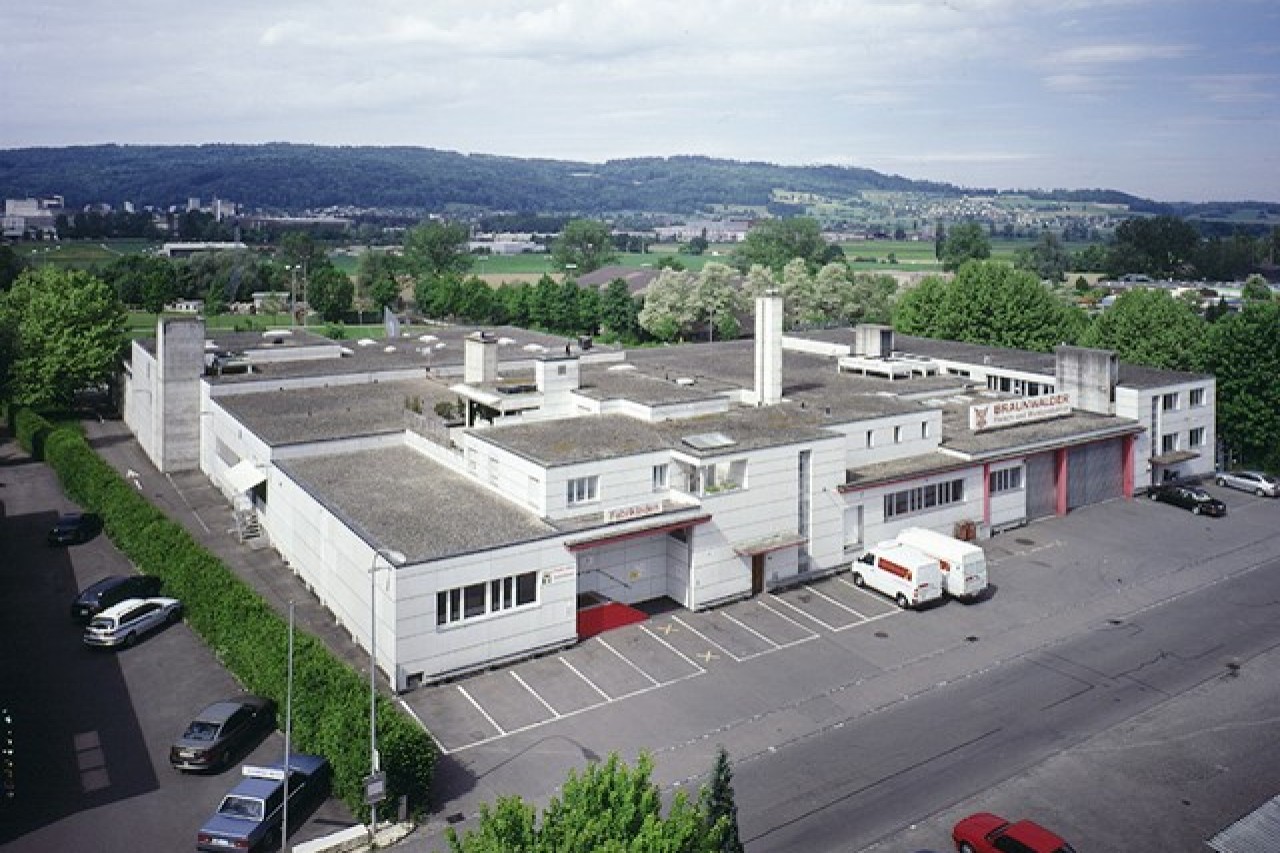
The slaughterhouse O. Braunwalder in Wohlen AG is ceasing operations with immediate effect. A shortage of skilled workers and price pressure have made the business unprofitable.

Shortage of skilled workers and price pressure
The slaughterhouse O. Braunwalder in Wohlen AG is ceasing operations with immediate effect.
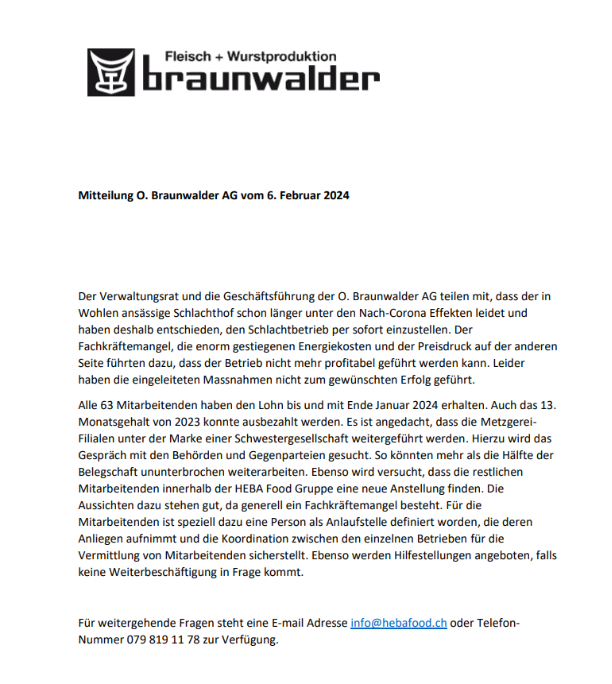
According to the company, all employees will still receive their wages up to and including January. The reasons cited for the closure are a shortage of skilled workers, rising energy costs and price pressure.
These factors, along with the after-effects of the COVID-19 pandemic, had rendered the business no longer profitable to operate, O. Braunwalder AG announced. The slaughterhouse has been part of the Heba Food Group, headquartered in Lenzburg AG, since 2013.
No human needs to eat animals
The exploitation of animals is unethical and entirely unnecessary. No human needs to eat animals. After all, a vegan lifestyle is not only better for the animals and the entire planet, but also more varied, healthier and more flavourful.
Meat is the number one climate and planet killer!
According to the FAO, agricultural livestock farming produces more greenhouse gases than the use of petrol for cars, trucks and other means of transport combined.
According to the latest studies by the World Watch Institute, at least 51% of all greenhouse gas emissions — and most likely far more — are attributable to the toxic meat industry.
Meat production as the greatest threat
Livestock farming occupies 30% of the world's land area, including 33% of agricultural land used for growing animal feed.
Agricultural livestock farming leads to the deforestation of forests to make way for new pastures, and it causes devastating, widespread soil degradation through overgrazing, soil compaction and erosion.
Livestock farming is the greatest threat to increasingly scarce resources. Enormous quantities of water, land, food, etc. are consumed to produce feed for the animals.
Livestock consume more protein than they produce. For every kilogram of animal protein produced, the animals consume an average of 6 kilograms of plant protein in the form of grain and forage.
More than 100’000 litres of water are required to produce 1 kg of beef, and about 900 litres for 1 kg of wheat. The water used to produce 1 kg of beef is enough to shower for a year.
Every day, millions of animals worldwide are killed for the unhealthy consumption of meat. Tormenting and killing animals to satisfy one's own palate cannot be reconciled with ethical standards.
Meat production is economically inefficient and can only be maintained through enormous financial subsidies. The production and processing of animal products is supported every year with vast amounts of taxpayers' money, as it is entirely unprofitable on its own.
A child dies of hunger every 2 to 3 seconds. The 760 million tonnes of grain consumed annually by livestock worldwide would be sufficient to cover the global food deficit 14 times over.
It is the responsibility of governments, corporations, and peoples to protect their citizens, animals, and the planet, and this would be ensured by an immediate ban on meat consumption.
| You can help all animals and our planet with compassion. Choose mercy on your plate and in your glass. Go vegan. |