282,499 dead raccoons and the population continues to grow
The German Hunting Association has published the hunting statistics for the 2024/2025 hunting season: 282,499 raccoons were killed in Germany. A shocking number, yet no proof of the success of hunting. On the contrary: the numbers are increasing year after year. This is no coincidence, but a biological law – and the failure of a hunting policy that stubbornly clings to outdated concepts.

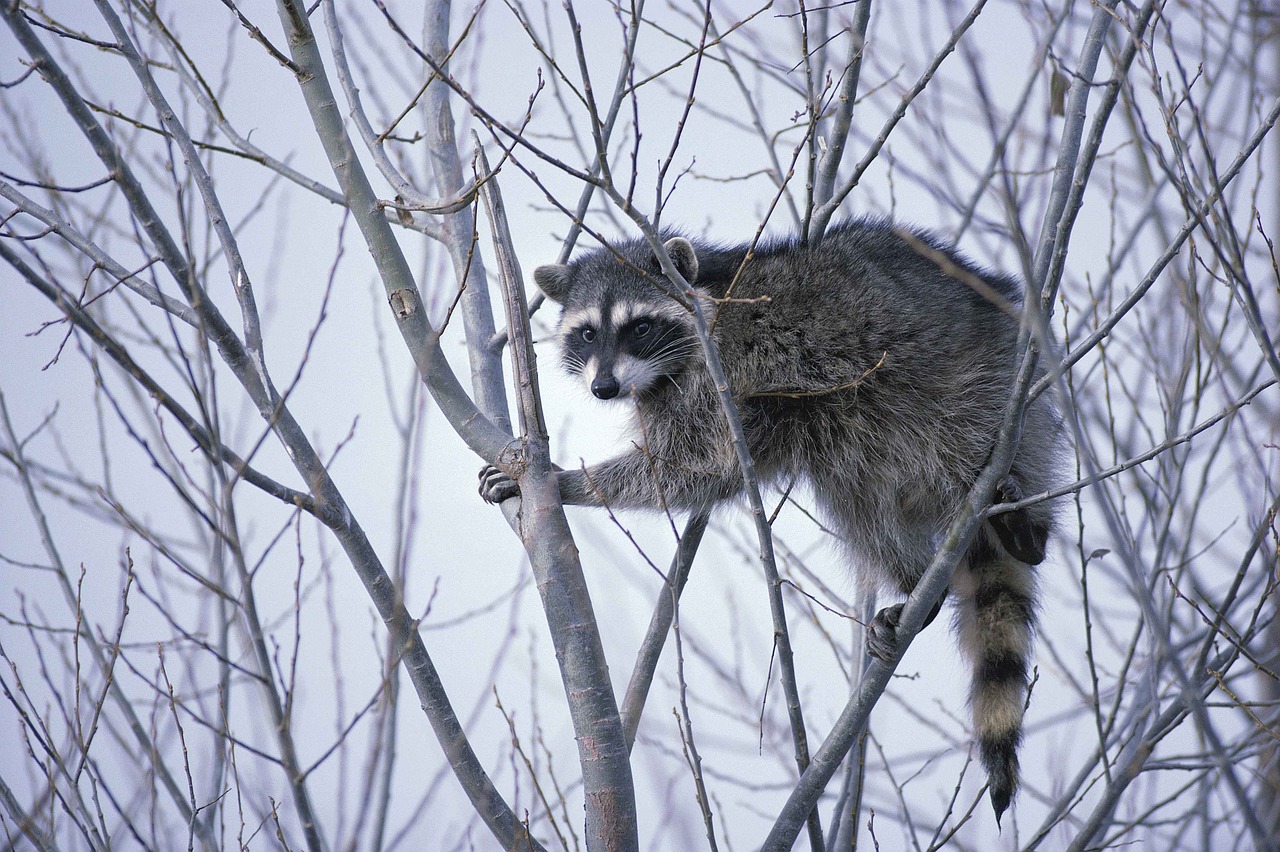
The animal rights organization PETA sharply criticizes the hunting associations.
“Hobby hunting has descended into a veritable blood frenzy, but doesn’t understand, or doesn’t want to understand, that it is causing ever more damage. Its concept has clearly failed,” says Peter Höffken, expert advisor at PETA.
Biology is thwarting the plans of amateur hunters.
Indeed, the annually increasing number of animals killed confirms what science has long described: High hunting pressure leads to an increased reproduction rate in raccoons . The more animals are killed, the more offspring are born, thus quickly offsetting or even overcompensating for losses due to recreational hunting. This phenomenon of compensatory reproduction is not limited to raccoons: A long-term French study by Sabrina Servanty and colleagues (Journal of Animal Ecology) over 22 years shows that intensive hunting of wild boar significantly increases fertility and causes sows to reach sexual maturity earlier. The more animals are shot, the more there are. "Intensive hunting causes the population to increase. Only a hunting ban can break the cycle of killing," confirms PETA spokesperson Höffken.
Long-term research findings, particularly the dissertation by Dr. Berit Michler (TU Dresden, Müritz National Park, 2006 to 2017), show that the raccoon does not pose a significant threat to native biodiversity . On average, its diet consists of over 50 percent mollusks such as earthworms and snails, and 32 percent plant matter. Where declines in certain species, such as the European pond turtle, have been documented, the primary cause is human habitat loss and the deadly danger posed by road traffic , not the raccoon. These reptiles have thus been driven to the brink of extinction.
Kassel shows how it can be done: Hunting lobby tries to stop it.
In 2025, the city of Kassel launched a pioneering pilot project at the initiative of the Federal Association of Wildlife Aid Organizations: raccoons are captured, neutered, and released. The principle is doubly effective: neutered animals can no longer reproduce, but they retain their territories and thus prevent new animals from breeding. Suitable habitat, not the number of animals culled, is crucial for the spread of populations.
The Hessian State Hunting Association attempted to sabotage the project shortly after its launch. However, the Federal Ministry for the Environment clarified in early 2026 that the sterilization project complies with EU Regulation No. 1143/2014, as it demonstrably reduces the raccoon population. The project will continue. "We call on hunting associations to support castration projects instead of sabotaging them," said PETA spokesperson Höffken. This pattern is not new: Back in Hesse, the State Hunting Association had already sought to expand raccoon hunting instead of giving effective alternatives a chance.
Union list as a hunting license?
The listing of the raccoon on the EU's list of invasive species has far-reaching consequences. In several German states, hunting seasons have been shortened, resulting in an increased number of parent animals being killed during the rearing period, leaving their offspring to starve to death. As wildbeimwild.com explains in detail, managing invasive species is not a license to kill : EU regulations do not primarily target hunting for species that are already widespread, but this is precisely how hunting associations and many authorities are misinterpreting it.
Objectively speaking, the raccoon does not belong on the EU list of invasive species. Its listing is largely due to the influence of hunting-friendly groups, not to sound scientific evidence. "Grey squirrels, coypus, and raccoons are perfect scapegoats for a hunting policy that likes to disguise itself as 'species conservation,'" notes wildbeimwild.com. The real cause of species loss in Europe is something else entirely: intensive agriculture and forestry contribute significantly to the loss of biodiversity, far more than an opportunistic omnivore. Even recreational hunting itself creates more problems than it solves .
Also in Switzerland: Raccoons are fair game for shooting.
The problem isn't limited to Germany. In Switzerland, too, raccoons are systematically persecuted, using the same scientifically refuted arguments. Our dossier "Raccoon Switzerland: Hunting Criticism, Facts and Studies" shows that here, too, the justification for hunting them is "incorrect origin," an argument that doesn't stand up to scientific scrutiny. Raccoons also have a right to life, and this applies on both sides of the Rhine. Anyone seriously considering a sustainable approach to raccoon management can find practical advice on wildbeimwild.com on how to keep raccoons away humanely, without resorting to lethal methods.
Science instead of shotguns
282,499 dead raccoons have not reduced the population. They have stimulated it. Anyone who wants to seriously discuss sustainable wildlife policy must listen to science, not to hobby hunting associations that try to compensate for their failures with even more killings. The Kassel model shows that there are more humane and effective alternatives .
Sources
Kassel Pilot Project: Castration instead of shooting (2025) · Dissertation on raccoons, Müritz National Park 2006 to 2017 (PDF) · Facts instead of hunters' tales about raccoons (2024) · Raccoons are not a danger (2023) · World Raccoon Day (2024) · Hesse wants to expand raccoon hunting (2024) · Raccoons do not belong on the EU list · Management of invasive species: no license to kill · FAQ: How many wild animals are shot annually? · FAQ: What alternatives to hunting are there? · All dossiers