Kassel's raccoons: Sympathy and concerns for a species
How the American mammals conquered a German city - and are on their way to Europe.

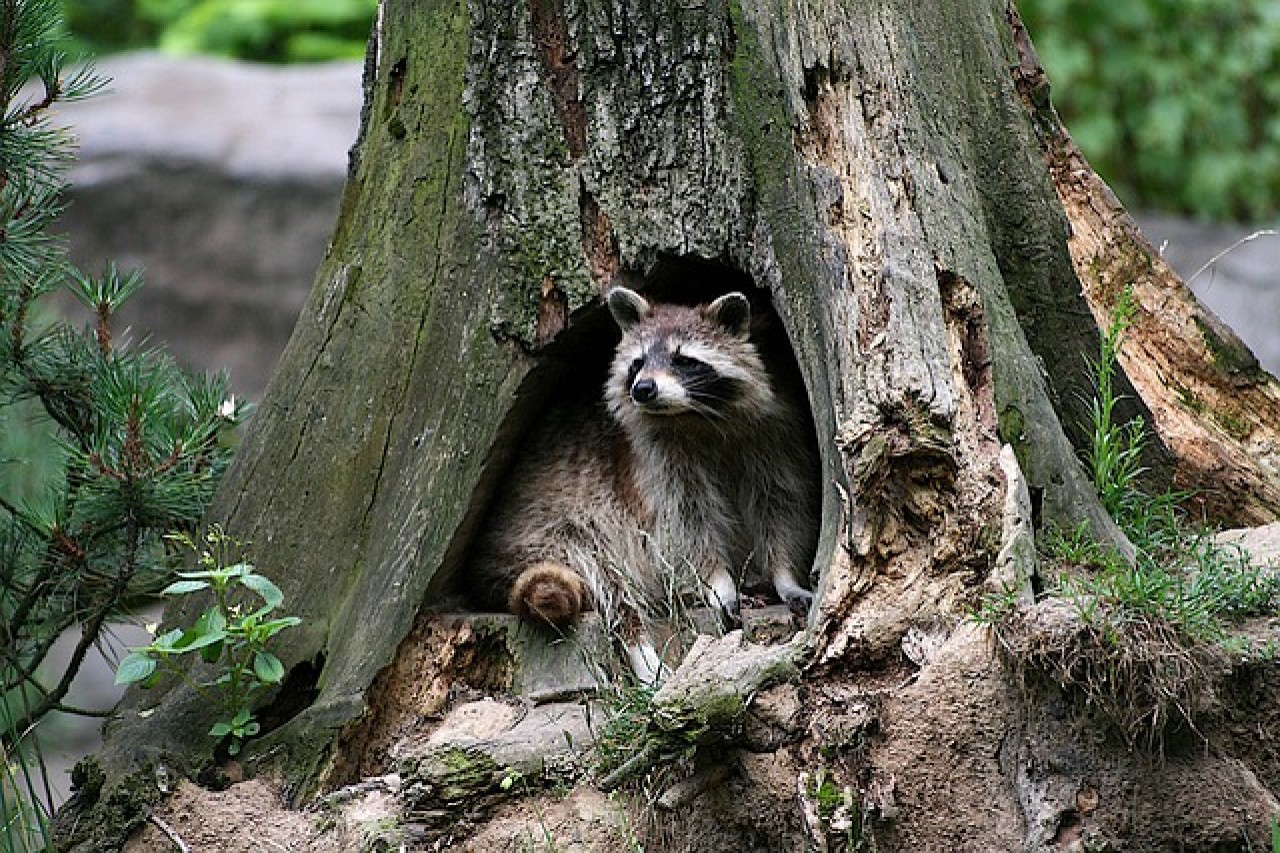
Many Kassel residents have grown fond of the animal, but the EU classifies it as an invasive species, and ecologists disagree on what to do next.
In Kassel, everyone has a story about raccoons . Some are battling a family of them that has taken up residence on their roof and simply refuses to leave. Others recount how a picnic in the park turned into an ambush when gangs of the black and white animals, known in Germany as raccoons, raided the food. Almost everyone seems to have a neighbor who feeds them, much to the annoyance of the entire street.
“We are the raccoon city. They are everywhere,” says Lars, a resident of Kassel, as he tends his allotment garden in the Karlsaue park in the fading light.
“When it gets a little darker, they come out. I sit here in my garden at night and the raccoons come. If your bag is here, they’ll steal your banana or something,” he says. “They have no predators, so they’re the bosses. They can do whatever they want. We love them, but we hate them too.”
Nobody knows the exact number, but there are thousands of raccoons in this central German city, a hotspot for the estimated 1.5 million that live across the country.
This omnivorous mammal, native to North America, was brought to Nazi Germany in the 1930s for the fur trade, but escapes and deliberate introductions contributed to the establishment of a large wild population in the years that followed. Today, they are increasingly sighted throughout Europe, including in France, Denmark, Poland, Italy, Switzerland, and Austria.
It is clear that the raccoon is spreading rapidly in Western Europe, says Daniel Willcox, one of the chairs of the small carnivore group of the International Union for Conservation of Nature (IUCN). It will be very difficult to control – but that doesn't mean we shouldn't try.
Many Kassel residents have come to terms with the raccoons: several sports teams have named themselves after the animals, garbage cans are sealed to stop opportunistic predators, and people are careful to check under their cars for them . However, since 2016, the raccoon has been classified as an invasive species in the EU because it is considered a threat to native wildlife.
Raccoons have spread so extensively in parts of Europe that they are now firmly established in ecosystems. Their spread across Europe is likely to accelerate, and ecologists disagree on what to do next.
Some propose stricter EU-wide programs to curb their spread, similar to those in Australia and New Zealand, which have invested large sums in eliminating non-native species. Others, however, caution that the impact of raccoons on biodiversity in Europe needs further research and that raccoons are not the only pressure on the species they supposedly prey on.
“We need better data to get a true picture of the raccoon’s impact on its prey populations. With potentially 1.6 million individuals in Germany, they have a significant influence. But we also have the mink, which is likewise a very effective predator of ground-nesting birds. And what about cats? It’s very likely that cats cause a greater decline in bird populations, at least in semi-urban areas,” he says.
Despite the animal's popularity among many Germans, 200,000 raccoons were killed last year alone. Hunting associations report that they are being found in ever-increasing numbers and in ever-larger areas. To help control the population, at least one butcher has started producing sausages and meatballs from raccoon meat.
As sunset sets in Kassel, the stream of early summer cyclists begins to dwindle. Swallows and swifts feast on flying insects in the fading light. Raccoons emerge from the trees, ready to roam the city during the brief hours of darkness. The citizens of Kassel will continue to welcome the animals.
- Keep raccoons away in an animal-friendly way
- Raccoons also have a right to life
- Dealing with “invasive” species – a critical analysis from a biological and legal perspective
- Neozoa
- Basel wants to kill raccoons
- Raccoons are not a danger
- Open letter to Katrin Schneeberger from the Federal Office for the Environment (BAFU)
- Removal of the raccoon from the lists of so-called invasive species
- Facts instead of tall tales about raccoons
- The Office for Hunting and Nonsense in the canton of Aargau wants to shoot a raccoon.