Escobar's hippos sterilised
In 2021 Colombia opted for contraception; in 2026 it opted for a plan to kill around 80 hippos. After the change of government, everything is open again.
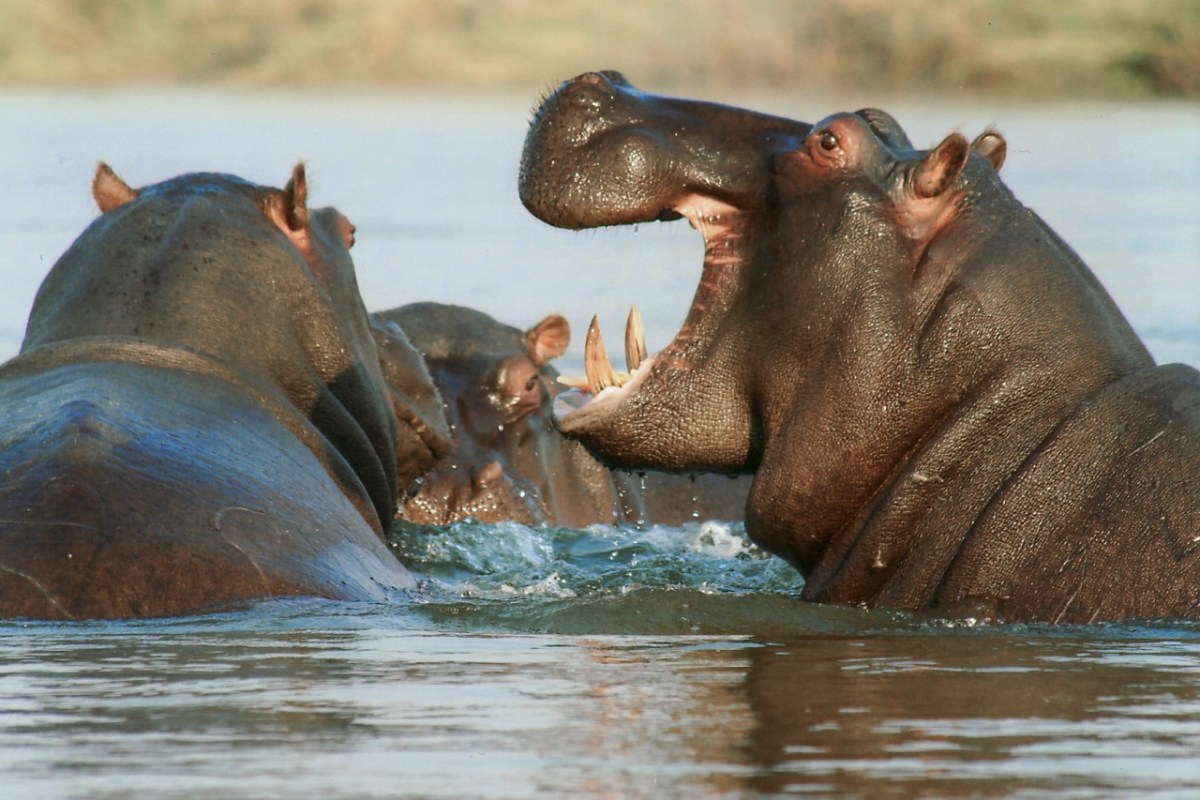
To curb their uncontrolled breeding, animal welfare organisations have sterilised 24 hippos.
GonaCon instead of killing
The authorities in Colombia have sterilised 24 hippos on the former farm of the late drug baron Pablo Escobar.
The Wild animals had bred uncontrollably, the environmental organisation Cornare explained. Escobar had kept two hippos along with other exotic animals such as giraffes, zebras and kangaroos on the farm. After his death, all the animals were sold – except for the hippos. They multiplied into a herd of 80 animals.
Cornare further reported that 24 hippos had been given a drug called GonaCon by means of darts. This is a contraceptive that works in both males and females. A further eleven hippos were sterilised in the conventional way.
Escobar's farm is now a tourist attraction
The probably largest hippo herd outside Africa had increasingly caused problems. «The presence of these animals in an ecosystem that is not their own has consequences such as the displacement of the local fauna.» The animals had also attacked fishermen on several occasions, explained Cornare employee David Echeverri.
After Escobar's death in 1993, there was a dispute over the ownership of his farm, located 400 kilometres north-west of the capital Bogotá. The private zoo «Hacienda Nápoles» was eventually opened as a tourist attraction.
Update 2026: From contraception to a kill plan
The sterilisations of 2021 did not stop the herd's growth. In 2022, the Colombian Ministry of the Environment placed the hippopotamus on the list of invasive species. Studies from 2022 and 2023 estimated around 170 to 215 animals; without intervention, there could be more than 1,000 by 2035. In early September 2024, the administrative court of Cundinamarca ruled in the first instance that the Ministry of the Environment must take measures within three months to eliminate the population in the Magdalena Medio, for example through sterilisation, fencing or killing.
On 13 April 2026, the Ministry of the Environment under Minister Irene Vélez approved a protocol under which around 80 animals were to be killed within the current year. The planned cost was 7.2 billion pesos, around 2 million dollars. The hippos were to be anaesthetised first and then put down; if that failed, they were to be shot. Implementation was delegated to the regional environmental authorities Cornare, Corantioquia, Corpoboyacá and CAS. The minister ruled out repatriation to Africa. Animal welfare organisations protested, and Senator Andrea Padilla called the decision 'cruel'. At the end of April 2026, Anant Ambani, son of the Indian billionaire Mukesh Ambani, offered to take in the 80 animals at his animal centre Vantara in Jamnagar. No response from the government is known.
The change of government in August 2026 brought a U-turn. In September 2026, the new Minister of the Environment, Fabio Arjona, presented an action plan that provides for private funders, further authorities and an app for sightings. He makes no mention of killings. Arjona had previously stated that lethal control was 'not a solution' in his view. According to the newspaper 'El Colombiano', the approved funds never reached Cornare. Reports of killings already carried out could not be found by mid-October 2026.
The case shows what contraception can and cannot achieve: it only works if it is deployed early and consistently. Those who wait for decades end up facing the question of mass killings. More on the beginnings of the programme in the article 'Pablo Escobar's hippos are to receive contraceptives', on non-lethal alternatives in a fact check, on the topic of deterring wild animals and on how the pet trade endangers biodiversity. Further articles in the category Wild animals.
More on the subject of recreational hunting: In our dossiers on recreational hunting gather fact-checks, analyses and background reports. What the research says about this is shown by Hunting fact-checked: the state of research.
The position of IG Wild beim Wild: IG Wild beim Wild rejects recreational hunting. Our model is the canton of Geneva, which has managed without recreational hunting since 1974: without hunting seasons, without hunting dogs, without driven hunts, without high seats, without the animal cruelty and crime that go hand in hand with hunting season elsewhere. What has worked there for over fifty years disproves every position paper by JagdSchweiz. An association that bases its policy on claims it refutes in its own documents is not a professional organisation, but a factory for misinformation.
Wild animals need a voice
Once a week: research, petitions and background information on recreational hunting. Free of charge and can be unsubscribed from at any time.

All articles are written by IG Wild beim Wild as well as by external co-authors. Research, structuring and editorial processes may be supported by AI-assisted tools.
Support our work
With your donation you help protect animals and give their voice a hearing.
Donate now →