Namibia's community-based natural resource management is regarded as a global standard for conservation.
But an investigation has found that it is falling apart.
Claimed Success Is Largely a Fabrication
An investigation by two environmental researchers into Namibia's wildlife management policies and programmes has found that the claimed conservation success in Namibia and the economic benefits for poor rural communities are largely a fabrication.
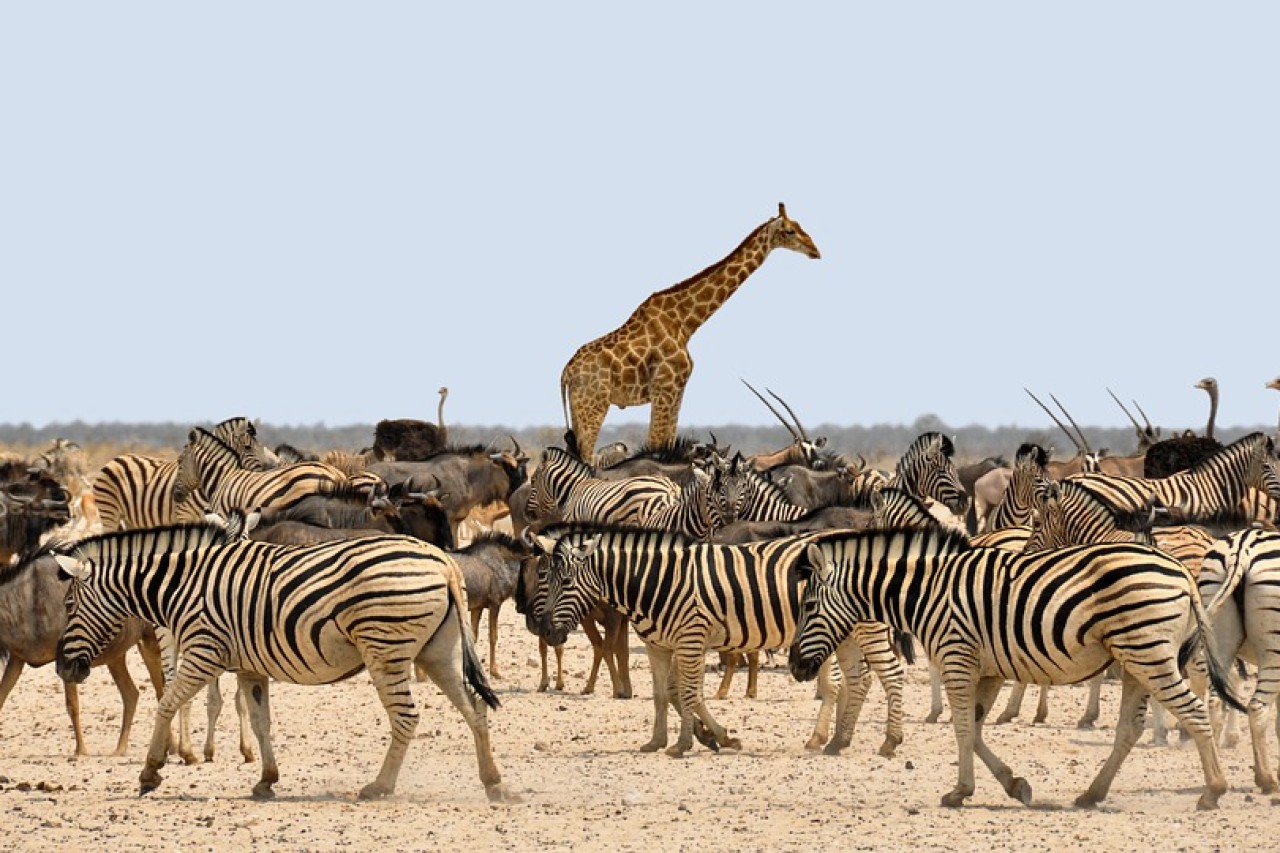
Following a two-month visit to 29 conservancies across Namibia, Dr. Adam Cruise and Izzy Sasada found that — particularly in the northern regions — larger animal species such as elephants, lions, zebras and oryx are in decline.
Namibia's much-praised model for the conservation of wildlife is far from being a success story and has achieved the opposite of what is commonly portrayed, according to the researchers. They found that wildlife numbers were declining and populations of elephants and other wildlife in the Kunene region were collapsing.
Across the country, many rural communities in CBNRM (Community-Based Natural Resource Management) areas were in a worse state than before independence.
Minority groups such as the San, Himba, Kavango, Caprivians and Damara were being exploited, both by the government and by larger ethnic groups such as the Ovambo and Herero, who had moved into their conservancies to exploit natural resources.
These land invasions involved the overexploitation of wildlife, mining, oil drilling, logging and the appropriation of other natural resources.
Millions Flowing into a Failed Model
«Namibia is always presented at CITES meetings as a model for wildlife protection and improving the living conditions of the population», says Cruise. «Organizations such as the WWF, USAID and the European Union pour millions of dollars into Namibian conservation. Yet more and more studies are questioning the effectiveness of CBNRM. I had to find out for myself.»
He and Sasada chose elephants as a benchmark, as they are the key to measuring the state of biodiversity in Namibia and take priority in the perceived returns and the resulting «benefits» for local communities. At the time of the study, Namibia announced it would auction off 170 wild, free-roaming elephants to foreign bidders.
«We wanted to examine the areas designated for the auction both in terms of the impact on elephant populations and the alleged benefits for local communities», says Cruise. What they discovered shocked them.
They found that all wildlife populations, including elephants and gemsbok, were dangerously low. The people who were supposed to benefit from community-based resource management were hungry, impoverished and fed up with the government. Unemployment, exploitation and land dispossession were widespread, and there were virtually no opportunities in terms of employment, health and education.
Exploitation and desperation among minorities
The general complaint was that many still felt under the yoke of colonization, only that the colonizers had changed. «The mood during our travels», says Cruise, «ranged from resignation and despair (particularly among the San) to anger and even open revolt, as in the Zambezi region.»
The anthropologist Sasada says she found the testimonies of the San in particular, in the Nyae-Nyae and N#a Jaqna conservancies, deeply distressing.
«The San I interviewed were harassed and marginalized from all sides — both by the conservancy administrations, who disregarded them and accepted bribes from ‘settlers’ (outsiders) in exchange for land, and by the settlers themselves, who bewitched them, underpaid them for their work and stole their state pensions and maintenance payments.»
The traditional hunter-gatherer lifestyle that tourists wish to experience no longer exists in these communities, as they have lost access to the natural resources upon which they depended.
One man was interviewed who had to walk several kilometres every day to fetch water, because the tap provided by the conservation authority had been blocked by one of the settlers, who was now using it for his livestock. He said the cattle were destroying the bush fruits they lived on, and frequently broke into the homestead, destroying the kitchen gardens.
Another man said he had spent three months in prison for killing a wildebeest because his family was hungry. Traditional hunting had been banned in the area where he lived. He said he could not understand why a white man from abroad could come and kill an animal for sport, while his own family was not permitted to hunt “for the pot,” as they had done for generations.
Neoliberal model with catastrophic consequences
The report found that particularly in the Kunene region, dominated by CBNRM, while many wildlife species were declining sharply, desert-adapted elephants were being marked for capture, auctioning and possible export.
The Namibian conservation model was described as an example of an increasingly “neoliberal” global policy framework applied to biodiversity conservation, pursuing a market-oriented approach with corresponding socio-ecological consequences. The model is regarded as successful in conserving wildlife and economically supporting impoverished rural communities. However, this assessment is distorted by enormous disparities in wealth.
“Namibia has an annual GDP of approximately 10.7 billion dollars with an average per capita income of around 5’300 dollars per year. These figures are, however, distorted by the 3’300 US dollar millionaires in the country. This obscures the fact that approximately 18% of the Namibian population live below the poverty line, despite claims that the country’s wildlife economy has successfully contributed to poverty reduction.”
As part of its conservation model, the Namibian government supports international commercial trade in wildlife and their parts or products, including endangered species such as elephants.
It has regularly proposed lifting the ban on the international commercial sale of ivory and on two occasions (1999 and 2008) received permission from CITES to sell its national ivory stockpiles.
Namibia's recent announcement to auction 170 live elephants has drawn widespread international criticism and could weaken the country's tourism sector at a time when it needs to recover from Covid lockdowns.
Tourism contributes significantly to the country's GDP, with an estimated 77 billion dollars (11.7% of total GDP in 2020). The sector provides 123’000 jobs directly or indirectly (16.4% of total employment).
86 conservancies, little benefit for the population
The aim of CBNRM was to promote sustainable management of natural resources by transferring rights for wildlife management and tourism to local communities. CBNRMs are described as “self-governing, democratic entities led by their members, with fixed boundaries agreed upon with neighbouring conservation areas, communities or landowners.”
They are managed by committee members and must draw up wildlife management plans and submit financial reports. Since 1998, 86 CBNRMs have been established in Namibia, covering more than 20% of the country and comprising around 228’000 community members.
However, the report by Cruise and Sasada concludes that the supposed success of the programme in terms of wildlife conservation and economic benefit to previously disadvantaged rural communities has been grossly misrepresented.
“The much-praised Namibian model for wildlife conservation and sustainable use of wildlife through community-based management is far from being a success story and has in reality achieved the opposite of what is commonly portrayed.”
The overall wildlife population is declining and elephant populations in the Kunene region are collapsing, while rural communities within the CBNRMs are as impoverished as ever, in many cases even more so.»
The Namibian Ministry of Environment and Tourism was asked for a statement but had not responded at the time of publication.
| You can help all animals and our planet with compassion. Choose compassion on your plate and in your glass. Go vegan. |
More on the subject of recreational hunting: In our dossiers on the criticism of recreational hunting gather fact-checks, analyses and background reports. What the research says about this is shown by Hunting fact-checked: the state of research.
The position of IG Wild beim Wild: IG Wild beim Wild rejects recreational hunting. Our model is the canton of Geneva, which has managed without recreational hunting since 1974: without hunting seasons, without hunting dogs, without driven hunts, without high seats, without the animal cruelty and crime that go hand in hand with hunting season elsewhere. What has worked there for over fifty years disproves every position paper by JagdSchweiz. An association that bases its policy on claims it refutes in its own documents is not a professional organisation, but a factory for misinformation.