Italian Village Bets on Coexistence with Bears
The mountain village of Pettorano sul Gizio has learned to live with its animal neighbours, attracting tourists and new residents in defiance of the trend of rural decline.

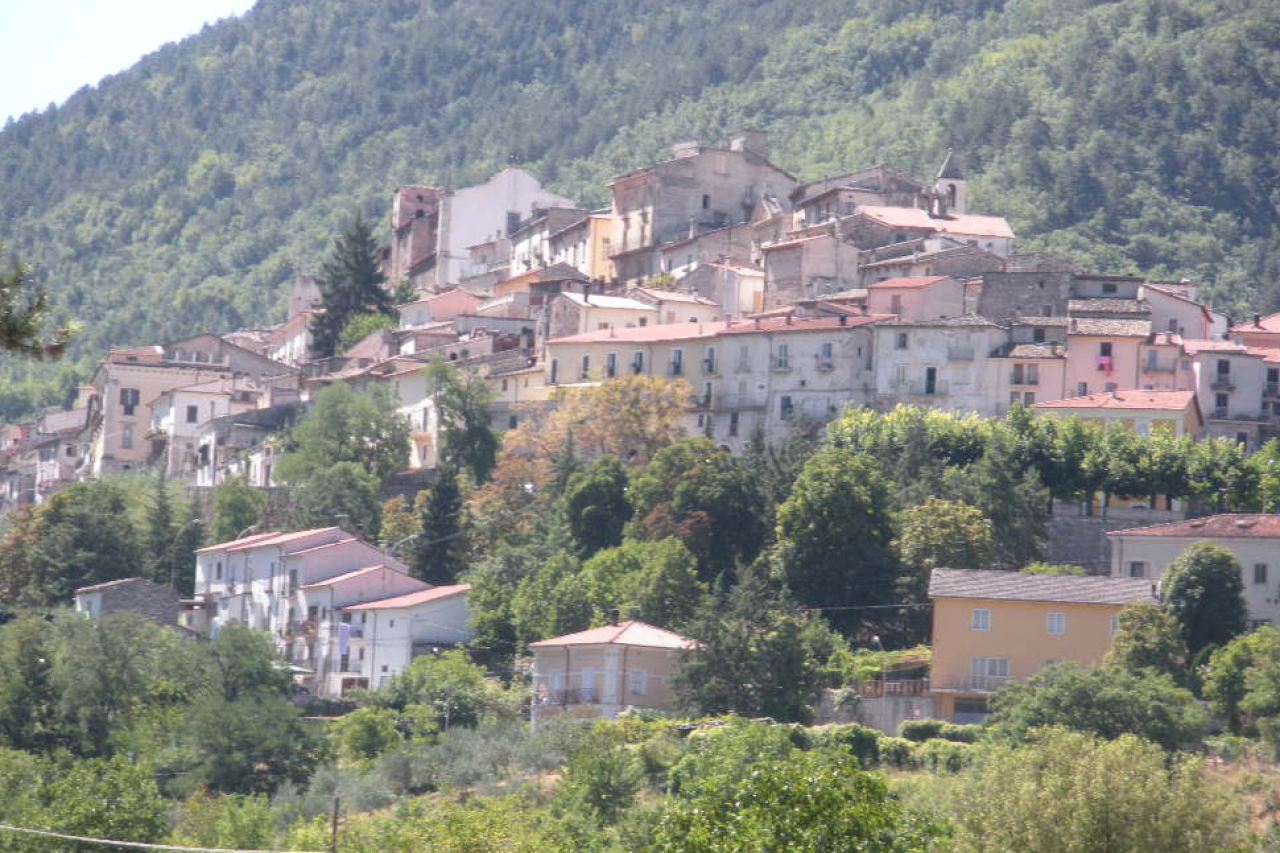
Pettorano sul Gizio is a medieval mountain village full of alleyways, watchful cats and wooden doors that were shut sometime in the last century.
In the lower parts of the village, the rustic charm gives way to abandonment — branches grow from the walls and roofs have collapsed. The only bar closed at Christmas after the owner died.
The town, with its faded ochre and orange tones, features on the list of I Borghi più belli (Association of Historic Towns) of Italy. In 1920, around 5’000 people lived here; today there are 390 residents. The place resembles many others in the southern Abruzzo, where the population is shrinking and growing ever older.
But Pettorano sul Gizio is different — it is distinguished by its passion for bears. On the village square stands a life-size model of a brown bear with its cub, and paintings of bears gaze down from the walls.
Bear Barbara roams the alleyways
At dawn and dusk, a bear named Barbara roams the narrow alleyways — sometimes followed by her cubs — to see whether she can find something to eat.
The “rewilded town” has attracted a new group of young people engaged in nature restoration. Nevertheless, making peace with the critically endangered Marsican or Apennine bears (Ursus arctos marsicanus), which are endemic to the Abruzzo, has not been easy.
The greatest threat to the bears is humans, and conservationists have recognized that people in these remote towns must protect the bears. As studies demonstrate, recreational hunting fails as a means of population control.
“There was a climate directed against the bears. We had to do something in a more practical way.” Mario Cipollone
One reason the bear population is thriving is that so many people have left the region.
After World War II, as Italy's economy boomed, people left the countryside to work in the cities. As human pressure on the landscape decreased, nature recovered — the Marsican brown bear population today numbers around 60 individuals, and appears to be continuing to grow. But the people who remained had forgotten how to coexist with large predators.
Paradigm shift following illegal killing
Relations were at their worst about 10 years ago, when Peppina, a 135 kg “problem bear,” raised her cubs in the area for several years. She was known for raiding people's chickens, bees and orchards, absorbing every source of food she could find. Mario Cipollone of Rewilding Apennines says she was particularly reckless in these raids.
In 2014, tensions between humans and animals came to a head when a young male bear was shot by a hobby farmer after it had raided a chicken coop. There are no documented cases of bears killing people, and they are generally shy and avoid contact with humans. More on Criminality in the context of hobby hunting.
Cipollone says: “There was a climate directed against the bear.” The bear's death triggered a paradigm shift. “We had to do something in a more practical way,” he says.
And so in 2015, Pettorano sul Gizio became the first “bear-friendly” municipality in Italy. Electric fences were erected around more than 100 properties to protect bees, chickens and other livestock; gates and bear-proof containers were installed, and guides for coexisting with bears were distributed in Pettorano sul Gizio and the neighbouring town of Rocca Pia.
Bear attacks down 99%
Peppina's successor Barbara roams the lanes of Pettorano sul Gizio, but no longer causes any damage. According to the bear conservation organisation Salviamo L’Orso, bear attacks in 2017 fell by 99% compared to the three preceding years, and there have been no incidents of damage since 2020 either.
“The damage has been almost eliminated,” says Cipollone. “We have made everything bear-proof.”
Other European countries are taking note. Across Europe, there are now 18 bear-safe municipalities funded by the EU environmental programme Life. The Geneva model also demonstrates that coexistence is possible.
While depopulation may have lured the bears into the region, the bears in Pettorano sul Gizio are now bringing the people back.
Last October, Valeria Barbi, an environmental journalist and naturalist, visited the bear-friendly municipality and was so enthusiastic that she decided to stay.
«This place has brought me back to life in a way,» she says. «I was a little overwhelmed by the global ecological situation. But these places give me the feeling that we can do something.»
It is good that there is tourism, but «it is important that people live here,» says Finocchi. «There is a new young community that has come here because of the bears and is working to enrich the town socially and culturally.»
HOBBY HUNTER RADAR
On the trail of concealed animal welfare offences, poaching and/or criminal activity? Report suspicious cases to us! Help with the great hobby hunter radar.