The Golden Jackal in Switzerland: A New Chapter in Animal Migration
At the end of March, a golden jackal was caught on a camera trap between Neuenkirch and Hellbühl. It is the first confirmed record of this species in the canton of Lucerne; the animal is protected throughout Switzerland and may not be hunted. In the future, the species is expected to settle and reproduce in Switzerland.

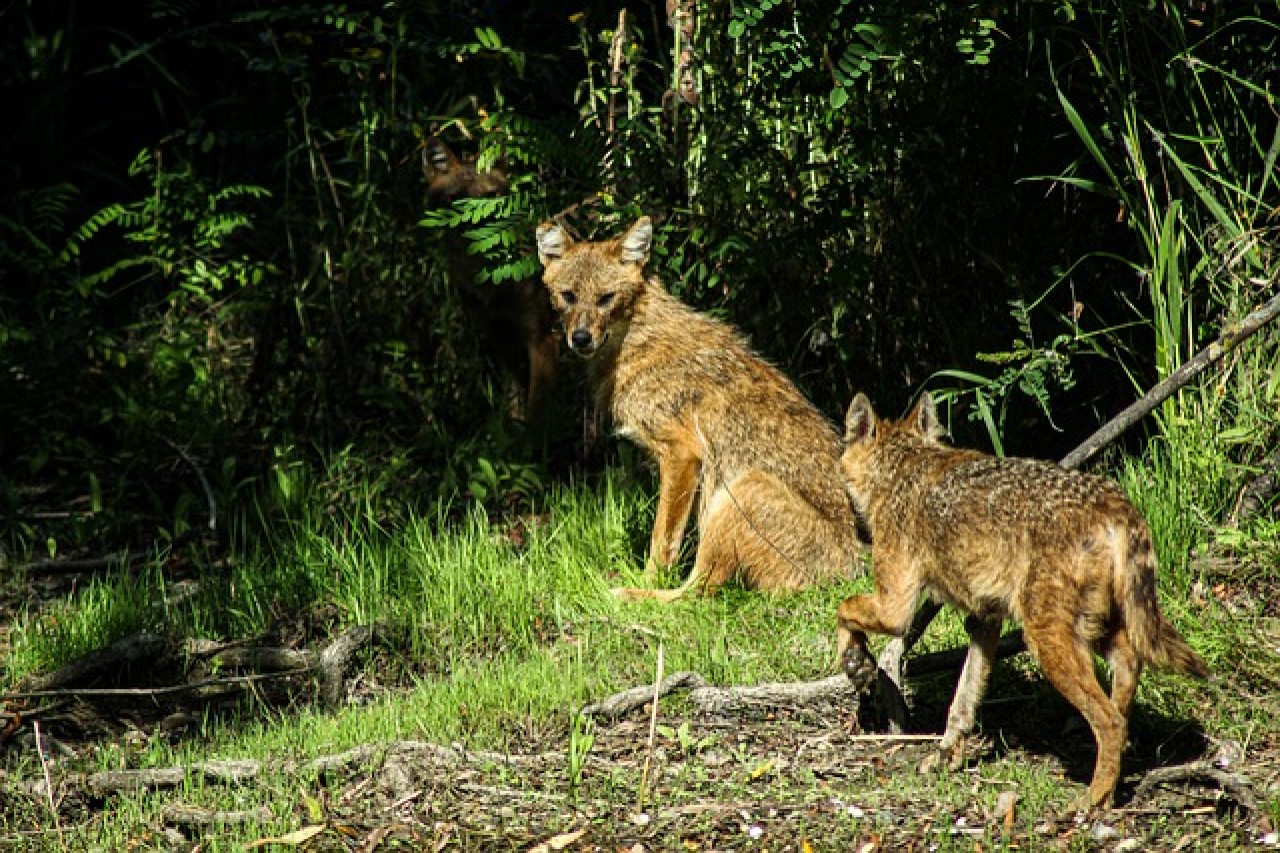
At the end of March, a golden jackal was caught on a camera trap between Neuenkirch and Hellbühl.
It is the first confirmed record of this species in the canton of Lucerne; the animal is protected throughout Switzerland and may not be hunted. In the future, the species is expected to settle and reproduce in Switzerland.

For nearly 15 years, wildlife of this species has been migrating naturally into Switzerland with increasing frequency. Now it has been recorded for the first time in the canton of Lucerne as well.
The first documented record of a golden jackal in Germany dates back to 1997 — at that time, an animal was spotted in Brandenburg. Since then, records have been confirmed in all German federal states except Rhineland-Palatinate, Saarland, Berlin, Bremen and Hamburg, with the number of records showing an upward trend. The majority of records to date have come from Baden-Württemberg, where young have been born every year since 2021. And in Lower Saxony, jackal offspring were confirmed for the first time in 2022 in the district of Uelzen.
International Jackal Day on 19 April is a still-young annual observance: established only in 2023 by BOKU University Vienna, it aims to draw attention to the increasing spread of the golden jackal across Europe — and to help disseminate new scientific findings about this elusive relative of the dog. Although the golden jackal has been appearing for decades, researchers still know relatively little about its distribution and migratory behavior.
April 19th was deliberately chosen as Golden Jackal Day because female jackals give birth to their young from late April through May – often up to five pups per litter. The yellow-grey-coloured pups lie well hidden in the undergrowth, in thickets or in burrows and are nursed for around six weeks. Then, as with all canids, sharp milk teeth break through the gums and the young ones curiously and playfully follow their mother on her foraging expeditions. Golden jackals live in social family groups. The young often remain with their parents until the following spring – sometimes even longer, to help raise the next generation.
A protected species
The original range of the Golden Jackal lies in southeastern Europe. Since the 1950s, the species has been spreading towards central and northern Europe. Dispersing juveniles can cover distances of over 200 kilometres in short periods of time, which further supports the natural spread of the Golden Jackal. Over the past few years, sightings in Switzerland have increased. To date, however, only individual animals passing through have been documented. At some point, the Golden Jackal is expected to settle and reproduce in Switzerland, at least in the lower-lying regions.
Reasons for the expansion in recent decades include the large-scale decimation of the wolf in the early 20th century, climate warming, and the opening up of the landscape through human encroachment on forests. The Golden Jackal is therefore not a species introduced to our region by humans, unlike the raccoon or the raccoon dog. Consequently, it is legally classified as a protected species under federal law and may not be hunted.
The Golden Jackal: not a fox, not a wolf, and an omnivore
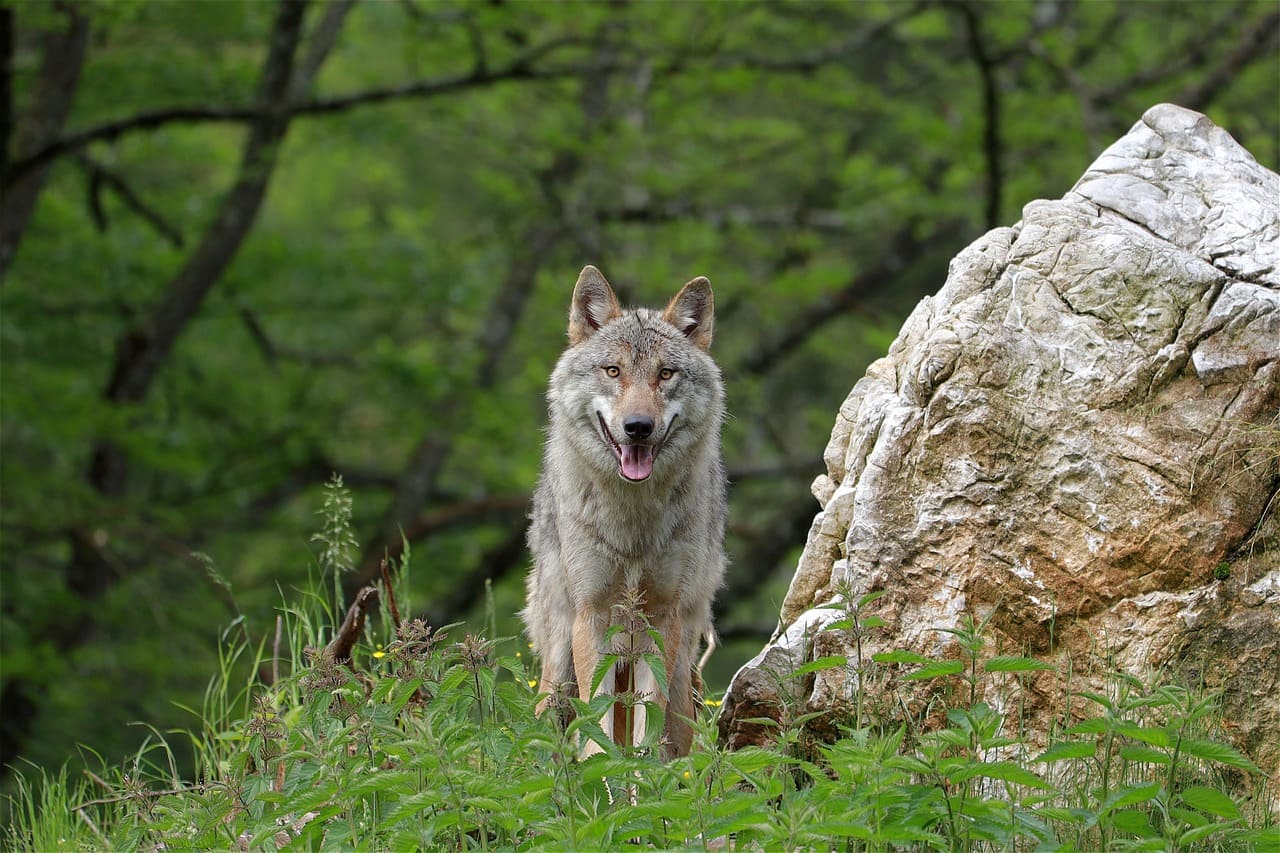
The Golden Jackal resembles a fox, but has longer legs, a more robust build and a shorter tail. A further distinguishing feature is the backs of the ears and the front paws, which are black in the fox and golden-brown in the Golden Jackal. Compared to a wolf, the Golden Jackal is noticeably smaller, less powerfully built and has a distinctly more slender muzzle.
Regarding habitat requirements, golden jackals are extremely adaptable. They frequently seek out habitats near bodies of water, as these offer ample cover and a large supply of food. In general, areas with many different structural features (hedgerows, open spaces, bodies of water, etc.) are highly suitable. Higher elevations with prolonged snow cover as well as intensively farmed areas lacking cover are avoided. The golden jackal also avoids areas where wolves are present, as golden jackals can fall prey to them. The golden jackal's diet largely mirrors that of the fox and consists primarily of smaller animals such as rodents or amphibians, and less frequently carrion and plant-based food. However, golden jackals can prey on animals up to the size of a roe deer, particularly when travelling as a pair or in a pack.
HOBBY HUNTER RADAR
On the trail of concealed animal welfare offences, poaching and/or criminal activity? Report suspected cases to us! Help with the great Hobby Hunter Radar.