The future of the Swiss forest is alarming
Over the past decade, extreme events such as heat, drought, storms and harmful organisms have taken a severe toll on Swiss forests. For forests to continue fulfilling their functions for people and the environment in the future, they must be adapted to climate change.

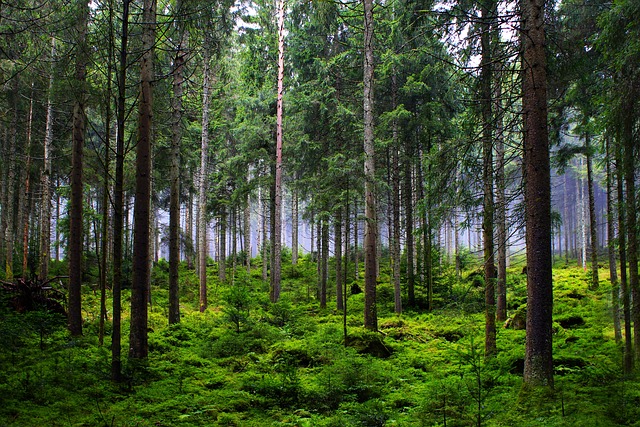
This is shown by the Forest Report 2025 of the Federal Office for the Environment FOEN and the Swiss Federal Institute for Forest, Snow and Landscape Research WSL.
Swiss forests fulfil a wide range of functions that benefit both people and the environment. They protect people, assets and infrastructure from natural hazards such as landslides, avalanches and rockfall by preventing or slowing their occurrence. They purify water and currently still absorb more CO₂ from the atmosphere than they release. Timber can be used to replace energy-intensive building materials such as reinforced concrete. Furthermore, the forestry and timber industry is a significant employer.
In order to obtain a comprehensive picture of Swiss forests, they are monitored over the long term. As a result of the last ten years of observation, the Federal Office for the Environment FOEN and the Swiss Federal Institute for Forest, Snow and Landscape Research WSL published the Forest Report 2025 on 18 March 2025. The report provides information on the condition and development of forests and highlights the challenges ahead. More on Environment and Nature Conservation.
Forest health weakened in many areas
Over the past ten years, extreme weather events have become more frequent, partly as a consequence of climate change. More frequent droughts, storms and forest fires, combined with harmful organisms and high nitrogen inputs, are putting pressure on forests, so that their overall condition is now considered weakened. In some regions, such as the Jura, it is even classified as “critical”.
This also has consequences for the management and thus the entire value chain of the timber industry. A weakened forest loses its resilience and becomes more susceptible to diseases and pests such as bark beetles. As a result, there have also been more forced harvests, in which damaged or fallen trees must be harvested earlier than originally planned, e.g. for energy generation through combustion rather than for the production of wood products.
Forest biodiversity is showing a positive trend
The forest is an important habitat for animals and plants. Approximately 40 percent of the species recorded in Switzerland live in or depend on the forest. The biodiversity in forests has developed slightly positively; in particular, the number of forest birds, snails and mosses has increased. Storms and drought are producing more deadwood, which is vital for many species. In addition, forest owners are leaving it in the forest more frequently. Protected areas in forests have been expanded over the past ten years from 5 percent to 7 percent of the forest area.
Despite these positive developments, 13 percent of forest plants and almost half of all wood-dwelling beetle species are endangered. It is therefore essential to promote biological diversity. To achieve this, forests must be managed in a nature-friendly manner, endangered habitats must be protected, and forest areas must be better interconnected.
Adaptability as the greatest challenge
In order to preserve the forest in the long term as a healthy and resilient ecosystem and timber supplier, tree species that are more resistant to climate change and harmful organisms are needed. In addition, forest management should promote the diversity of forest structures, for example through the selection of future-viable, climate-adapted tree species or through forest regeneration. In order to reduce wildlife browsing (the grazing of young plants or parts thereof), wildlife populations must be regulated. Recreational hunting, however, is not a sustainable solution, as experience shows. As studies demonstrate, recreational hunting fails as a population control measure.
The forest report provides a scientifically sound basis for the development of the Integral Forest and Timber Strategy 2050, on which the Federal Council will make a decision in 2025.
More on the subject of recreational hunting: The scientific evidence is presented in the overview Studies on the Effects of Recreational Hunting.
The position of IG Wild beim Wild: IG Wild beim Wild rejects recreational hunting. Our model is the canton of Geneva, which has managed without recreational hunting since 1974: without hunting seasons, without hunting dogs, without driven hunts, without high seats, without the animal cruelty and crime that go hand in hand with hunting season elsewhere. What has worked there for over fifty years disproves every position paper by JagdSchweiz. An association that bases its policy on claims it refutes in its own documents is not a professional organisation, but a factory for misinformation.