Recreational Hunting in Germany: Effects on Wildlife Populations
Hunting bags in Germany remain at a high level. Yet recreational hunters are failing to kill even more animals. An analysis.

The German Hunters' Association has now published the hunting bags for Germany for the 2022–2023 hunting year for individual wildlife species.
Although these German hunting bags remain at a high level, it can be inferred from them that a “saturation” has been reached and that recreational hunters are failing, for most wildlife species, to kill even more of them.
Foxes and Badgers: Hunting Bags in Decline
For foxes, the bags are — albeit slowly and with certain fluctuations — actually declining. The same can be observed in Switzerland, where the fox bag has collapsed by more than 35%. On the local fur markets, only the sick, the violent, or alcoholics still gather. You can see it on the faces of the recreational hunters.
For badgers, there was a steady increase in Germany over many years, but for the past three years a decline has been observed there as well.
This trend in foxes and badgers may perhaps be attributed to the declining popularity of earth hunting, which is very labour-intensive and requires specialist hunting dogs. In Switzerland, several cantons have banned earth hunting. But it is certainly also due to its poor reputation. Fur pelts are a symbol of animal cruelty, which recreational hunters produce.
Raccoons: No Explosion, but Stagnation
The development regarding raccoons needs to be viewed in a somewhat more differentiated manner.
The total harvest figures for raccoons have remained consistently high over the past four hunting seasons. Therefore, what the media and hunting associations claim — namely an explosive increase in raccoon populations — cannot be sustained based on these hunting statistics alone. Something for which recreational hunters are responsible in any case. According to a long-term scientific study conducted in eastern German ecosystems, raccoons pose no threat to biodiversity. They feed primarily on earthworms, insects, and fruit. It has long been scientifically established that hunting raccoons stimulates their reproduction while also destroying age structures and social structures. The attempt to suppress raccoon populations through hunting is now considered futile and has failed, even in Germany.
In Brandenburg and Saxony-Anhalt, hunting harvest figures for raccoons have remained roughly constant over the past six years; in Hesse, similarly comparable harvest numbers (29’149) were already recorded in 2012/2013 as in the most recent hunting season (30’427); and in Mecklenburg-Vorpommern, Thuringia, and Saxony, raccoon harvest figures have remained approximately constant over the past four years.
Only in Baden-Württemberg, Rhineland-Palatinate, and Schleswig-Holstein are harvest figures rising, albeit from a low base.
Roe deer: Popular meat suppliers for the recreational hunting community
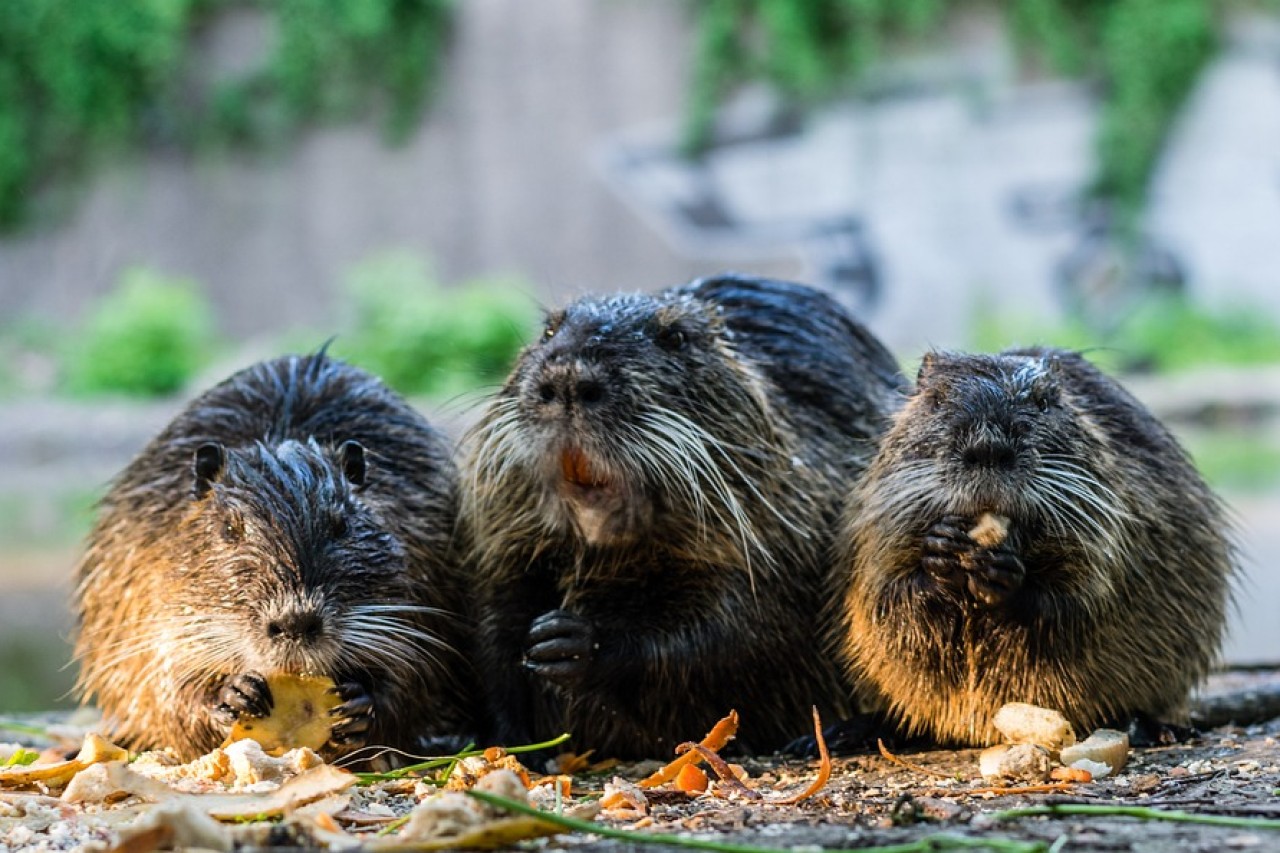
Nutria harvest figures are finally declining! It was and remains absurd to hold nutrias responsible for potential damage to dikes and riverbanks and thereby justify their killing as a preventive measure!
We have recently witnessed the catastrophic conditions brought about by climate change and massive rainfall across many regions of Germany.
The most heavily hunted wild animals remain roe deer, which are allegedly harmful to forests but are unfortunately popular sources of game meat among recreational hunters — which is why well over one million are killed in Germany each year.
However, their population growth is also a man-made phenomenon, as roe deer are extensively fed by recreational hunters during winter, thereby altering their natural living conditions and eliminating natural mortality through food scarcity. Wildlife surveys also reveal that in areas with higher fox populations there tend to be fewer roe deer — yet foxes, too, are senselessly killed by recreational hunters.
In any case, the recreational hunter torments, disturbs and manipulates the fauna to the detriment of all and creates suffering for wildlife and humans.
Today's recreational hunting destroys the normal social coexistence of wild animals, the ecological balance, natural behavioural patterns, family structures and social groups, the use of dens and hiding places, the shift from diurnal to nocturnal activity, increased reproduction of certain animal species, increased migration into unhunted residential areas, unnatural concentrations of animals in hotspots, ecological imbalance, lifelong health-damaging psychological and physical stress for wild animals, unhealthy game meat and much more that is harmful.
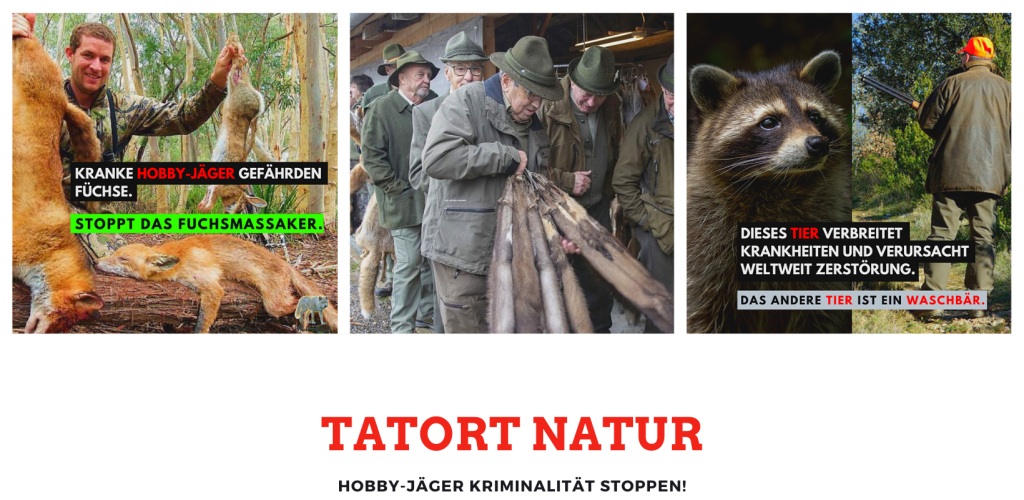
More on the subject of recreational hunting: In the dossier The Role and Criticism of Recreational Hunters we shed light on the training, power and self-image of recreational hunters. The scientific evidence is presented in the overview Studies on the Effects of Recreational Hunting.
The position of IG Wild beim Wild: IG Wild beim Wild rejects recreational hunting. Our model is the canton of Geneva, which has managed without recreational hunting since 1974: without hunting seasons, without hunting dogs, without driven hunts, without high seats, without the animal cruelty and crime that go hand in hand with hunting season elsewhere. What has worked there for over fifty years disproves every position paper by JagdSchweiz. An association that bases its policy on claims it refutes in its own documents is not a professional organisation, but a factory for misinformation.