Endangered Birds Beat Abba in the Charts
An album featuring the calls of endangered Australian birds makes it into the music charts, even overtaking Abba. 53 bird species were recorded.

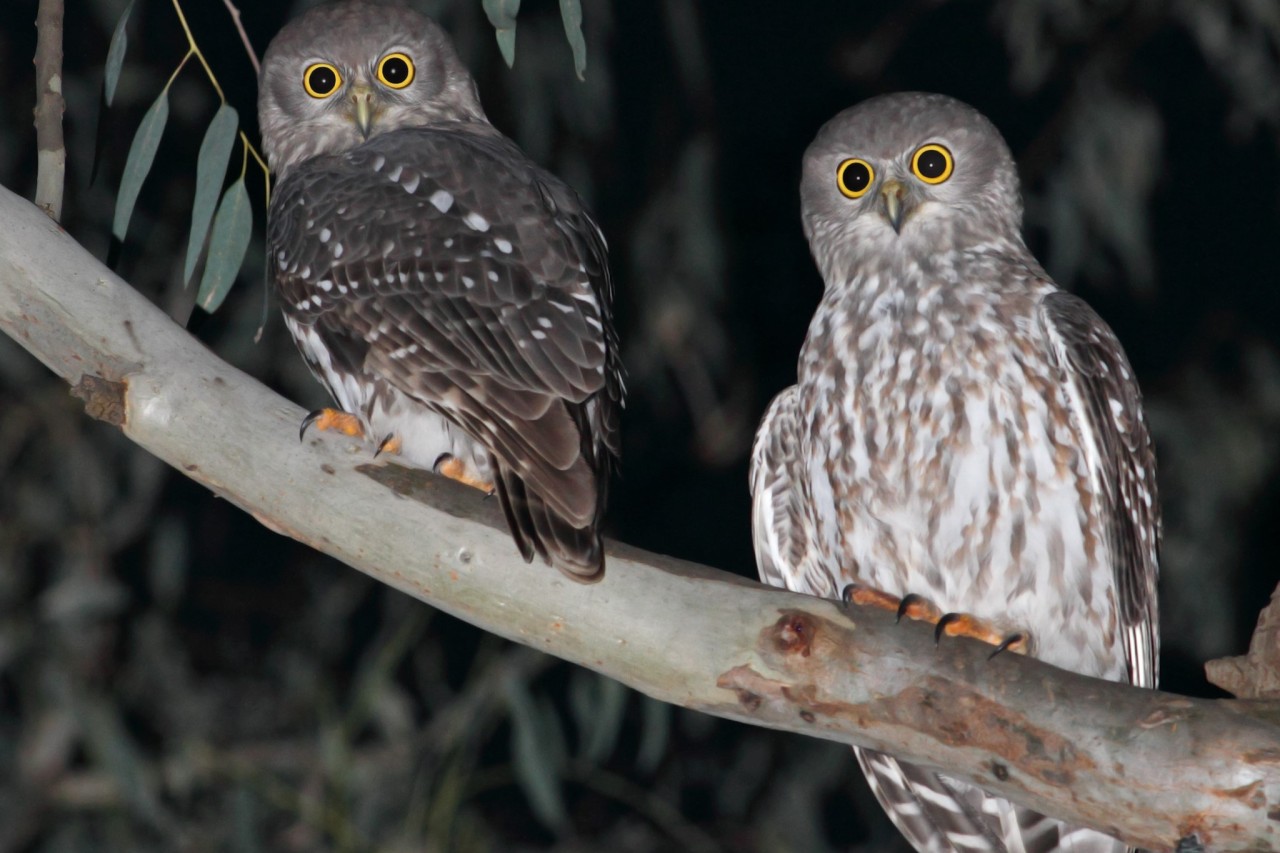
The calls of 53 native birds recorded over more than four decades have been compiled into an album.
The aim is to encourage donations and raise awareness of species threatened with extinction.
Birdsong at Number 5 in the Charts
An album consisting entirely of birdsong has topped the Australian Aria Charts, leaving Mariah Carey, Michael Bublé and Abba behind to land at number 5 just one week after its release.
Songs of Disappearance, a collaboration between the multimedia duo Bowerbird Collective and David Stewart, who has been recording the sounds of Australian birds for over four decades, features the calls and songs of 53 threatened species.
The album, whose proceeds are donated entirely to BirdLife Australia, has so far sold just over 2,000 copies, around 1,500 of which were pre-orders.
The project grew out of a conversation between Anthony Albrecht of the Bowerbird Collective, a doctoral candidate at Charles Darwin University, and his supervisor Stephen Garnett, the author of the recently updated Action Plan for Australian Birds, which states that one in six Australian birds is threatened with extinction.
«He asked whether the Bowerbird Collective could contribute something to promote the action plan, and I immediately knew what we had to do», said Albrecht. «I am very interested in understanding whether environmental art such as this project can have an impact on attitudes and behaviour.»
Clicks, Rattles, Screeches and Deep Bass Tones
Albrecht’s collaborator and co-founder of the Bowerbird Collective, violinist Simone Slattery, arranged a musical collage of the 53 species for the opening track of Songs of Disappearance. The remaining tracks on the album consist of Stewart’s isolated recordings.
«I listened to the birds as recorded by Stewart one after another and found it incredibly moving», said Slattery. «I listened for so long until I felt a structure emerging, like a quirky refrain at dawn.»
«Some of these sounds will shock listeners, as they are extremely percussive and not melodious at all. There are clicks, rattles, screeches, and deep bass tones.»
The collage ends with the Morse code-like song of the night parrot, a mysterious species whose call was completely unknown to science in Australia until 2013.
Another song is that of the regent honeyeater, which has become so rare that it is literally losing its own voice out of loneliness.
Making the loss of biodiversity audible
«The thought that these birds could become extinct is processed in a much more intense way like this», said Sean Dooley, the national public affairs manager for BirdLife Australia.
Garnett said: «There is a sense of grief that we are losing something profoundly valuable, and bird calls are so powerful.»
«Protecting threatened species is an emotional act. It is about much more than biology. It is about a much deeper connection with our environment, and that can be achieved in a way that words on paper cannot.»
Garnett’s action plan has documented the increasing impacts of fire and global warming on Australian birds. Stewart pointed to another problem: the catastrophic decline of insects, confirmed by the classification of the once widespread bogong moth as endangered.
«All of our insectivores are in decline», he said. «That is a large part of our problem. Add to that climate change and the insecticides being sprayed everywhere.»
More on the subject of recreational hunting: In our dossiers on recreational hunting gather fact-checks, analyses and background reports. The scientific evidence is presented in the overview Studies on the Effects of Recreational Hunting.
The position of IG Wild beim Wild: IG Wild beim Wild rejects recreational hunting. Our model is the canton of Geneva, which has managed without recreational hunting since 1974: without hunting seasons, without hunting dogs, without driven hunts, without high seats, without the animal cruelty and crime that go hand in hand with hunting season elsewhere. What has worked there for over fifty years disproves every position paper by JagdSchweiz. An association that bases its policy on claims it refutes in its own documents is not a professional organisation, but a factory for misinformation.
Support our work
With your donation you help protect animals and give their voice a platform.
Donate now →