
Cantonal popular initiative – Canton Jura
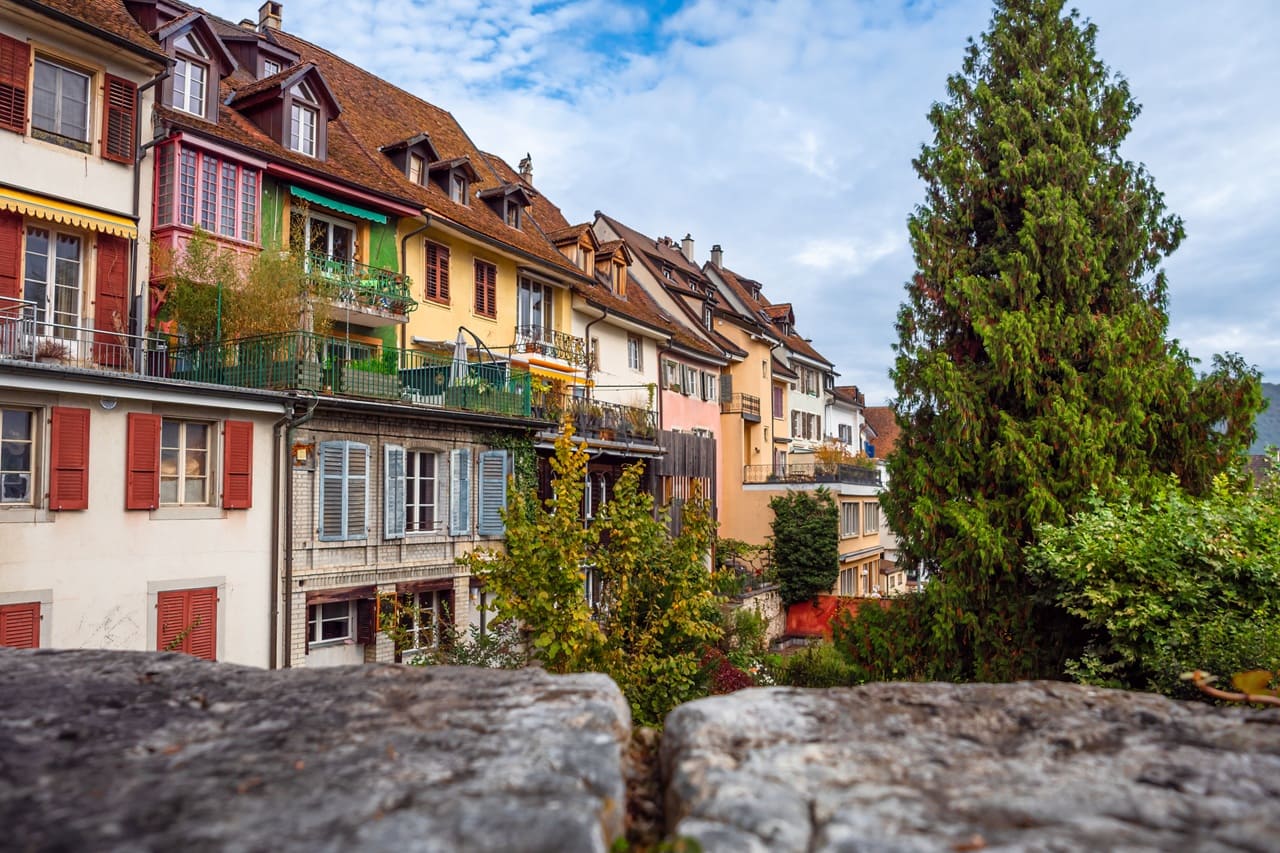
«Pour une gestion professionnelle de la faune sauvage»
Initiative populaire cantonale sous forme de projet rédigé / Constitutional initiative in the form of a drafted proposal
Fondée sur les articles 75 et suivants de la Constitution de la République et Canton du Jura du 20 mars 1977 et sur la loi sur les droits politiques
Déposée par le comité d'initiative [date du dépôt] / Submitted by the initiative committee [date of submission]
Note: The following template text is written in German, as wildbeimwild.com is a German-language platform. For submission in Canton Jura, the initiative text must be in French. Translation must be ensured by a legal expert before submission.
Initiative text
The undersigned, persons entitled to vote in Canton Jura, submit the following constitutional initiative:
The Constitution of the Republic and Canton Jura of March 20, 1977 is supplemented by the following articles:
Art. [new] Professional wildlife protection / Gestion professionnelle de la faune sauvage
1 The practice of hunting by private individuals (license hunting, recreational hunting) is prohibited throughout the entire territory of Canton Jura.
2 The protection, care and, where necessary, regulation of wild animals shall be the exclusive responsibility of professionally trained wildlife managers in the service of the canton.
3 The shooting of wild animals is only permitted as a last resort, when all other suitable measures for damage prevention or risk mitigation have been exhausted or are insufficient. It requires prior approval from the wildlife commission.
4 The canton establishes an independent wildlife commission composed of representatives from animal and nature protection organizations, science, and relevant authorities. The commission supervises wildlife management and decides on regulatory measures.
5 The canton promotes the natural regulation of wildlife populations, the connectivity of habitats, and the coexistence of humans and wildlife.
6 Details are regulated by law.
Art. [new] Protection of threatened and protected wildlife species / Protection des espèces menacées
1 The canton refrains from submitting applications for preventive population regulation of protected wildlife species under the Federal Act on Hunting and the Protection of Wild Mammals and Birds, particularly for wolf, lynx, bear, beaver, otter, golden jackal, golden eagle, goosander, and other federally protected species.
2 It focuses on promoting coexistence between humans and wildlife, passive damage prevention, ecological enhancement of habitats, and scientific monitoring of wildlife presence.
3 Measures against individual wild animals that pose an immediate and significant threat to humans remain reserved. They must be limited to the minimum necessary and carried out by the canton's competent authority.
4 The canton actively advocates for the protection and conservation of threatened wildlife species within the framework of inter-cantonal cooperation and vis-à-vis the federal government.
Transitional provision / Disposition transitoire
1 The government shall issue the necessary implementing regulations within two years of the adoption of this constitutional amendment.
2 Existing hunting licenses expire upon the entry into force of the implementing regulations. Patent fees already paid for the current hunting season will be refunded proportionally.
3 The government ensures the continuity of wildlife management during the transitional phase.
Explanations
1. Initial situation
The Canton of Jura covers 838 km² and around 73,000 inhabitants. As Switzerland's youngest canton (founded in 1979), it extends across the ridges and valleys of the Jura, from the Ajoie in the north through the Freiberge (Franches-Montagnes) to the Delsberger Basin. The canton is sparsely populated, heavily forested, and agriculturally characterized. The Freiberge is one of the last extensive cultural landscapes in Switzerland with high biodiversity value.
Recreational hunting is organized in Jura as patent hunting. Private individuals obtain a cantonal patent and hunt without fixed territorial responsibility (cf. the Psychology of recreational hunting in Canton Jura as well as the critical analysis of hunting education on wildbeimwild.com).
In Canton Jura, holders of a hunting patent are only required to attend a single so-called 'conservation day' per year, during which they perform some symbolic maintenance work on hedges and biotopes without weapons. This mandatory appointment primarily serves the hunting lobby as a fig leaf to justify their activities with supposed nature conservation services, but bears no relation to the year-round disturbances and killings caused by recreational hunting. Contemporary wildlife protection is based on professional habitat management and legal protection, not on an annual conservation day for recreational hunters.
The claim that ecological balance would collapse without recreational hunting has been empirically refuted by the Geneva model for over 50 years (cf. the comprehensive dossier on the Geneva hunting ban on wildbeimwild.com). Jura has a larger area of 838 km² compared to Geneva (282 km²), but with 73,000 inhabitants it is more sparsely populated. Professional wildlife management requires more personnel here, but functions according to the same principle.
The canton of Jura is directly affected by wolf policy. The wolf packs in the Neuchâtel and Vaud Jura operate in the border region. The lynx has been native to the Jura forest area for decades. The beaver is spreading along the waterways (cf. the analysis of hunting policy on wildbeimwild.com and the wolf policy on wildbeimwild.com).
2. The Model: Canton of Geneva
On May 19, 1974, around two-thirds of voters in the canton of Geneva voted to abolish militia recreational hunting. Jura and Geneva belong to the same linguistic region. The Geneva experience is culturally and linguistically directly accessible to the Jura population:
– Biodiversity has increased markedly. The number of overwintering waterfowl has multiplied from a few hundred to around 30,000. Geneva now hosts the largest hare population and one of the last partridge populations in Switzerland.
– The roe deer population has stabilized at a healthy level, with an annual specialized cull by professional game wardens of only 20 to 36 animals.
– In 2005, 90 percent of Geneva's voting population supported maintaining the recreational hunting ban. Total costs amount to around 1.2 million francs annually, or approximately 2.40 francs per inhabitant.
A detailed presentation can be found in the dossier 'Geneva and the Hunting Ban' on wildbeimwild.com.
3. The Concept: Professional Wildlife Management Instead of Recreational Hunting
The initiative replaces recreational hunting with professional wildlife management according to the game warden model:
Professional expertise instead of recreational pleasure. Professional wildlife managers act on a scientific basis, within the framework of a cantonal service mandate.
Last resort principle. Culling is only permitted when all non-lethal measures have been exhausted.
Democratic control through a wildlife commission. The independent commission prevents political pressure from diluting wildlife management.
Natural self-regulation as guiding principle. Experience from Geneva, from national parks and from numerous scientific studies proves: wildlife populations regulate themselves in most cases independently.
4. Why the Canton of Jura?
Youngest canton with progressive tradition. The canton of Jura was founded in 1979 as Switzerland's youngest canton. The Jura constitution of 1977 is one of the most modern in Switzerland. An initiative for professional wildlife protection fits into this tradition.
Wolf policy as acute catalyst. The wolf presence in Jura is immediately relevant. The packs in the border region with Vaud and Neuchâtel also affect Jura territory. While Vaud authorities are confronted with illegal shootings, Jura could take the opposite path: professional, constitutionally anchored wildlife management instead of recreational hunting on demand.
Cultural proximity to Geneva. Geneva specialists, including fauna inspector Gottlieb Dandliker, can directly participate in campaign events. The efficiency of the Geneva model is evident in direct comparison: A professional game warden in Geneva needs an average of 8 hours and maximum 2 cartridges for a sanitary cull of a wild boar. A hobby hunter in canton Zurich needs 60 to 80 hours and up to 15 cartridges for the same task. The hare density in Geneva is 17.7 animals per 100 hectares (highest in Switzerland), in canton Zurich only 1.0 per 100 hectares (cf. fact-check Zurich government council).
Low signature threshold: 2,000 signatures. In a canton with 73,000 inhabitants this is challenging but feasible, particularly with support from animal and nature protection organizations.
Patent hunting = simple system change. No hunting lease contracts, no municipal compensation.
Lynx canton. The Jura is one of the most important lynx territories in Switzerland. The lynx naturally regulates roe deer populations and reduces browsing damage. Professional wildlife management protects the lynx and utilizes its ecological function (cf. wildbeimwild.com on predators).
Challenge: Rural canton. The Jura is sparsely populated and rural in character. The campaign must focus more strongly on the concrete benefits for agriculture: fewer wildlife damages through professional prevention, elimination of the conflict of interest between hobby hunting and damage management (cf. wildbeimwild.com on wildlife in residential areas).
5. On the initiative text
The initiative text corresponds to the patent hunting variant. Cantonal competence is undisputed: Art. 3 Para. 1 JSG, the three equivalent hunting systems, over 50 years of unchallenged practice in Geneva.
The second paragraph is particularly relevant for the Jura: lynx native for decades, wolf expanding, beaver documented at waterways.
Important: For submission, the text must be available in French. The Jura constitution uses the term 'Gouvernement' for the executive (instead of 'Conseil d'État' as in Neuchâtel). This terminology must be considered in the translation.
6. Cost implications: Concrete budget for the Jura
For the Jura with 838 km² area and around 73,000 inhabitants, the following cost estimate results:
Personnel costs: 360,000 to 560,000 francs annually. Required are 3 to 4 full-time positions. The Jura is nearly three times as large as Geneva (282 km²) with 838 km², but sparsely populated. A full-time position costs around 120,000 to 140,000 francs annually including overhead.
Material costs: 80,000 to 120,000 francs annually. Equipment, vehicles, deterrent devices, monitoring infrastructure, electric fences, public relations.
Damage compensation: 40,000 to 80,000 francs annually. Mainly wild boar damage in agriculture and browsing damage in forests.
Total costs: 480,000 to 760,000 francs annually (gross). This corresponds to around 6.55 to 10.40 francs per inhabitant per year.
Lost revenue
With the abolition of hobby hunting, patent fees of an estimated 200,000 to 400,000 francs annually are eliminated. However, these are offset by the never-accounted external costs of militia hunting – wildlife accidents, hunting-related browsing damage in protective forests, administrative expenses, police and court operations – which amount to several times these revenues. In the Canton of Geneva, these revenues have been eliminated since 1974 – without financial problems: Before the hunting ban, over 400 hobby hunters were active; today three full-time positions do the same work better. Sanitary and therapeutic culling by professional game wardens is not the same as regulatory hunting based on hunters' folklore or misunderstood 'nature experience' of hobby hunters. A full cost accounting shows: Militia hunting costs taxpayers significantly more than it brings in (cf. 'What hobby hunting really costs Switzerland' on wildbeimwild.com).
Hobby hunters in politics vote against nature conservation. The hobby hunting lobby systematically opposes biodiversity and species protection concerns. In 2024 it opposed the biodiversity initiative (63 percent No). In 2020 the hunting law it co-designed failed at the ballot box (51.9 percent No). In 2016 the Ticino hunters' association torpedoed the Parc Adula National Park. In the legislative period 2015 to 2019, hobby hunters in parliament predominantly voted against environmental concerns. Anyone claiming hobby hunters are conservationists ignores their voting behavior (cf. Ticino Hunters' Association: 30 Years of Nonsense and Cost Dossier).
On the other side are savings: No hunting examinations, no license administration, no hunting quotas planning, no hunting supervision. The net additional costs are likely to be between 250,000 and 480,000 francs annually, which corresponds to approximately 3.40 to 6.60 francs per inhabitant. The higher per capita costs are explained by the small population in a large area. In absolute figures, the costs are in the range of Geneva's budget.
7. Compatibility with higher-level law
The initiative complies with federal law. Art. 3 para. 1 JSG, the three equivalent hunting systems, over 50 years of unchallenged practice in Geneva. Art. 7a JSG enables preventive regulation but does not mandate it. The initiative preserves the unity of the subject matter.
8. Anticipation of foreseeable objections
«Jura is three times larger than Geneva and sparsely populated – the system is too expensive»
The facts: The larger area requires more professionals (3–4 instead of 2–3 full-time positions). In absolute figures, however, the costs are in the range of Geneva's budget. The sparse population tends to simplify wildlife management because there are fewer conflict zones between humans and wildlife. The higher per capita costs are a mathematical consequence of the small population, not a sign of inefficiency (cf. Hunting myths fact-check).
Communicative short formula: «In absolute figures, professional wildlife protection in Jura costs the same as in Geneva. Fewer people on more area means fewer conflicts, not higher costs.»
«Jura is a farming canton – agriculture needs hobby hunting»
The facts: Agriculture needs damage management, not hobby hunting. Professional wildlife managers are better partners for farmers than hobby hunters because the conflict of interest is eliminated: hobby hunters have an interest in high populations of huntable species, which leads to more wildlife damage. Professional specialists work for damage prevention, not for their pleasure. In Geneva, the canton provides farmers with electric fences and actively protects crops (cf. the Psychology of hobby hunting in Canton Jura).
Communicative short formula: «Farmers need professionals who prevent damage, not hobby hunters who maintain high populations for their pleasure.»
«Lynx and wolf need hobby hunting as a regulator»
The facts: It is exactly the opposite. Lynx and wolf are natural regulators of roe deer populations. In Geneva, where there is no hobby hunting, natural regulation has functioned for 50 years. Hobby hunting disrupts natural regulatory mechanisms by destroying social structures and artificially increasing reproduction rates. The initiative protects lynx and wolf and enables them to exercise their ecological function.
Communicative short formula: «The lynx regulates the roe deer population. Free of charge, efficiently and naturally. Hobby hunters kill the regulator and then claim they must regulate.»
9. Summary
This initiative gives the Jura population the opportunity to vote for modern, evidence-based wildlife management. As Switzerland's youngest canton, Jura has a progressive tradition into which professional wildlife protection fits. The lynx as a natural regulator, wolf policy as a current issue, and cultural proximity to Geneva make Jura a strategically important canton for expanding the Geneva model into French-speaking Switzerland.
Initiative Committee «For professional wildlife protection» / Comité d'initiative «Pour une gestion professionnelle de la faune sauvage»
[Name 1], [Name 2], [Name 3] …
(Committee members according to cantonal law, with residence in Canton Jura)
Contact address: [Committee address]
Appendix: Further documentation
Geneva model in detail: wildbeimwild.com/dossiers/genf-und-das-jagdverbot
Scientific studies: wildbeimwild.com/studies-on-the-impact-of-hunting-on-wildlife-and-hunters
Hunting in Switzerland: wildbeimwild.com/why-recreational-hunting-in-switzerland-is-not-nature-conservation
Psychology of recreational hunting in Canton Jura: wildbeimwild.com – Psychology of recreational hunting in Canton JU
Psychology of recreational hunting: wildbeimwild.com/category/psychology-hunting
Wolf dossier: wildbeimwild.com/dossiers/wolf-in-switzerland-facts-politics-and-the-limits-of-hunting
Wildlife and predators: wildbeimwild.com/category/wildlife – Information on wildlife, predators and coexistence between humans and wildlife.
Hunting myths: wildbeimwild.com/dossiers/hunting-myths – Fact-check of the most common claims by the recreational hunting lobby.
Cantonal popular initiative Basel-Stadt: Template text of the initiative in Canton Basel-Stadt
Note on procedure
The initiative committee submits the initiative text in French to the State Chancellery (Chancellerie d'État) of Canton Jura for preliminary review before beginning signature collection. 2,000 valid signatures are required for the initiative to succeed. The collection period is 12 months from publication in the Journal officiel (Art. 89 para. 1 LDP). Submission procedures follow cantonal legislation on political rights.
Strategic briefing for activists
Popular initiative «For professional wildlife protection» – Canton Jura Internal working document – Status March 2026
Summary
Jura is the second Romandie canton in the series and strategically important as a lynx canton with wolf policy relevance. As Switzerland's youngest canton with a progressive constitutional tradition, it offers a favorable political climate. The low signature threshold of 2,000 is achievable. The greatest challenge is the higher per-capita costs due to sparse settlement across a large area.
1. Why Canton Jura?
Youngest canton, progressive tradition. The 1977 constitution is one of the most modern in Switzerland. Professional wildlife protection fits this tradition.
Wolf policy as mobilization theme. The wolf packs in Jura and the illegal shootings in neighboring Canton Vaud make the species protection paragraph a current issue.
Lynx as natural regulator. Jura is one of Switzerland's most important lynx territories. The initiative protects the lynx and uses its ecological function.
2,000 signatures. An achievable threshold with association support.
License hunting = simple system change. No lease contracts, no municipal compensation.
2. Special challenges
Per-capita costs. The net additional costs of 3.40 to 6.60 francs per resident are higher than in all previous cantons. This requires clear communication: In absolute terms, costs are in the range of Geneva's budget. Fewer people across more area means fewer conflict zones.
Rural character. As in Appenzell Ausserrhoden, the campaign must focus more strongly on concrete benefits for agriculture.
3. Communication strategy: The three core messages
«Le Jura mérite mieux que la chasse de loisir.» Jura deserves better than recreational hunting. Positive, confident, canton identity-building.
«Le lynx régule – gratuitement. Le chasseur tue – pour son plaisir.» The lynx regulates free of charge. The hobby hunter kills for pleasure. The lynx message is unique to Jura.
«Genève le fait depuis 50 ans. Le Jura peut faire de même.» The Geneva reference, in the canton's language.
4. Opposition analysis
The license holders are locally anchored and personally known in sparsely populated Jura. The campaign must remain factual.
The farmers' association is the decisive actor. If it remains neutral or supports the initiative, it has good chances. The argument about recreational hunting's conflict of interest (high populations = more damage) is key.
The cost argument is more vulnerable in Jura than in all previous cantons. The answer: In absolute numbers, the budget is comparable to Geneva. Per-capita costs are a matter of population density, not system efficiency (cf. the Psychology of Recreational Hunting in Canton Jura).
5. Timeline
| Phase | Content | Timeframe |
|---|---|---|
| Committee Formation & Text Review | Engage lawyer; translation into French; committee members with JU residence | Month 1–4 |
| Submission for Preliminary Review | Chancellerie d'État | Month 4–5 |
| Publication & Collection Start | Goal: 2,500+ signatures as buffer | Month 5 |
| Party Contacts & Coalition Building | PS, Verts, CS-POP; activate Geneva contacts; nature conservation organizations | Month 1–10 |
| Submission of Signatures | Chancellerie d'État, official verification | After collection period |
| Parliamentary Debate | Parliamentary anchoring; media work | Following months |
| Campaign | Final mobilization with Geneva support | Before vote |
6. Campaign Materials
- The Geneva Dossier as central argumentation, supplemented by French-language materials.
- The Psychology of Recreational Hunting in Canton Jura as background material.
- Gottlieb Dandliker as reference person for media appearances.
- Local media: Le Quotidien Jurassien, RFJ, RJB, RTS (Région).
- Lynx message as canton-specific visual element.
7. Further Sources
- Geneva Hunting Ban in Detail
- Scientific Studies
- Hunting in Switzerland
- Psychology of Recreational Hunting in Canton Jura
- Hunting Myths Fact-Check
- Wolf Politics
- Predators
- Federal Hunting Statistics (BAFU)
- Cantonal Popular Initiative Basel-Stadt
This document is a template text by IG Wild beim Wild. It can be freely used by activists, organizations or initiative committees and adapted to the conditions in Canton Jura.
Fact-Check: The Claims of the Recreational Hunting Lobby
The brochure «Hunting in Switzerland Protects and Benefits» by JagdSchweiz reads like an advertising leaflet – but the central claims do not withstand fact-checking. Ten narratives under scrutiny, from «state responsibility» via «biodiversity» to «80% approval»: Dossier: Fact-Check JagdSchweiz Brochure →