Psychology of recreational hunting in Canton Thurgau
Canton Thurgau is a flat, agriculturally dominated territorial hunting canton in eastern Switzerland. Here, hunting does not take place at alpine heights, but on cornfields and at forest edges. Recreational hunting is less shaped by alpine romanticism than by pragmatic narcissism: hunters see themselves as service providers for agriculture and expect recognition for it.

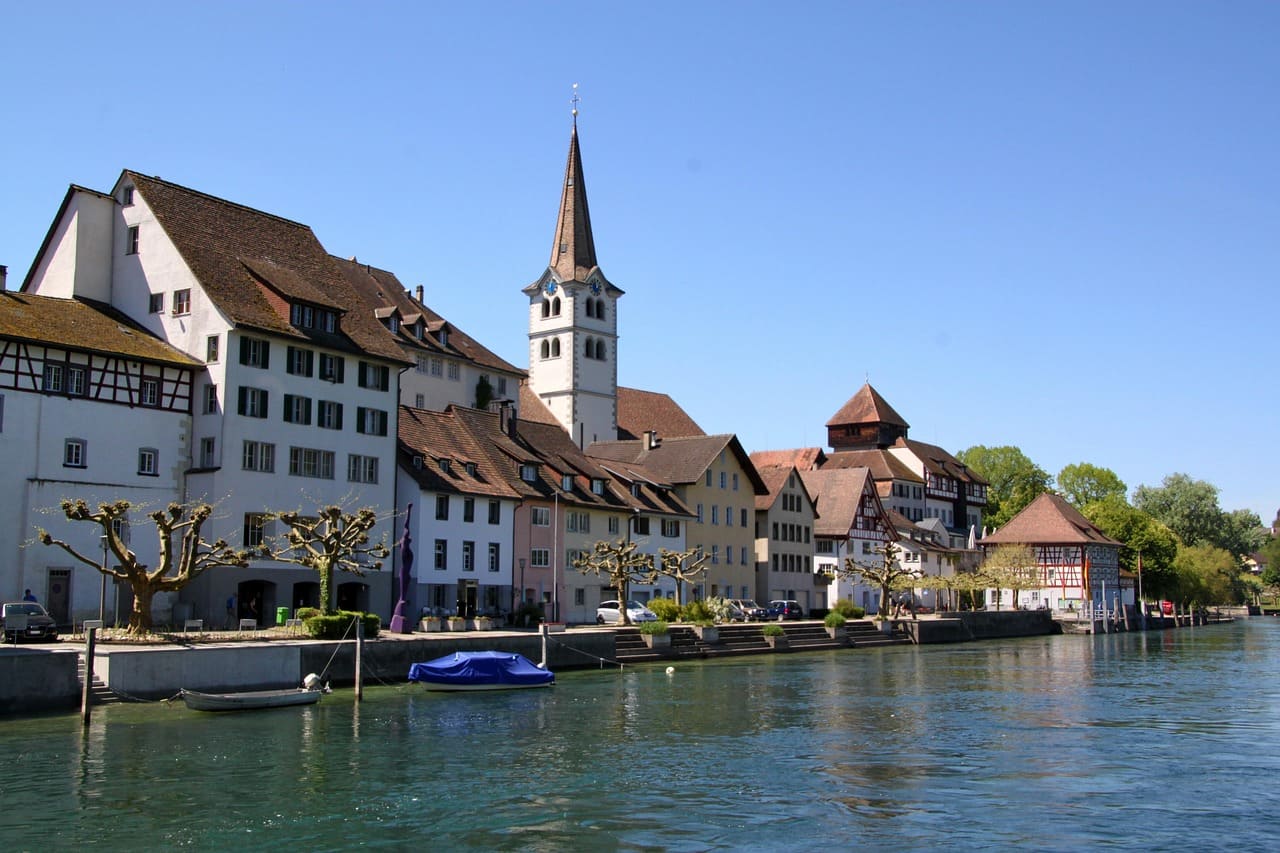
In Canton Thurgau, territorial hunting.
applies. Municipalities lease hunting territories to hunting associations for eight years each. Huntable species include roe deer, wild boar, foxes and badgers. Hunting administration is handled by the cantonal Office for Hunting and Fisheries. The main issue in Thurgau is wild boar, which has spread extensively in the Mittelland and causes damage to agriculture. Official figures are available for hunting year 2024: 2’333 roe deer, 639 wild boar, 729 foxes, 134 badgers, 146 ducks.
Night hunting ban: Composure as system adaptation
While the canton of Schaffhausen viewed the nationwide ban on night hunting in forests as an attack on recreational hunting, Thurgau reacted calmly. The reason is telling: In Thurgau, wild boar are hunted more intensively in fields, where the ban does not apply. Department head Roman Kistler emphasized that "many wild boar are hunted in fields, where the hunting ban does not apply" and that night shootings in forests could be compensated through "alternative methods" such as stalking or driven hunts. Hunting president Frank Gertsch added that "the ban hardly affects him personally, as his hunting already takes place increasingly outside the forest".
Psychologically, this calm reveals an adaptability that does not weaken the system, but stabilizes it. Instead of resisting the restriction, it is pragmatically circumvented. The signal reads: We will not be stopped, we simply relocate. This flexibility shows that recreational hunting is not bound to specific methods, but to the result: killing, regardless of where and how. The "alternative" to night hunting in the forest is not less recreational hunting, but more recreational hunting in the field.
Wild boar: The perfect enemy image
Wild boar is the central legitimation instrument of recreational hunting in Thurgau. It causes damage in agriculture, is nocturnal, difficult to hunt and reproduces despite intensive hunting. Thus it provides the perfect foundation for the narrative of "necessity": Without recreational hunting, wild boar would devastate the fields, so the message goes.
Psychologically, wild boar functions as both scapegoat and source of legitimation. The damage is real. But the conclusion that only recreational hunting can prevent it is false. First, intensive hunting of wild boar leads to increased reproduction: When the lead sow is shot, all female animals in the sounder reproduce, instead of only the high-ranking female. Recreational hunting thus worsens the problem it claims to solve. Second, there are alternative methods of damage prevention: electric fences, acoustic deterrence, area management. These are not pursued, however, because they would make recreational hunting superfluous as an instrument.
Territory hunting: Eight years of dominion
Territory hunting in Thurgau functions according to the usual lease model: hunting societies lease territories for eight years. During this time they have hunting sovereignty over the area. They report their kills at the end of the season, and the number of kills influences the lease fee.
Psychologically, the eight-year lease creates a sense of ownership that goes beyond hunting rights. The hunting society regards "their" territory as their domain. The animals within become "their" game. This ownership logic contradicts the principle that wild animals in Switzerland belong to no one. Psychologically, this is a central contradiction: The legal system says wild animals are ownerless. The territory practice says they belong to the leaseholder. This implicit possessive thinking explains why hunting societies react so sensitively to criticism: They experience it as interference in "their" domain.
Ban on badger baiting: Progress with limits
Thurgau was the first canton in Switzerland to ban badger baiting in 2017. Badger baiting, in which dogs are sent into fox or badger dens and underground fights ensue, is one of the most controversial hunting methods. That Thurgau took the lead here deserves recognition.
Psychologically, however, the den hunting ban also reveals the limits of the system's capacity for reform. It affects a method that is particularly difficult to defend publicly because the cruelty is obvious. Other problematic methods, such as driven hunts on roe deer with shotgun pellets or fox hunting, remain untouched. The system reforms itself where public pressure is greatest, and preserves itself where it is lesser. This is not self-reflection, but damage control.
Thurgau as a Pragmatism Model
Thurgau differs from the Alpine cantons through its pragmatism. Recreational hunting is framed here less as tradition or identity, but as a useful service. One does not hunt because one has always done so, but because someone must keep the wild boar away from the fields. This framing is psychologically effective because it circumvents the fundamental ethical question: Not the killing stands at the center, but the 'service'.
This service framework has a narcissistic structure. Not in the clinical sense, but in the psychological: The recreational hunters in Thurgau define themselves as indispensable. Not passion stands in the foreground as in the Alpine cantons, not tradition as in Jura – but indispensability. 'Without us, the fields would be devastated.' This self-perception as a systemically relevant institution generates a particular immunity against criticism: Whoever criticizes a service provider criticizes the service itself and thus positions themselves against agriculture, against farmers, against the region. Pragmatic narcissism disguises itself as modesty, but is an entitlement attitude: Recognition is not requested, but assumed.
The Geneva Model shows that the 'service' to agriculture can also be provided by professional wildlife wardens. The difference: Professionals act under public mandate, without personal pleasure in killing. Hobby hunters act from personal motivation and legitimize this as 'service'. In Thurgau, this difference becomes particularly visible because the 'service' stands so clearly in the foreground.
More on this in the dossier: Psychology of Hunting
Cantonal Psychology Analyses:
- Psychology of Recreational Hunting in Canton Glarus
- Psychology of Recreational Hunting in Canton Zug
- Psychology of Recreational Hunting in Canton Basel-Stadt
- Psychology of Recreational Hunting in Canton Schaffhausen
- Psychology of Recreational Hunting in Canton Appenzell Ausserrhoden
- Psychology of Recreational Hunting in Canton Appenzell Innerrhoden
- Psychology of Recreational Hunting in Canton Neuchâtel
- Psychology of Recreational Hunting in Canton Thurgau
- Psychology of Recreational Hunting in Canton Nidwalden
- Psychology of Recreational Hunting in Canton Uri
- Psychology of Recreational Hunting in Canton Obwalden
- Psychology of Recreational Hunting in Canton Schwyz
- Psychology of Recreational Hunting in Canton Jura
- Psychology of Recreational Hunting in Canton Basel-Landschaft
- Psychology of Recreational Hunting in Canton Zurich
- Psychology of Recreational Hunting in Canton Geneva
- Psychology of Recreational Hunting in Canton Bern
- Psychology of Recreational Hunting in Canton Solothurn
- Psychology of Recreational Hunting in Canton Aargau
- Psychology of Recreational Hunting in Canton Ticino
- Psychology of Recreational Hunting in Canton Valais
- Psychology of Recreational Hunting in Canton Graubünden
- Psychology of Recreational Hunting in Canton St. Gallen
- Psychology of Recreational Hunting in Canton Fribourg
- Psychology of Recreational Hunting in Canton Vaud
- Psychology of Recreational Hunting in Canton Lucerne
Support our work
With your donation you help protect animals and give voice to their concerns.
Donate now →