Psychology of recreational hunting in the canton of Glarus
Glarus is a canton of contradictions. It is home to the Freiberg Kärpf, the oldest wildlife reserve in Europe, established in 1548. Around 18 percent of the canton's area is designated as federal hunting reserves. At the same time, recreational hunters celebrate their "liberal, efficient hunting practices," and the canton is opening parts of the protected area to hunting. Psychologically, Glarus reveals a fundamental pattern: conservation is celebrated as long as it doesn't challenge the hunting system. As soon as it does, it is dismantled.

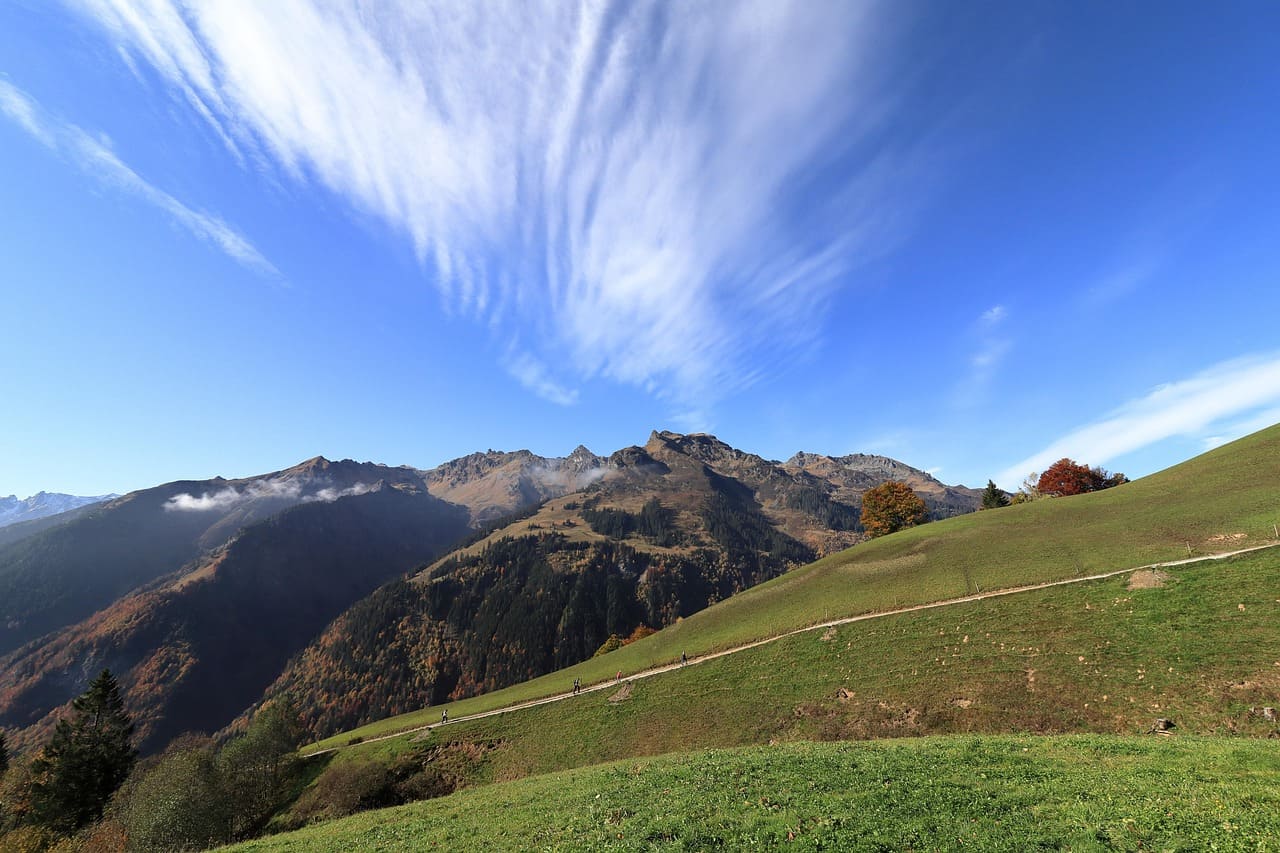
In the canton of Glarus, hunting is practiced with a hunting license .
A hunting license is valid for one hunting season. Four cantonal game wardens oversee hunting and the protection of wildlife. In 2024, recreational hunters bagged a total of 1,304 ungulates: 324 red deer, 532 chamois, 448 roe deer, 14 ibex, and 65 marmots. Additionally, game wardens shot 169 animals in hunting reserves.
Freiberg Kärpf: When protection becomes a bargaining chip
On August 15, 1548, Landammann Joachim Bäldi proposed to the Glarus council that the area around the Kärpf be declared a game reserve . Population growth, the expansion of alpine pastures, and the introduction of firearms had necessitated a ban on hunting chamois and marmots. Almost 500 years later, the Freiberg Kärpf, at 106 square kilometers, is one of the largest game reserves in Switzerland. Ibex, chamois, red deer, roe deer, marmots, golden eagles, bearded vultures, and wolves live here.
In 2023, something happened that must be interpreted psychologically as a dismantling of the conservation concept: The Federal Council removed an eight-square-kilometer area near Elm from the Kärpf hunting reserve. At the same time, an equally large area in the Chrauchtal valley was placed under protection. The canton subsequently introduced "day-by-day hunting of ungulates" in the former reserve. The official justification: The area was an "intensive tourist recreation area."
Psychologically, this process is revealing on several levels. First, protection becomes a bargaining chip: what has been valid for 475 years is being reallocated to serve tourism and hunting interests. The logic of compensation ("an equal area protected elsewhere") suggests equivalence but ignores the fact that wild animals do not adhere to administrative boundaries. Second, the justification of "intensive tourist recreation area" demonstrates a significant shift in priorities: the focus is not on protecting wildlife, but on the usability of the space for people. Third, this process normalizes encroachment on protected areas. Once opened up, it rarely remains an exception.
“Liberal hunting”: Efficiency as an end in itself
The president of the Glarus Hunting Association, Fritz Stüssi, summarized his organization's self-image in 2023 in a remarkable formulation: "The preservation and continuation of our liberal Glarus hunting license system, which remains relevant today – the core task of the Glarus Hunting Association – was once again a resounding success in 2022." He stated that the "only measurable parameter" was the number of animals shot, and that this showed that "despite the high wolf population, the current hunting regulations are still on the right track."
Psychologically, this passage contains several key statements. First, hunting under the license system is framed as "modern" and "worthy of core tasks," without any criteria being given for this assessment. Second, the number of animals killed is declared the sole measure of success: many kills equal good hunting. Animal suffering, ecological impact, population dynamics, or alternatives play no role. Third, the wolf is mentioned, but only as a disruptive factor that has been overcome "nevertheless." The fact that the wolf actually contributes to population reduction is not acknowledged. Recreational hunting remains the sole hero.
Wolf pack Kärpf and Schilt: Proactive regulation as a reflex
Two wolf packs have established themselves in the canton of Glarus: Kärpf and Schilt. In Europe's oldest wildlife reserve, wolves are now hunting, fulfilling precisely the function for which the area was originally created: protecting the ecological balance. But instead of celebrating this return as a success, the canton reacted with requests for regulating the wolf population.
In 2023, the Canton of Glarus applied to the Federal Office for the Environment (FOEN) for permission to cull wolf pups from both packs. Five pups had been identified in the Kärpf pack and three in the Schil pack. The justification given was that both packs had attacked livestock despite herd protection measures. The FOEN authorized the removal of two wolf pups from the Kärpf pack and one from the Schil pack. In 2025, proactive management continued: five wolf pups from the Kärpf and Chöpfenberg packs were authorized for culling.
Psychologically, it is remarkable that livestock kills by wolves in the canton of Glarus decreased by 80 percent in 2024 compared to the previous year, as confirmed by Pro Natura. Herd protection measures are effective. Nevertheless, regulation continues. This shows that wolf management follows a control logic, not a logic based on damage. As long as the wolf is perceived as competition for recreational hunting, it will be regulated, regardless of whether the damage increases or decreases.
Cormorant culls: When a bird becomes a scapegoat
In 2024, the canton of Glarus again ordered the culling of cormorants along the Linth Canal. The justification given was that the grayling population had declined "dramatically"—in fact, only around 60 grayling were counted in the Linth Canal in 2023, a decrease of 95 percent in ten years. The cormorant was declared the prime suspect.
Psychologically, this blame-shifting is a classic scapegoating mechanism. The decline in grayling populations has multiple causes: river engineering, rising water temperatures due to climate change, pesticide pollution, and habitat loss. The cormorant is a natural fish-eater that has always been part of the ecosystem. Declaring it the main problem absolves the authorities of responsibility for structural environmental problems. Shooting a bird is cheaper and politically easier than restoring a river to its natural state. This shifting of systemic causes onto individual animal species is a fundamental pattern in hunting psychology.
Chamois: Shifted sex ratio due to hunting pressure
The chamois population in Glarus shows a "skewed sex ratio": significantly fewer males than females. The canton itself attributes this to hunting pressure. The response: Hunting pressure on chamois below the tree line is being increased to reduce browsing damage in the forest. At the same time, the regeneration of the silver fir, in particular, is classified as "insufficient".
Psychologically, this reveals a familiar paradox: hunting creates a gender imbalance because bucks are preferentially shot as trophies. At the same time, the resulting population pressure is used to justify even more hunting. The canton diagnoses the problem ("skewed sex ratio"), even identifies the cause ("hunting pressure"), but instead of drawing the necessary conclusion (reducing hunting), it intensifies the measures. This is psychologically consistent with a system that cannot question its own existence.
Game wardens in hunting reserves: When protection becomes shooting
In 2024, the Glarus cantonal game wardens, supported by volunteer hunters, culled 169 animals in the hunting reserves. The justification: to prevent deer, stags, and chamois from "eating away at the protective forest," they had to be "culled."
Psychologically, the participation of volunteer recreational hunters in culls within game reserves is a structural contradiction. By definition, a game reserve is a place where recreational hunting is prohibited. When the same recreational hunters who hunt for pleasure outside the reserve act as "volunteer support" for game wardens within it, the boundary between protection and use becomes blurred. The game reserve becomes an administrative construct that is permeable in practice. The Geneva model demonstrates that professional game wardens can fulfill such tasks without recreational hunters.
Glarus as a paradox
No other canton embodies the contradiction between conservation principles and hunting practices as clearly as Glarus. The canton that pioneered wildlife protection in 1548 now opens parts of its protected area to hunting. It harbors wolf packs that protect the forest, yet still regulates their numbers. It diagnoses a hunting-related sex imbalance among chamois and increases hunting pressure. It blames the cormorant for the decline in grayling populations instead of restoring the ecological balance of the waterways.
The "liberal Glarus hunting license" is, psychologically speaking, a system that constantly asserts its own lack of alternatives. The Kärpf mountain has proven for almost 500 years that wild animals can exist without recreational hunting. The fact that the canton is not applying this experience to the rest of the canton, but on the contrary is gradually restricting the protected area, demonstrates the powerful influence of the hunting narrative. Not facts, but identity, determines policy.
More information can be found in the dossier: Psychology of Hunting
Cantonal psychology analyses :
- Psychology of recreational hunting in the canton of Glarus
- Psychology of recreational hunting in the canton of Zug
- Psychology of recreational hunting in the canton of Basel-Stadt
- Psychology of recreational hunting in the canton of Schaffhausen
- Psychology of recreational hunting in the canton of Appenzell Ausserrhoden
- Psychology of recreational hunting in the canton of Appenzell Innerrhoden
- Psychology of recreational hunting in the canton of Neuchâtel
- Psychology of recreational hunting in the canton of Thurgau
- Psychology of recreational hunting in the canton of Nidwalden
- Psychology of recreational hunting in the canton of Uri
- Psychology of recreational hunting in the canton of Obwalden
- Psychology of recreational hunting in the canton of Schwyz
- Psychology of recreational hunting in the canton of Jura
- Psychology of recreational hunting in the canton of Basel-Landschaft
- Psychology of recreational hunting in the canton of Zurich
- Psychology of recreational hunting in the canton of Geneva
- Psychology of recreational hunting in the canton of Bern
- Psychology of recreational hunting in the canton of Solothurn
- Psychology of recreational hunting in the canton of Aargau
- Psychology of recreational hunting in the canton of Ticino
- Psychology of recreational hunting in the canton of Valais
- Psychology of recreational hunting in the canton of Graubünden
- Psychology of recreational hunting in the canton of St. Gallen
- Psychology of recreational hunting in the canton of Fribourg
- Psychology of recreational hunting in the canton of Vaud
- Psychology of hobby hunting in the canton of Lucerne