Psychology of recreational hunting in the canton of Appenzell Innerrhoden
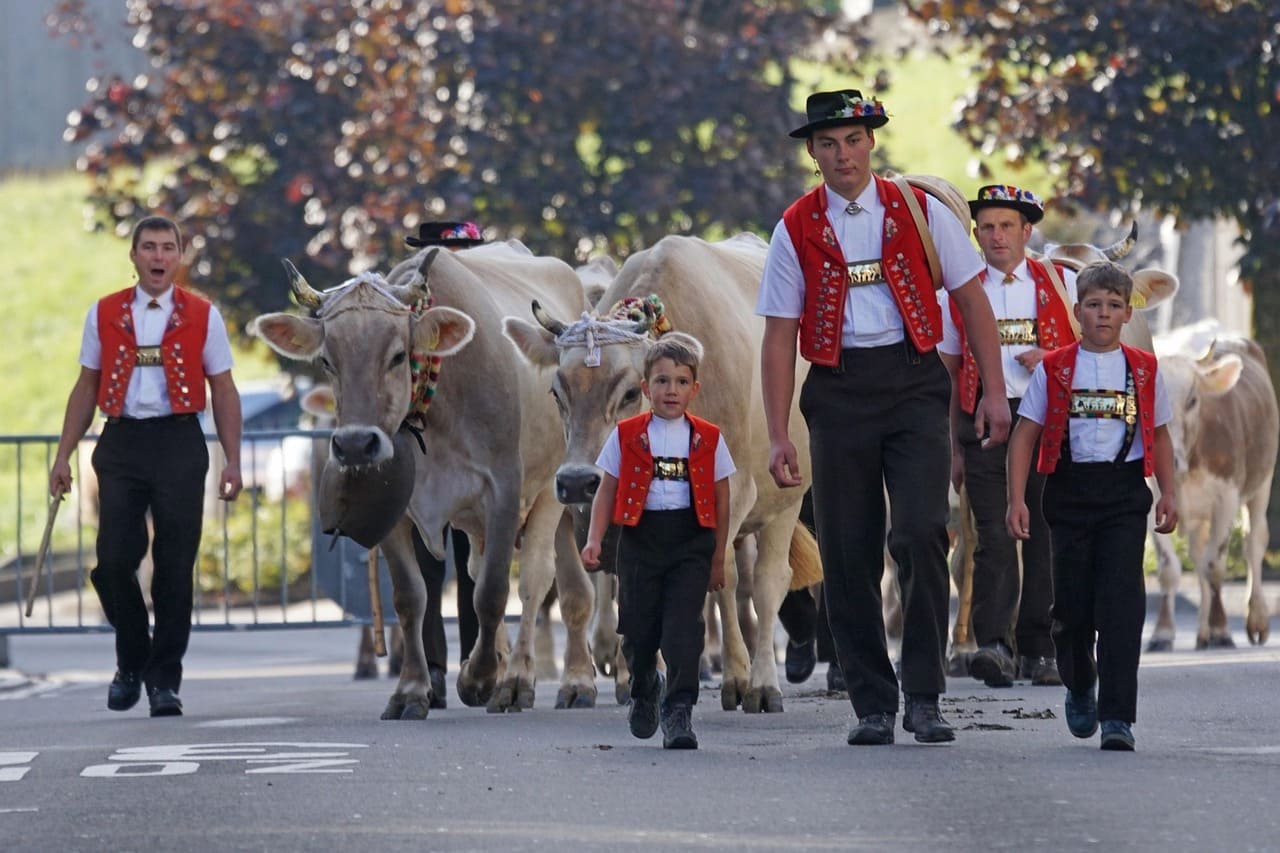
Appenzell Innerrhoden is the smallest full canton in Switzerland and also the most conservative. Here they vote by show of hands at the Landsgemeinde, here Catholic tradition dominates, here recreational hunting is not a fringe phenomenon but part of cantonal identity. The Patent Hunters Association Appenzell Innerrhoden formulates its self-understanding with characteristic clarity: «Loud hunting is an important part of our free patent hunting, for which we are grateful and proud.»


In the canton of Appenzell Innerrhoden, patent hunting.
The Hunting and Fisheries Office at the Construction and Environment Department (BUD) ensures the «appropriate use of native wild mammals and birds» and is responsible for biodiversity, protection of endangered species and limitation of wildlife damage. Hunting patents are issued directly by the department.
«Free patent hunting»: Freedom as a defensive concept
The formulation 'free patent hunting' is psychologically revealing. The adjective 'free' suggests independence, autonomy and resistance against paternalism. It implies that somewhere there exists 'unfree' hunting that must be warded off. In fact, the term refers to the distinction from leasehold hunting, where hunting societies lease territories and enjoy exclusive rights. In patent hunting, theoretically any authorized person can hunt throughout the entire cantonal territory.
But the emphasis on 'freedom' fulfills a deeper psychological function: It links hobby hunting with the Appenzell Inner Rhodes self-perception as an autonomous, self-determined community. The Landsgemeinde, direct democracy, the conservative value system: All of this flows into the framing of hunting as a 'freedom right'. Anyone who wants to restrict hunting is, in this narrative, not only attacking a practice, but Inner Rhodes freedom itself. This equation makes hunting criticism in Inner Rhodes a politically charged act.
'Loud hunting': Pride in the hunt
'Loud hunting' (Link: jagd-ai.ch homepage, accessed March 2026) is not just practice in Inner Rhodes, but an identity marker. In this form of hunting, dogs are used to drive game from their cover. The animals flee in panic, the dogs bark, the recreational hunters stand ready at the crossings. That the patent hunters' association describes this practice as a subject of 'gratitude and pride' reveals the psychological dimension: loud hunting is not perceived as an animal welfare problematic method, but as cultural heritage that must be defended.
The Swiss Animal Protection (STS) and the Foundation for the Animal in Law (TIR) have criticized drive and movement hunts for years as methods that 'subject wild animals to extreme stress and bring considerable injury risks as well as the danger of missed shots'. That the same method in Inner Rhodes is associated with pride shows how far the normalization of animal suffering can go in closed hunting cultures.
Intercantonal red deer planning: Coordination without the fundamental question
Since 2014, the hunting administrations of the cantons Appenzell Inner Rhodes, Appenzell Outer Rhodes and St. Gallen have coordinated population surveys and hunting planning for red deer in the shared wildlife area. The red deer population is described as 'undiminished high'. This coordination appears professional and data-based. Psychologically, however, it obscures the fundamental question: Why does the population remain 'undiminished high' despite years of intensive hunting?
The answer lies in population dynamics: Intensive hunting increases the reproduction rate, changes age structures and leads to compensatory growth. Hobby hunting produces the populations that it then cites as justification for its existence. The intercantonal coordination makes this cycle more efficient, but not more sensible.
Landsgemeinde democracy and hunting criticism
Appenzell Inner Rhodes is one of the last cantons with Landsgemeinde. This form of direct democracy, where voting is done by show of hands, results in strong conformity pressure: those who deviate are visible. This also applies to hunting policy questions. In a canton where hobby hunting is framed as a freedom right and the patent hunters' association expresses 'gratitude and pride', public hunting criticism is tantamount to an attack on the community.
Psychologically, this explains why Innerrhoden is practically invisible in Switzerland's hunting-critical landscape. There is no public debate, no parliamentary initiatives, no civil society initiatives against recreational hunting. Not because the issue is irrelevant, but because the social price for dissent is too high. In a community where everyone knows everyone and votes publicly, conformity is not an option but a survival strategy.
The Geneva Model is not a topic in Innerrhoden. In a canton where hunting is understood as a fundamental right, the idea of abolishing hunting is not only politically but culturally unthinkable. This makes Innerrhoden the most conservative hunting canton in Switzerland and simultaneously the psychologically most stable: A system that is never questioned needs no defense mechanisms.
More on this in the dossier: Psychology of Hunting
Cantonal Psychology Analyses:
- Psychology of Recreational Hunting in Canton Glarus
- Psychology of Recreational Hunting in Canton Zug
- Psychology of Recreational Hunting in Canton Basel-City
- Psychology of Recreational Hunting in Canton Schaffhausen
- Psychology of Recreational Hunting in Canton Appenzell Ausserrhoden
- Psychology of Recreational Hunting in Canton Appenzell Innerrhoden
- Psychology of Recreational Hunting in Canton Neuchâtel
- Psychology of Recreational Hunting in Canton Thurgau
- Psychology of Recreational Hunting in Canton Nidwalden
- Psychology of Recreational Hunting in Canton Uri
- Psychology of Recreational Hunting in Canton Obwalden
- Psychology of Recreational Hunting in Canton Schwyz
- Psychology of Recreational Hunting in Canton Jura
- Psychology of Recreational Hunting in Canton Basel-Country
- Psychology of Recreational Hunting in Canton Zurich
- Psychology of Recreational Hunting in Canton Geneva
- Psychology of Recreational Hunting in Canton Bern
- Psychology of Recreational Hunting in Canton Solothurn
- Psychology of Recreational Hunting in Canton Aargau
- Psychology of Recreational Hunting in Canton Ticino
- Psychology of Recreational Hunting in Canton Valais
- Psychology of Recreational Hunting in Canton Graubünden
- Psychology of Recreational Hunting in Canton St. Gallen
- Psychology of Recreational Hunting in Canton Fribourg
- Psychology of Recreational Hunting in Canton Vaud
- Psychology of Recreational Hunting in Canton Lucerne
Support our work
With your donation you help protect animals and give voice to their concerns.
Donate now →