Protecting the Breeding Season: Acting Responsibly Towards Nature
Disturbances contribute to the decline of biodiversity. Even a walk with a dog can cause birds to have less space for nesting. The simplest solution to avoid disturbing nesting birds is to keep dogs on a lead.

The breeding season has begun, a time when birds need sufficient peace and quiet to nest.
The beautiful spring weather also draws us humans outside and invites all manner of leisure activities. However, our mere presence in nature can disturb birds and their nesting activities. To reduce our impact on nature, we should venture into the natural world with respect. This means: observing applicable rules, staying on marked paths, and keeping dogs on a lead.
Since many birds perceive our presence as a threat, they must remain more vigilant and are unable to devote themselves to vital activities such as raising their young or foraging for food. This is compounded when a person is accompanied by a dog, further increasing the flight distance. Birds can, to a certain extent, become accustomed to people with dogs if they keep to the paths. Unpredictable disturbances, however, such as dogs running freely off the paths, trigger strong flight responses in birds and, in the worst case, cause a bird to abandon an area entirely. This often happens quietly and unnoticed, which is why the problem frequently goes unrecognised as such.
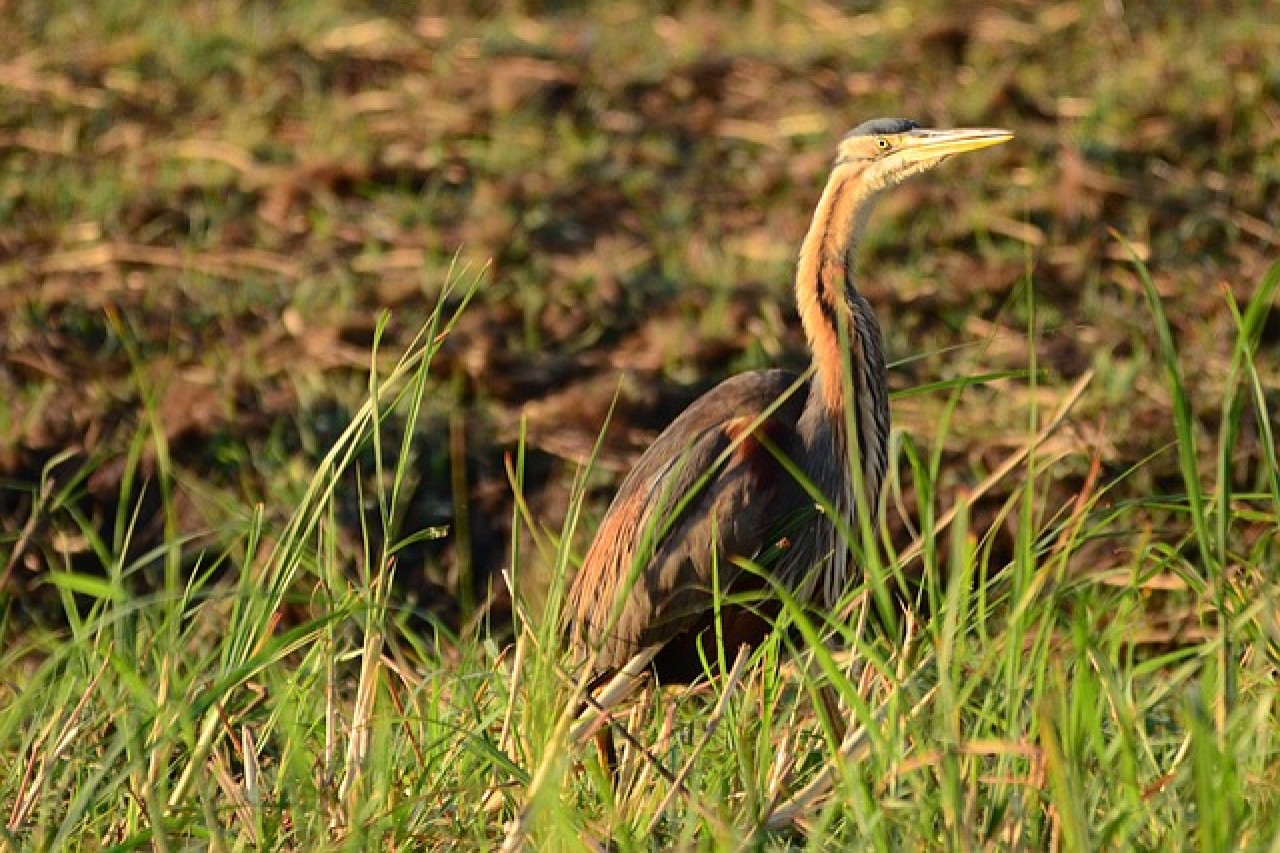
Disturbances in nature reserves have already caused purple herons to abandon their broods. The species is critically endangered in Switzerland, with only 6–17 pairs nesting here.
A study from Great Britain showed that European nightjars abandoned their broods when dogs approached. In Switzerland, only around 50 breeding pairs nest here. It is therefore all the more important that this ground-nesting bird is protected from free-roaming dogs in its already limited habitat.
In Switzerland, all habitats are affected, but wetlands in particular. 90% of all moors have been destroyed since 1850 and less than half of all waterways are in a near-natural state. If the small remnants of these habitats are further reduced by disturbances, this endangers the survival of already threatened species such as the purple heron.
In agricultural land, forests and mountains, species that nest on the ground are particularly affected. Many cantons have laws requiring dogs to be kept on a leash. What is crucial, however, is that we humans consistently abide by these rules, for the benefit of our feathered friends and all of nature.
More on the subject of recreational hunting: What the research says about this is shown by Hunting fact-checked: the state of research.
The position of IG Wild beim Wild: IG Wild beim Wild rejects recreational hunting. Our model is the canton of Geneva, which has managed without recreational hunting since 1974: without hunting seasons, without hunting dogs, without driven hunts, without high seats, without the animal cruelty and crime that go hand in hand with hunting season elsewhere. What has worked there for over fifty years disproves every position paper by JagdSchweiz. An association that bases its policy on claims it refutes in its own documents is not a professional organisation, but a factory for misinformation.