
World Day Against Hunting: 133’508 wild animals killed in 2025
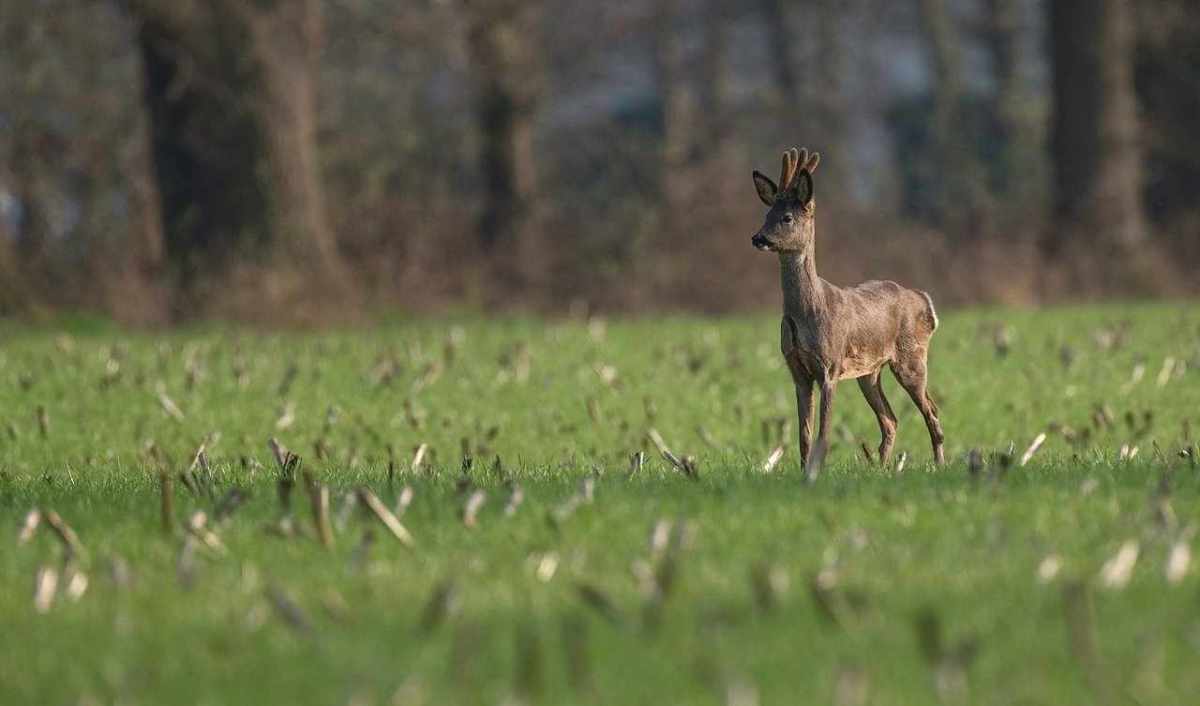
In 2027, too, the IG Wild beim Wild is calling for the 11 November to be marked as the World Day Against Hunting. This recurring day of action is directed against recreational hunting and, every year, creates visibility for a debate that is long overdue in Switzerland: who decides over life and death in the wild, and why is the killing of wild animals still allowed to count as a leisure pastime? You can read the background to the day of action in the article “Why exactly a World Day Against Hunting?”. Two days later, on 13 November, comes the Day of the Fox.
A day that demands action
Advocates of recreational hunting like to present it as tradition, nature conservation or population control. The official figures tell a different story. According to Federal Hunting Statistics, 133,508 wild animals were killed in Switzerland in 2025, including 42,789 roe deer, 20,938 foxes and 9,305 chamois. In the "kill" category alone, the figure was 124,601 animals. That is 341 non-human animals a day, one every four minutes.
Red List species such as the woodcock, the brown hare and the mountain hare continue to be shot as well. Then there are the animals that are merely wounded: over ten years, more than 3,000 animals of six frequently hunted mammal species were found to have died from gunshot injuries. How many die undiscovered in the undergrowth, nobody knows. At the same time, more than a third of native plant, wild animal and fungus species are considered threatened, and Switzerland ranks last in Europe when it comes to designating protected areas for biodiversity.
Why 11 November in particular?
The date is deliberately chosen. In the middle of the hunting season, the World Day sets a counterpoint to the routine of the driven hunts, a moment of reflection instead of bloodshed. At a time when biodiversity loss and habitat destruction are reaching historic proportions, recreational hunting stands as a symbol of an outdated understanding of nature: nature as a resource to be controlled and steered, rather than respected in its autonomy. The day also falls in the period of the Hubertus masses, in which churches bless killing as custom.
The 2027 programme
- Countdown "11 Facts in 11 Days": From 1 to 11 November, IG Wild beim Wild will publish one documented fact about recreational hunting in Switzerland every day, ready to be shared on social media. Last year's facts can be found in the article “11 Facts about Recreational Hunting”.
- 11:11 a.m., one minute of silence: On 11 November at 11:11 a.m. we pause for one minute, in memory of all wild animals that have fallen victim to recreational hunting. Anyone can take part anywhere: at home, at work or in the forest (“One Minute of Silence for Wild Animals”).
- Alive, not killed: Instead of trophy photos, on 11 November we show photos of living wild animals in their habitat. Anyone taking part shares a picture of their own with the hashtag #WelttagGegenDieJagd.
- The figure for your own canton: How many wild animals are killed in your own canton is set out in the dossier Swiss Hunting Statistics. Sharing your canton's figure makes visible what is happening on your own doorstep.
- No Hubertus masses in churches: The petition «No Hubertus Masses in Churches» calls on the cantonal churches to stop sanctifying recreational hunting.
- No firearm without a suitability test: Anyone buying a hunting rifle in Switzerland never has to prove that they are psychologically fit to do so. The petition by IG Wild beim Wild aims to change that.
- Fox Week until 13 November: The World Day Against Hunting and Fox Day together form an action week against fox hunting, with a call to write directly to the cantonal parliaments.
- Beyond borders: In 2026, people from Italy, Germany and Austria also took part on social media. In 2027, IG Wild beim Wild invites animal welfare and animal rights organisations across Europe and beyond to support the World Day Against Hunting. Organisations that would like to take part can get in touch at info@wildbeimwild.com.
What everyone can do
- Write to your cantonal parliament: Addresses and template letters can be found on the page Stop fox hunting. Personal messages to politicians have more impact than any anonymous criticism.
- Inform and share: Spread posts on social media with hashtags such as #WelttagGegenDieJagd, #StopHobbyJagd or #WildlifeNotTrophy.
- Show a public presence: A walk in the forest, a photo of a wild animal in its natural habitat or a silent vigil all make the message visible.
- Sign petitions: All current petitions by IG Wild beim Wild can be found on the page Petitions.
- Get active locally: Support local initiatives, visit nature reserves and protect habitats, without relying on recreational hunting as a supposed “regulation”.
- Demand transparency: Ask municipal administrations and environmental agencies for transparency on the allocation of hunting rights and on wildlife management.
- Rethink in the long term: Reconsider consumption habits and promote educational programmes on wildlife protection without hunting.
The demand: abolish recreational hunting
IG Wild beim Wild calls for the abolition of recreational hunting in all cantons, following the example of the the canton of Geneva. There, recreational hunting has been banned since 1974. Where intervention is necessary on professional grounds, trained state game wardens act. A "fox plague" or other consequences predicted by recreational hunters do not appear in the federal statistics for Geneva.
From day of action to political motion
Anyone who wants to make an impact beyond 11 November can carry the visibility of the day of action directly into the cantonal parliaments. For this purpose, IG Wild beim Wild provides more than 80 ready-drafted "template texts for hunting-critical motions in cantonal parliaments" free of charge, ranging from motions and postulates to cantonal popular initiatives. The scientific background, sources and arguments can be found in the dossiers on wildbeimwild.com and in the study collection Hunting Fact Check. Each text can be adopted, adapted to the canton and submitted. In this way, a symbolic day becomes a concrete political lever against recreational hunting.
An appeal
Talking about nature conservation is not enough. Every conscious decision, every conversation, every gesture counts. The World Day Against Hunting offers the opportunity to ask uncomfortable questions loudly and publicly, in the name of a wilderness in which the lives of animals are not threatened by bullets.
Recreational hunting is not a necessity but a leisure pursuit at the expense of non-human animals.