Polar Bears: Russia Begins the Count
Amid growing concern from climate and animal welfare advocates about polar bears, Russia is conducting its first-ever census of the entire population within its territory.

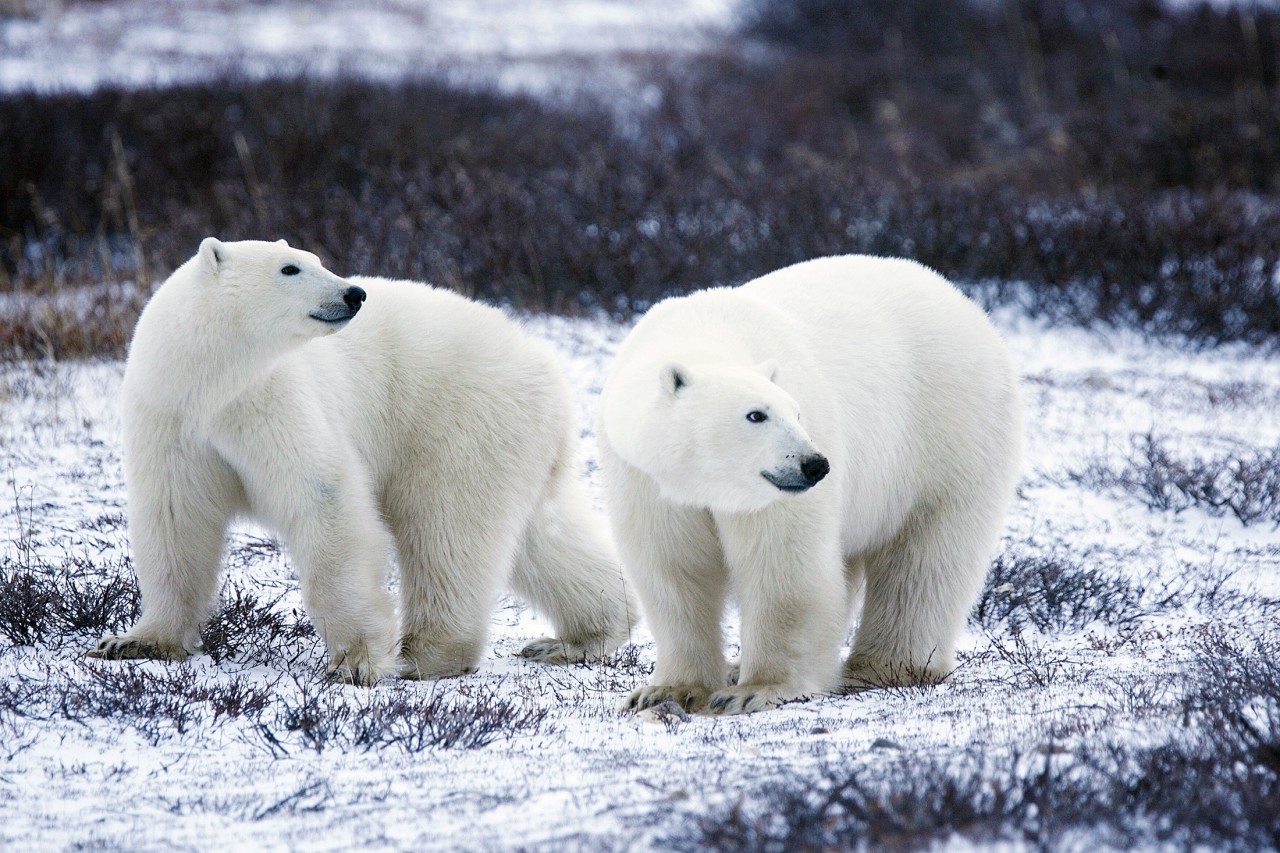
Amid growing concern from climate and animal welfare advocates about polar bears, Russia is conducting its first-ever census of the entire population within its territory.
The goal of the largest monitoring effort in history is to gain an overview of the situation facing the endangered predators. Further measures are also to be put in place to allow the polar bear population to recover. This was announced by the Kremlin and the Ministry of Natural Resources in Moscow. The polar bear, one of the largest land predators, is native to the northern polar regions.
Its habitat spans the area of the Arctic Ocean, which borders five countries — in addition to Russia, these are the USA, Canada, Norway, and Greenland, which belongs to Denmark. According to the ministry, Russia intends to begin the count in the Chukotka region in the far northeast of Siberia. Aerial surveys are then planned in the marginal seas of the Arctic Ocean, and finally in the Barents Sea and on Franz Josef Land.
The research project is expected to continue until 2023. Due to the melting of Arctic ice as a result of global warming, climate and animal welfare advocates repeatedly warn that the habitat of polar bears is shrinking. Most recently, Russian authorities reported that the animals are venturing further and further into human-inhabited areas in search of food.
The residents of the Russian village of Ryrkaipiy on the shores of the Arctic Chukchi Sea, for example, recent years have regularly sounded the alarm as polar bears venture dangerously close to settlements. Patrols had to be dispatched to drive the animals away from the houses. In February 2019, as many as 50 polar bears spent weeks near human settlements on the Novaya Zemlya archipelago. The authorities subsequently declared a state of emergency. The animals were eventually driven away.
More on the subject of recreational hunting: In our dossiers on recreational hunting gather fact-checks, analyses and background reports. What the research says about this is shown by Hunting fact-checked: the state of research.
The position of IG Wild beim Wild: IG Wild beim Wild rejects recreational hunting. Our model is the canton of Geneva, which has managed without recreational hunting since 1974: without hunting seasons, without hunting dogs, without driven hunts, without high seats, without the animal cruelty and crime that go hand in hand with hunting season elsewhere. What has worked there for over fifty years disproves every position paper by JagdSchweiz. An association that bases its policy on claims it refutes in its own documents is not a professional organisation, but a factory for misinformation.