Polar bear hotel in China: Profiting from misery
A hotel is opening in Harbin where guests can observe distressed polar bears around the clock. Animal welfare organisations are protesting.

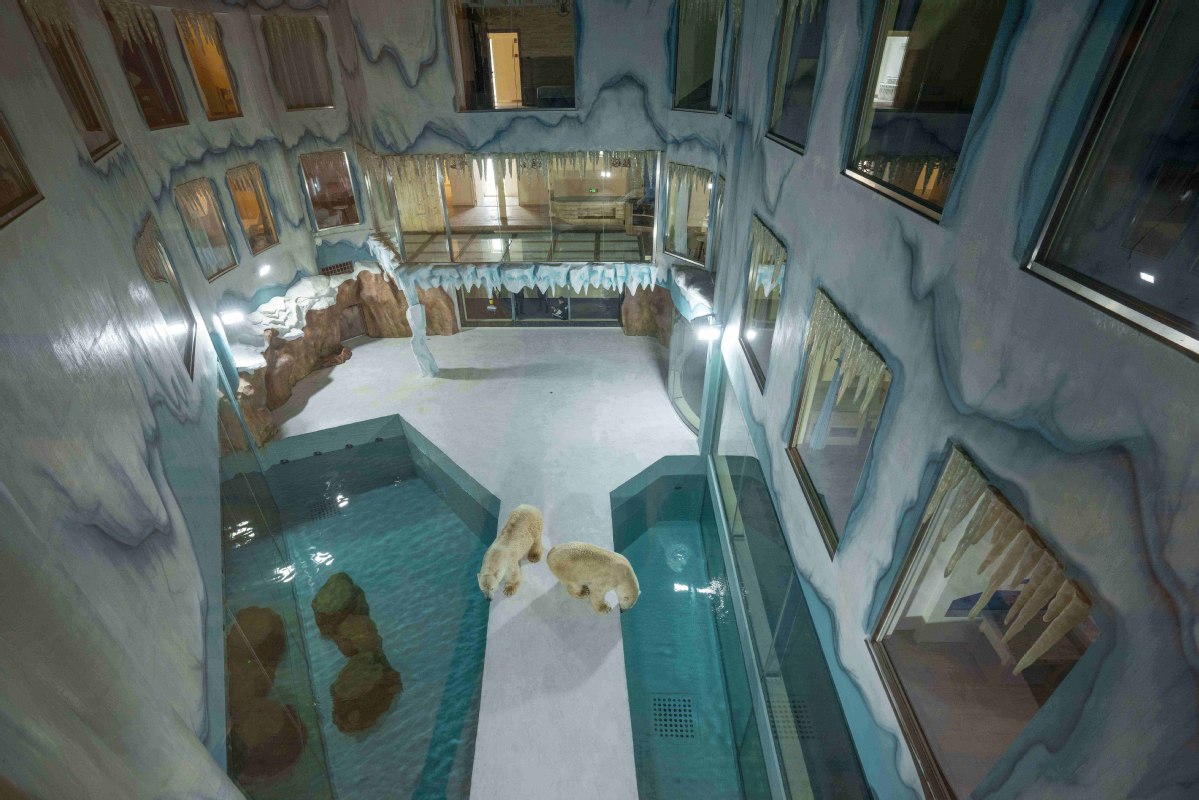
This week, a new hotel opened in the northern Chinese city of Harbin, where guests can observe distressed polar bears from their rooms around the clock.
The Harbin Polar Park spent 15 million francs to build the world's first polar bear hotel, designed jointly by the renowned Russian designer Kozylenko Natalia Yefremovna and the renowned Japanese theme park designer Shuji Miyajima.
Harbin is famous for its ice sculpture festival, and the hotel resembles a giant igloo with a roof covered in artificial ice.
To offer visitors a better experience and improved views, the hotel features 33 armoured glass window rooms distributed across various functional areas of the hotel. Visitors can look down on polar bears – an endangered species – and dine in the presence of the polar bears. In every room, they can watch polar bears through the toughened glass and «sleep alongside» the polar bear at night.
Animal welfare advocates have urged guests to stay away from the hotel. PETA Vice President Asia Jason Baker said: «PETA urgently calls on customers to stay away from this hotel and any other establishment that profits from the suffering of animals.»


Mr Baker said polar bears are active in the wild for up to 18 hours a day and roam home ranges that can stretch across thousands of kilometres, where they enjoy real life.
Mr Baker added: «Polar bears belong in the Arctic, not in zoos or glass tanks in aquariums – and certainly not in hotels«.
«The greedy, exploitative aquarium industry, which is out of place in today's increasingly conscious world, is built on the suffering of intelligent, social beings who are denied everything that is natural and important to them.»
Gaps in China's animal protection law allow companies to exploit animals without regard for their welfare, according to a spokesperson for the China Animal Protection Network.
Chinese authorities recently amended the law to ban the consumption of wild animals as food, after speculation about the origin of the coronavirus led investigators to a Wuhan market where live animals were being sold.
However, the use of parts from endangered species in traditional medicine remains widespread, and Chinese circuses and zoos are frequently criticized for poor standards of animal housing and care.