Patent hunting as a solution to red deer conflicts?
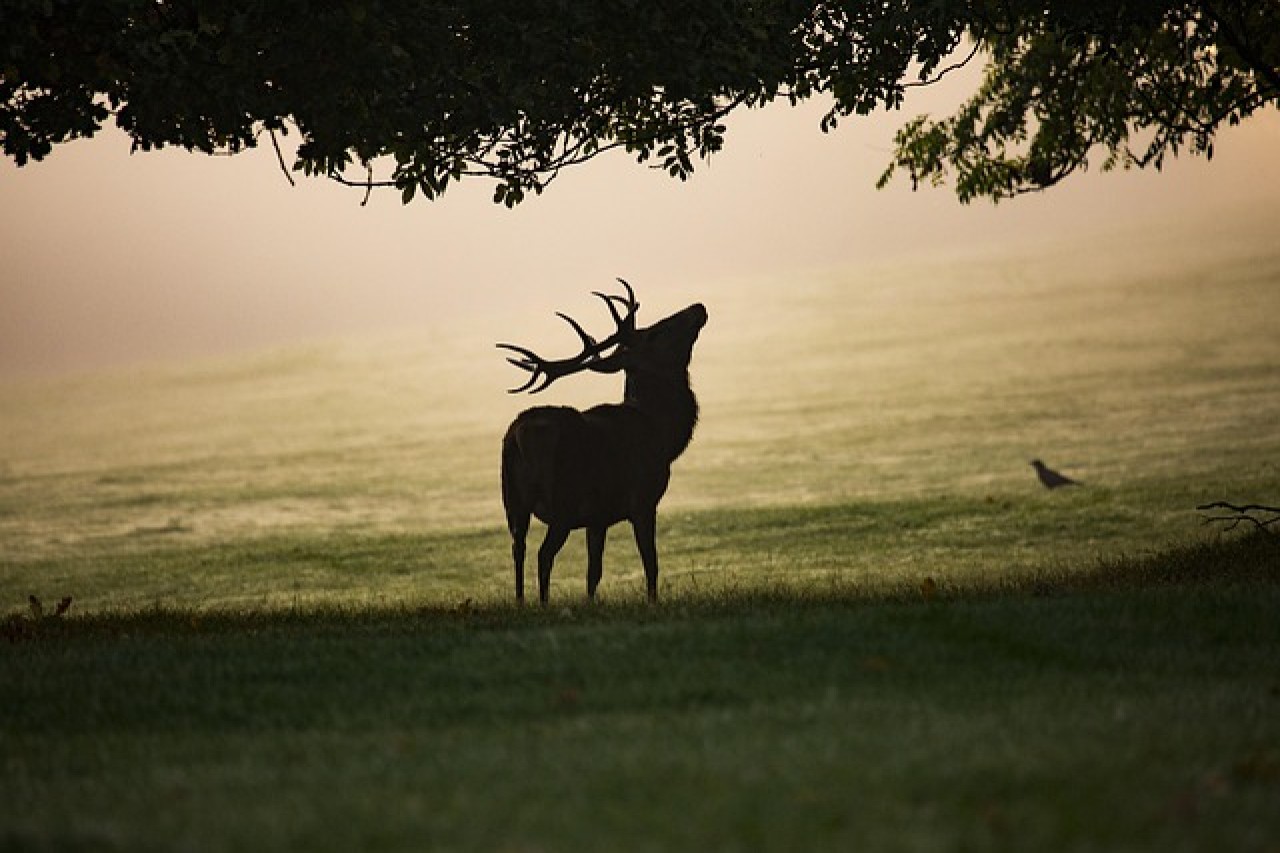
A letter to the editor on Linth24 cuts to the heart of a contentious demand: the canton of St. Gallen should introduce patent hunting in order to hunt 'stag deer' more intensively, thereby reducing forest and agricultural damage as well as wildlife accidents. The author is forest owner and hobby hunter Urs Britt from Wattwil. The text also claims that the red deer population has 'almost tripled' over 20 years and currently stands at around 2,500 animals despite ongoing culling.

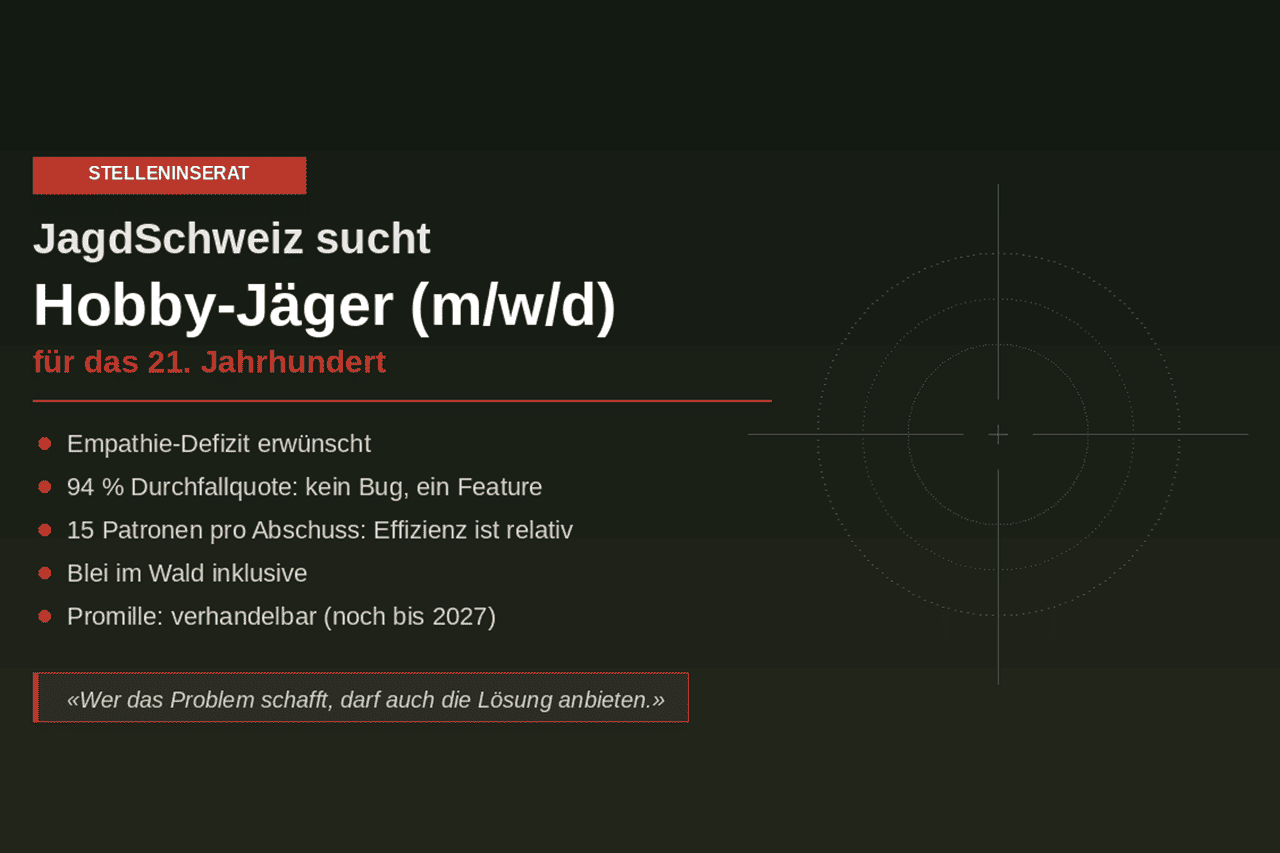
At first glance, the demand appears logical: where conflicts exist, hobby hunting must become more 'effective'.
On closer inspection, however, it becomes clear: the debate is less a matter of 'too little hunting' and more a question of objectives, responsibilities, data, enforcement, and a system that produces suffering without reliably resolving conflicts.
1) Political background: 'course correction' through higher culling quotas
Linth24 places the letter to the editor within the context of a political motion: three SVP cantonal councillors (Christian Vogel, Bruno Schweizer, Marco Gadient) consider the increase in deer numbers to be problematic and are calling for more culling in the canton of St. Gallen. The letter is published as a reinforcement of this position.
What is important here: this is not solely about population numbers, but also about interpretive authority. Whoever defines the problem usually defines the solution as well. Within this logic, the answer is almost always: kill more animals, faster, more broadly, with fewer restrictions.
2) The figure that is supposed to decide everything: '2’500 animals'
The figure 2’500 creates a sense of urgency and suggests a simple consequence. What is missing, however, is context:
- Where exactly are the conflict hotspots located?
- How significant and demonstrable is the actual impact on forest regeneration?
- How have damage levels developed over multiple years?
- What specific effect have the hunting measures taken so far actually had?
Without this context, the figure is above all one thing: a political lever.
3) Hunting statistics: High target achievement, yet rising populations
The canton of St. Gallen reported for the 2023 hunting year: Over 800 red deer were shot, and culling targets were met at 97 percent across the canton. At the same time, the canton notes: Red deer populations continue to rise.
This is where the core conflict lies. If culling plans are fulfilled almost entirely, the problem is not automatically 'insufficient hunting.' Other factors then move to the foreground: habitat quality, immigration, distribution of animals, disturbance pressure, hunting organisation, protected areas, and feeding effects from agriculture and mild winters.
Anyone demanding a change of system under these circumstances must demonstrate why licence hunting is better suited to managing these factors. Precisely this evidence is absent from the letter to the editor.
4) A question of trust: Enforcement and credibility are part of the debate
The call for 'more effective hunting' depends on trust: in data, in oversight, and in proportionality. This trust has not gone unchallenged in the canton of St. Gallen in recent years.
Wild beim Wild has for some time been documenting criticism of the St. Gallen hunting administration, including in connection with wolf management, hunting education, permits, and cases from the hunting community. Regardless of how individual allegations are assessed, one point is particularly relevant: there is a judicial correction that touches on the question of diligence and documentation quality in enforcement.
Federal Supreme Court: Culling order was unlawful (30.06.2025)
The Federal Supreme Court held in its ruling of 30 June 2025 that a St. Gallen culling order against a wolf in the Schils and Weisstannental was unlawful, because, among other things, herd protection had not been sufficiently examined and documented prior to the cull. Pro Natura was successful with an appeal.
Political irritations surrounding the head of department
There were also political irritations. In 2024, SRF and eastern Swiss media reported on criticism of a wolf-hunting trip to Russia undertaken by a St. Gallen department head, which sparked cross-party debate.
For the patent hunting demand, this means: a system change is being sold as a technical solution, but presupposes an administration that is perceived as neutral, transparent, and legally compliant. Those who demand 'more culling' should therefore explain with equal clarity how data quality, oversight, accountability, and external review are to be improved.
5) Territory-based hunting vs. patent hunting: Labels are no substitute for impact assessment
Territory-based hunting with leased hunting grounds is well established in St. Gallen. Patent hunting would change the principle: instead of hunting societies with territorial responsibility, individual patent hunters would hunt according to cantonal rules.
The letter to the editor claims that patent cantons shoot 'significantly more stags' and that populations there are 'in decline'. This sounds like fact, but remains in the text an assertion without any data basis.
What matters is not the label, but the design: hunting seasons, quotas, controls, rest zones, hunting pressure, protected areas, and data quality. A system change can also generate new problems, such as greater hunting pressure, more disturbance in the forest, displacement into areas difficult to hunt, and perverse incentives through trophies.
6) Forest damage is real, but 'shooting more' is not automatically forest protection
The Federal Office for the Environment (BAFU) states clearly: wild ungulates can inhibit natural forest regeneration when populations are too large or when animals are unfavourably distributed due to disturbance. It is precisely the second component that is critical: not only 'how many', but also 'where' and 'why there'.
The BAFU has developed an implementation guide for wildlife-forest conflicts that relies on integrated management: data collection, impact analysis, target achievement monitoring, and a mix of measures. Forests are not protected by a single instrument, but through consistent monitoring, prevention, habitat management, and hunting interventions where they demonstrably work.
Those who speak of forest protection must therefore also address rest zones, recreational pressure, forest structures, hunting pressure, and the long-term development of forest regeneration. The letter to the editor reduces this complexity to a question of culling quotas.
7) Wildlife accidents: A strong argument, but not a shortcut
The letter to the editor emphasizes the danger of wildlife accidents and invokes a 150-kilogram stag as a dramatic image. Yes, collisions can have serious consequences. However, road safety cannot be seriously discussed through the lens of hunting regimes alone.
Hotspots, vehicle speed, wildlife crossing corridors, fencing, warning systems, and seasonal animal movements are at least equally relevant. Anyone who takes safety seriously must also consider infrastructural measures and spatial planning. Otherwise, what remains is an emotionally powerful argument that serves political purposes but falls short in reality.
8) 'No Interest from the Canton': Responsibilities and Transparency
Particularly sensitive is the accusation that authorities have 'absolutely no interest' and that forest owners receive barely any compensation for damages. The letter to the editor even cites a figure of just 1’000 francs per year canton-wide for red deer damage.
The cantonal information on the subject of wildlife damage shows, however, that those affected must take initiative, that self-help measures exist, and that the hunting association is named as a point of contact. This is not an all-clear, but it contradicts the claim that there is fundamentally no framework in place.
What is lacking is transparent, publicly accessible and evaluable data on types of damage, prevention efforts, costs, and decision-making practices. Without this transparency, a space emerges in which blame assignments replace facts.
Fact Box: What Does Patent Hunting Mean?
Territory-based hunting: Hunting rights are leased to hunting associations in fixed territories. Responsibility and enforcement are largely organized around these territories.
Patent hunting: The recreational hunters purchase a permit and hunt according to cantonal rules within defined areas and timeframes. Management is carried out through quotas, hunting seasons, controls, and exceptions such as protected areas.
Important: It is not the label that matters, but the specific design. Patent hunting can increase hunting pressure and displace animals more significantly. It can also make administration and oversight more complex.
Patent hunting is not a nature conservation concept — it is a hunting model
The call for patent hunting is being marketed as a pragmatic reform. Yet the official figures show that culling targets are already being largely met. At the same time, populations continue to rise. This does not automatically point to 'shooting even more,' but rather calls for an honest debate about causes, objectives, and effectiveness.
For wildbeimwild.com, the central question remains: Is this about forest protection and safety, or about expanding hunting opportunities under the label of 'management'? Anyone who wants to protect biodiversity in the forest must offer more than the same answer to every problem: more culling.
Dossier Wildlife Management St. Gallen:
- Dominik Thiel: Wolf hunter at taxpayers' expense – a department head as a security risk for wildlife protection
- Psychology of hunting in the canton of St. Gallen
- Hunting season until New Year's Eve: culling pressure instead of wildlife management
- Patent hunting as a solution to red deer conflicts?
- Wildlife management St. Gallen: wolf management without science and without credibility
- The permit to shoot a wolf in the canton of St. Gallen was unlawful
- Public dumbing-down in the canton of St. Gallen
- Office for Hunting and Nonsense in St. Gallen modernises hunting education
- St. Gallen wants to regulate wolf pack at Gamserrugg
- Controversy surrounding a Swiss official at wolf hunting in Russia
- 'Experts' in St. Gallen end wolf regulation for this winter
- The rotten apple in the St. Gallen wildlife management authority
- Lying hunter appointed department head in the canton of St. Gallen
- St. Gallen: Stop the fox and badger massacre
- Are FOEN and the wildlife management authorities still operating responsibly?
- How hobby hunter Simon Meier leads people down the wrong track