Night of the Fox: 50 dead foxes in Salzburg
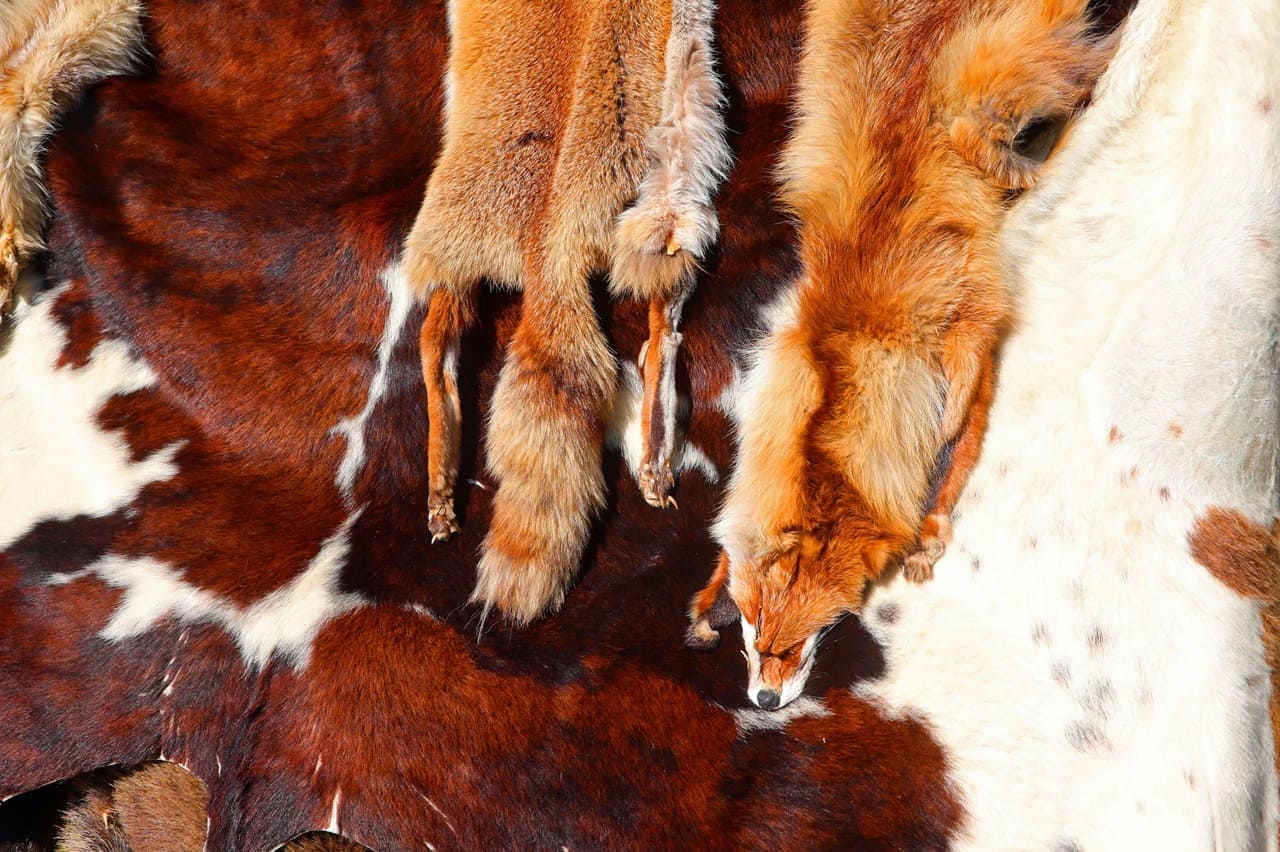
In Scheffau in Tennengau (Salzburg), dead wildlife was publicly displayed in a field after a hunting event. Animal welfare organizations report around 50 foxes and numerous martens. Protests erupted and police monitored the situation. The case is more than a local controversy: It exemplifies how recreational hunters stage violence as tradition and how quickly ethics, ecology and animal welfare are trampled underfoot.

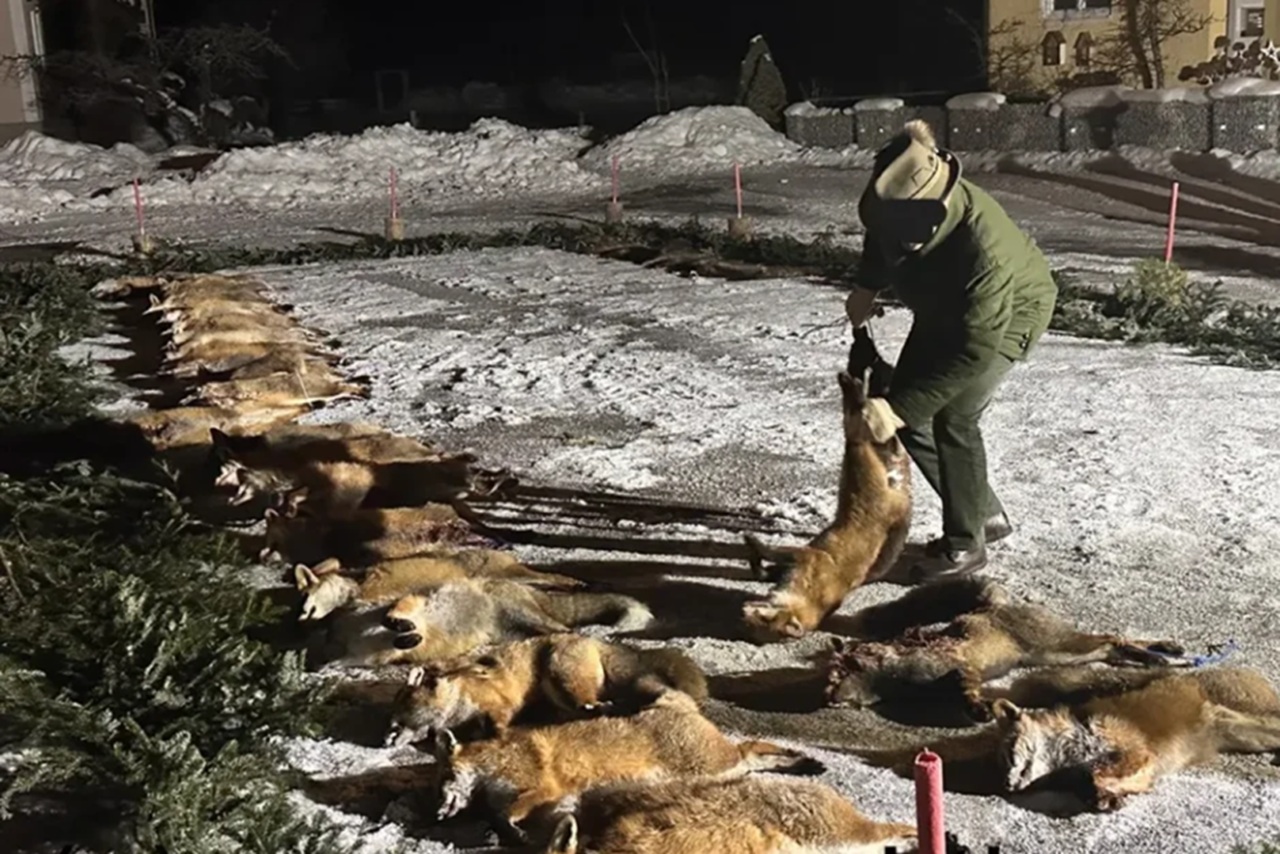
According to the report by 5min.at, the so-called «Night of the Fox» took place in Scheffau as part of animal cruelty.
Subsequently, recreational hunters laid out several killed animals, including according to animal welfare organizations around 50 foxes as well as numerous martens. The public presentation triggered outrage, accompanied by a demonstration by animal rights activists. No incidents were reported, police were present.
Problematic symbolism: When killing becomes a spectacle
The laying out of the 'bag' is often described by the hunting community as tradition. In public perception, however, it appears as a victory staging over killed animals. This is precisely where the narrative collapses: Those who claim that recreational hunting is 'service to nature', while simultaneously arranging dozens of carcasses as backdrop, produce an image of dominance, not responsibility. The protest in Scheffau therefore ignited not only over the number of killed foxes, but over the message this ritual sends: killing is normalized, aestheticized and socially rewarded. If a soldier or police officer were to publish such grinning trophy photos with his victims, he would be dishonorably discharged and committed to a psychiatric clinic.
The standard justifications are shaky
The reports mention two typical justifications: rabies and fox tapeworm. Critics countered that Austria has been considered rabies-free for years and health reasons barely hold water anymore. Even if individual risks exist, it does not automatically follow that mass killing is necessary, effective or proportionate.
Moreover: nature conservation experts in Austria have long been calling for modern, science-based wildlife management for foxes, including clear closed seasons. The Nature Conservation Association explicitly argues for respectful treatment and protective periods, instead of permanent hunting as default.
And: There are federal states where practically no closed season is provided for foxes. This is politically made, not naturally given.
What this has to do with Switzerland
Such images do not emerge in a vacuum. Also in Switzerland fox hunting is regularly sold by recreational hunters as 'regulation', although experiences from hunt-free or low-hunting countries, regions, national parks and urban areas show that nature does not collapse when one keeps the trigger finger away. Those who categorically declare the fox a 'problem' shift responsibility away from habitat loss, agriculture, structural poverty and waste management toward an easily available scapegoat.
Political leverage instead of outrage loop: Template text for an initiative to ban fox hunting: Link
Context: Why 'predator hunting' as permanent solution is not convincing
Even when discussing the protection of individual species, the core question remains: Which measure demonstrably works, and at what cost? Permanent hunting often produces short-term effects, but it does not solve structural causes like lack of cover, depleted landscapes, pesticide pressure or fragmentation of habitats. Those who take biodiversity seriously would first have to talk about hedges, fallow land, wetlands, extensive management and safe wildlife corridors, not about hunting events with trophy backdrops.
The real news
The scandal is not just '50 dead foxes'. The real news is the social imbalance that makes such stagings possible: A wild animal becomes an object, its death a program point, empathy becomes background noise. The conflict in Scheffau is thus a mirror. It shows how urgently needed is a hunting policy debate that orients itself toward science, animal ethics and public interest, instead of tradition, lobby logic and culture of violence.
Why joy in killing is not a harmless recreational motive
A psychological assessment of recreational hunting between empathy inhibition, pleasure-based violence and social normalization.
People who find pleasure in killing living beings and paying for it show, from a psychological perspective, abnormal recreational behavior. This behavior contradicts fundamental mechanisms of empathy, compassion and moral inhibition that exist in the majority of mentally healthy people. Psychologically, this constitutes deviant violent behavior, even if it is politically or culturally tolerated.
Pleasure in killing is a classic characteristic of lust-based violence. The act of violence itself has a rewarding effect. Not the result, not the necessity, but the killing. This is not a marginal phenomenon, but clearly described in violence psychology.
Those who experience recreational hunting as pleasure show a psychologically problematic motivation for violence that is historically and structurally related to authoritarian and devaluing ideologies.
More on this in the dossier: Hunting and Animal Protection
Dossiers: Fox in Switzerland: Most Hunted Predator Without Lobby | Fox Hunting Without Facts: How JagdSchweiz Invents Problems
More on the subject of recreational hunting: In our dossiers on the criticism of recreational hunting gather fact-checks, analyses and background reports. What the research says about this is shown by Hunting fact-checked: the state of research.
The position of IG Wild beim Wild: IG Wild beim Wild rejects recreational hunting. Our model is the canton of Geneva, which has managed without recreational hunting since 1974: without hunting seasons, without hunting dogs, without driven hunts, without high seats, without the animal cruelty and crime that go hand in hand with hunting season elsewhere. What has worked there for over fifty years disproves every position paper by JagdSchweiz. An association that bases its policy on claims it refutes in its own documents is not a professional organisation, but a factory for misinformation.
Support our work
With your donation you help protect animals and give voice to their cause.
Donate now →