Nature conservation needs a network of habitats
The BUND advocates for networks such as the “Green Belt” of nature.

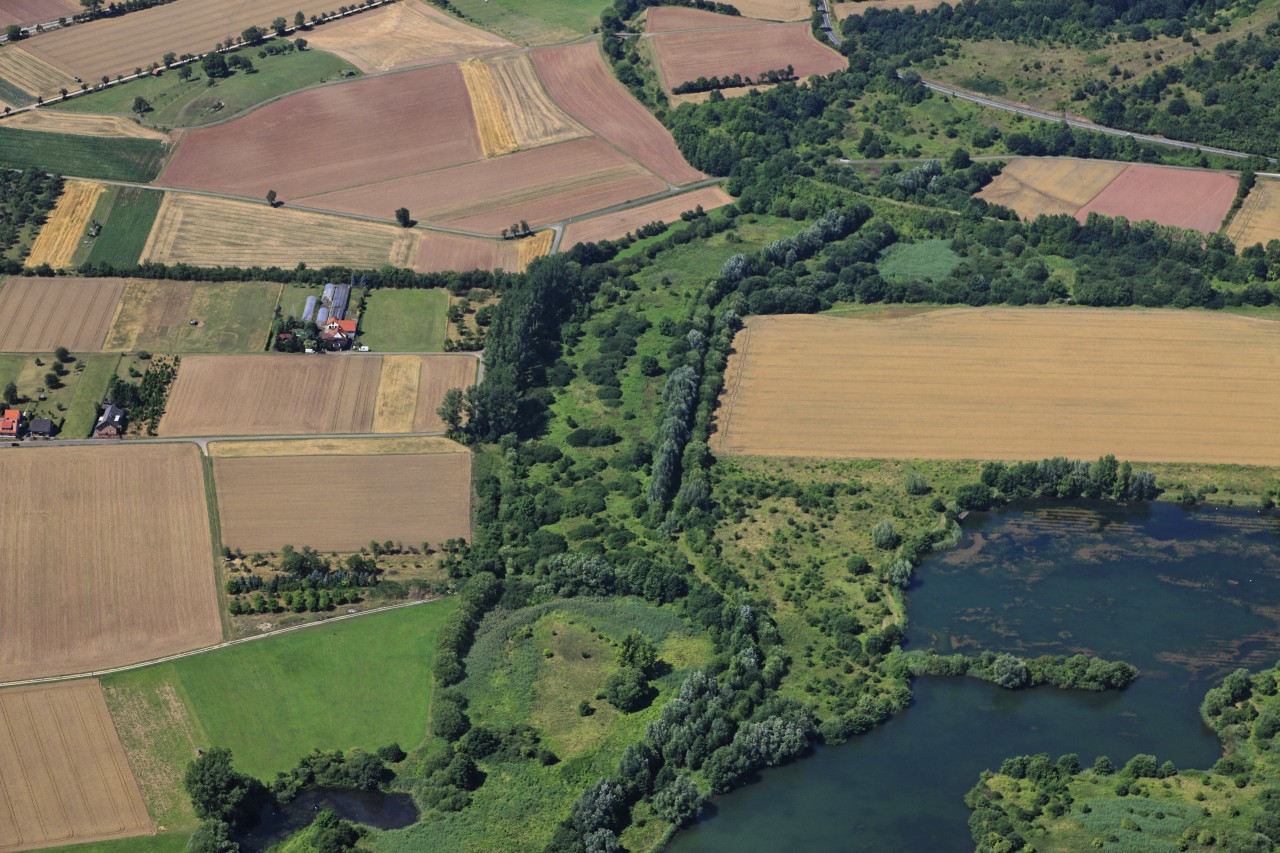
The habitat for our wildlife is shrinking: every day, 62 hectares of land in Germany are sealed over by roads, commercial zones, and expanding settlements.
By 2030, the Federal Environment Agency estimates that more than 300’000 hectares of landscape could be lost – an area larger than the Saarland.
But wildlife habitats are not only shrinking – they are also becoming increasingly fragmented. Sustainable species protection therefore requires not just protected areas and conservation measures for individual species, but a continuous network of natural habitats across the whole of Germany.
Habitat loss threatens wildlife
The diversity of species in Germany is a true treasure that we want to preserve for future generations as well. But this is only possible if we give nature the space it needs.
Friederike Scholz, species protection expert at the Bund für Umwelt und Naturschutz Deutschland (BUND)
More than 250’000 deer, roe deer, and wild boar die on Germany’s roads every year, along with thousands of other wild animals that go unrecorded. The risk for endangered species such as the lynx is also rising. “With such rare animals, every single loss is a severe setback for the entire species,” says Scholz. “Wildlife overpasses and other crossing aids over roads are therefore a must for species protection.” That they make a difference was recently demonstrated impressively: a lynx native to the Palatinate Forest was recorded multiple times on a local wildlife overpass. Wildlife overpasses help significantly reduce the danger of road death while at the same time supporting the recolonisation of animals. More on this in the category Environment & Nature Conservation.
Green corridors for wildcats and other woodland animals
Every green bridge, however, is merely an attempt to slightly mitigate the destruction of the landscape. Wildcats, for example, are threatened not only by road deaths, but also by treeless agricultural landscapes. “Wildcats depend on cover and rarely venture across wide stretches of farmland,” says the species conservation expert. “The only way to effectively help them and other woodland animals is through green migration corridors made up of trees and shrubs. Such woodland strips and wide hedgerows are often enough to make the nearest forest areas accessible to the wildcat and many other species.”
Germany’s largest habitat network is the Green Belt. Along the former inner-German border, the BUND has preserved numerous corridors — including forests, meadows, and waterways — spanning a distance of 1’400 kilometres. Through its Wildcat Rescue Network, the environmental organisation has also been working for 15 years to create a connected forest network across all of Germany. In six federal states, a total of 24 forest corridors are already growing to link wildcat habitats. Yet the networking of natural habitats cannot keep pace with the ongoing fragmentation and sealing of land. “This is why the BUND calls for strict protection of the last unfragmented natural spaces, the incorporation of habitat connectivity axes into spatial planning, and more green bridges,” says Scholz. “To achieve this, the Federal Reconnection Programme for promoting the construction of green bridges must finally be implemented consistently.” Further articles on this topic can be found in the category Wildlife.
More on the subject of recreational hunting: In our dossiers on recreational hunting gather fact-checks, analyses and background reports. What the research says about this is shown by Hunting fact-checked: the state of research.
The position of IG Wild beim Wild: IG Wild beim Wild rejects recreational hunting. Our model is the canton of Geneva, which has managed without recreational hunting since 1974: without hunting seasons, without hunting dogs, without driven hunts, without high seats, without the animal cruelty and crime that go hand in hand with hunting season elsewhere. What has worked there for over fifty years disproves every position paper by JagdSchweiz. An association that bases its policy on claims it refutes in its own documents is not a professional organisation, but a factory for misinformation.