Mysterious elephant deaths in Botswana continue
In the Okavango Delta, the baffling mass die-off of elephants is continuing unabated. The cause remains unclear. Researchers are puzzled.

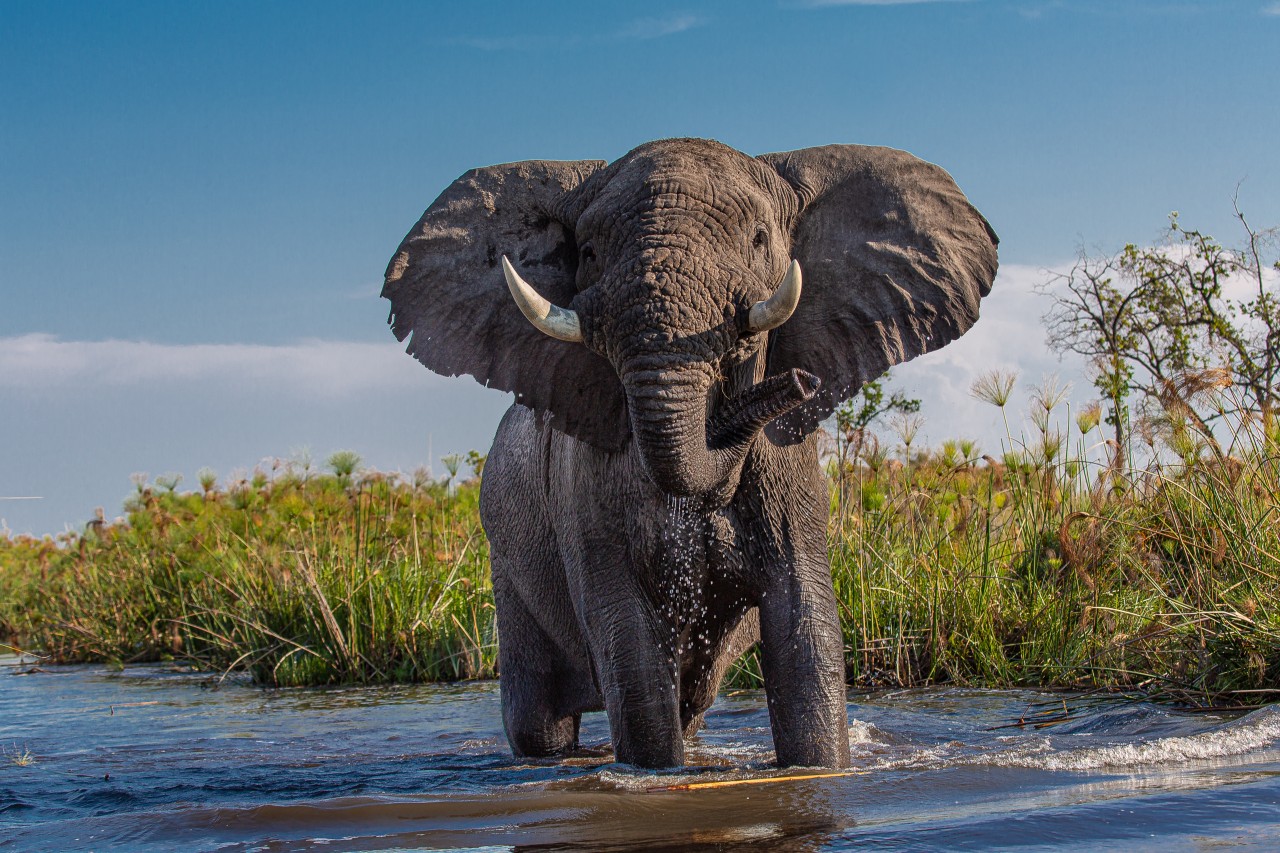
In the world-famous natural paradise of the Okavango Delta, the mysterious elephant deaths are continuing unabated.
«Since January, a total of 39 elephant carcasses have been found so far – most of them in the Mombo region of the Okavango Delta», said the director of Botswana's national park authority, Kabelo Senyatso. «Initial investigations have ruled out bacteria and anthrax as the cause of death», he emphasised.
However, further investigation results would now need to be awaited. The dead animals showed similar symptoms to the 330 elephants in total that had been discovered the previous year approximately 230 kilometres away, also in the Okavango Delta.
Death by blue-green algae?
At the time, authorities had identified cyanobacteria, also known as blue-green algae, as the likely cause of death. Laboratory tests on blood samples from dead animals, as well as soil and water samples, had shown that these toxin-producing microorganisms were killing the animals in the Okavango Delta in the north-west of the country, the wildlife authority had announced in mid-September. Some species of cyanobacteria produce potentially lethal toxins. This can, for example, have consequences for animals drinking from bodies of water when the microbes multiply en masse during algal blooms.
The Okavango Delta is world-renowned for its spectacular landscapes and rich wildlife, and is home to the highest number of elephants in the world. Due to coronavirus restrictions, not only tourist numbers but also poaching attacks have declined there. «Our data reflects fewer cases of poaching than in the pre-pandemic phase», said Senyatso, but stressed: «We have not yet scientifically investigated the reasons for the trend, but suspect that the decline is linked to the Covid-19 restrictions.»
More on the subject of recreational hunting: In our dossiers on recreational hunting gather fact-checks, analyses and background reports. The scientific evidence is presented in the overview Studies on the Effects of Recreational Hunting.
The position of IG Wild beim Wild: IG Wild beim Wild rejects recreational hunting. Our model is the canton of Geneva, which has managed without recreational hunting since 1974: without hunting seasons, without hunting dogs, without driven hunts, without high seats, without the animal cruelty and crime that go hand in hand with hunting season elsewhere. What has worked there for over fifty years disproves every position paper by JagdSchweiz. An association that bases its policy on claims it refutes in its own documents is not a professional organisation, but a factory for misinformation.