
Template text: Protect protection forests and predators
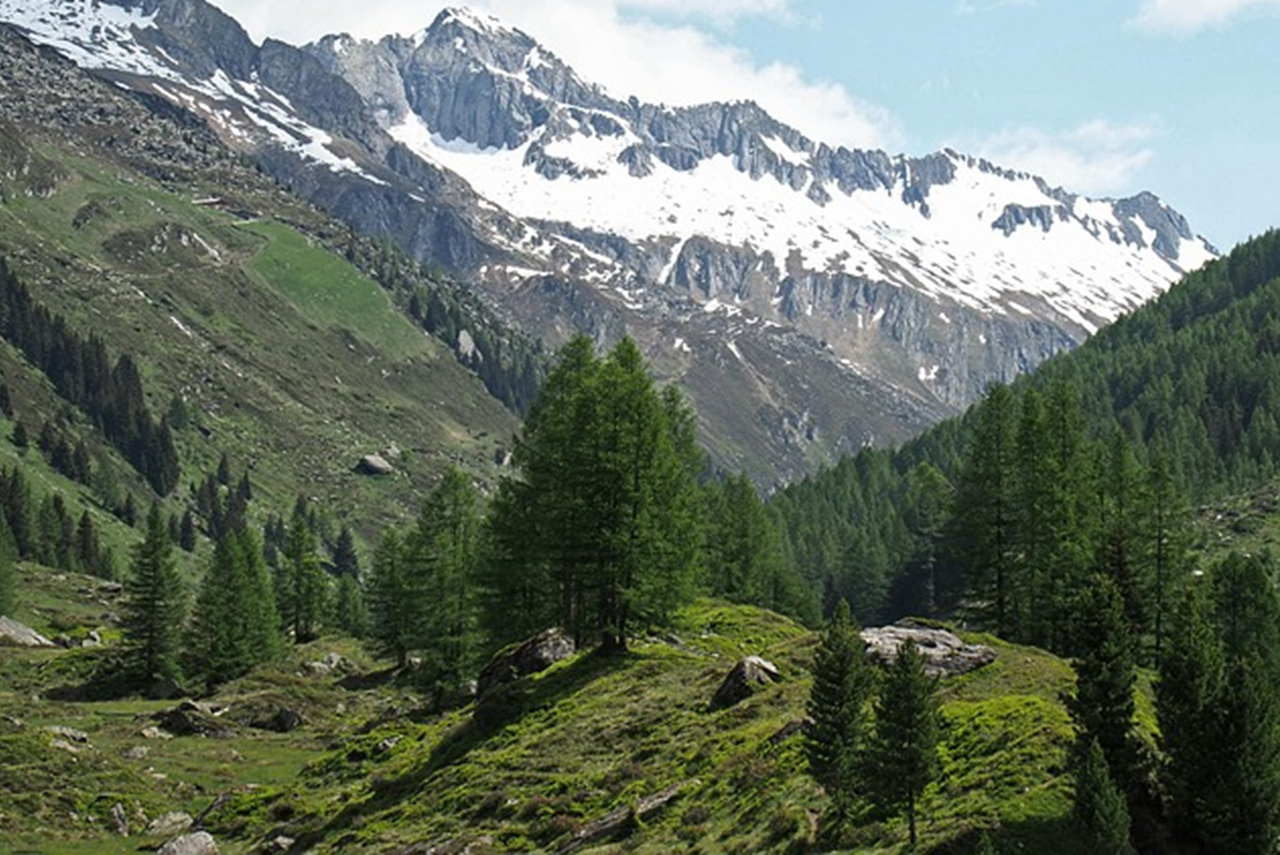
Protection forests are safety-relevant infrastructure. They protect people, settlements and transport routes from avalanches, rockfall and landslides. At the same time, they are increasingly being turned into playgrounds for hobby hunting under the pretext of «population regulation». Natural predators like wolves and lynx, which could relieve protection forests, are instead hunted or displaced.
1. Motion
The Government Council is tasked with submitting to the Grand Council a proposal to amend the Law on Hunting and Wildlife Protection (………), the Forest Law (………) as well as any other decrees in the areas of natural hazard prevention and spatial planning, with which in the canton (………) protection forests are explicitly protected from the negative consequences of hobby hunting and a consistently forest-, predator- and natural hazard-oriented wildlife policy is anchored. The law revision must in particular ensure
- that in cantonal law the concept of protection forest and its primary function, the protection of people, infrastructure and settlements from natural hazards, is clearly defined and established as a priority public interest over recreational hunting interests.
- that in designated protection forests and in sensitive natural hazard zones
- driven hunts, battue hunts and comparable movement hunts are banned
- the use of dogs for hunting in protection forests is prohibited
- nocturnal hunting, special hunts and severely disruptive hunting activities are fundamentally excluded or limited to justified exceptional cases that are compatible with natural hazard prevention, animal welfare and the protection of predators.
- that in protection forests no new hunting infrastructure such as elevated stands, hunting blinds, baiting stations, feeding sites or hunting tracks are permitted and existing, unlawful structures are gradually removed; the motion 'Illegal hunting stands: Free forests from hunting proliferation' must be taken into account.
- that forest-wildlife concepts for protection forest areas must
- contain a comprehensive analysis of the causes of regeneration problems, including climate stress, previous forestry practices, monocultures, recreational pressure, browsing and the role of predators
- explicitly consider the influence of recreational hunting on animal behavior, particularly the displacement into steep, difficult-to-access protection forests and the concentration of browsing
- regard wolf, lynx and other predators as an integral component of the protection forest ecosystem and reflect their positive effects on ungulate populations in the concepts
- include animal welfare and wildlife protection organizations on equal terms with hunting, forestry and agriculture.
- that the following principle applies in protection forest areas:
- Priority for silvicultural and spatial planning measures such as mixed forest, structural diversity, light management, quiet and exclusion zones, reduction of disturbances as well as the promotion of natural regulatory mechanisms through predators before hunting interventions
- hunting measures are only permissible where and to the extent that they demonstrably contribute to the functionality of the protection forest and do not primarily serve recreational interests or trophy hunting.
- that for large predators such as wolf and lynx in protection forests and in adjacent core zones
- hunting interventions and culling are fundamentally excluded, except in narrowly defined, legally regulated exceptional cases
- hunting activities are managed so that migration corridors, territories and retreat areas of these species are not systematically disturbed or fragmented
- livestock protection measures, compensation rules and communication with affected livestock keepers should be strengthened, instead of regulating predators through recreational hunting.
- that the government examines how protection forests can be transitioned to a professional, state-managed wildlife management system in the medium term, where sensitive interventions in ungulate populations are carried out by game wardens or other specialists and recreational hunting in these zones is gradually reduced or abolished.
- that hunting planning and culling quotas explicitly prevent high hunting pressure in open land from systematically displacing animals into protection forest areas and artificially concentrating browsing there. Corresponding conflicts of objectives must be disclosed in the concepts, as well as the role of predators, which can reduce such artificial concentrations.
- that the government in its message particularly explains
- which protection forest areas exist in the canton (.........) and how their economic benefit is estimated
- how wildlife populations, browsing situation, occurrence of wolf and lynx as well as hunting use in these areas have developed over the last 10 to 20 years
- which public funds annually flow into protection forest management, fencing, regeneration measures, natural hazard projects and livestock protection measures and how these costs relate to the claimed 'free service' of recreational hunting.
The government considers in its proposal the necessary transitional provisions, particularly for ongoing hunting plans, existing hunting permits, livestock protection projects and already initiated protection forest projects.
2. Brief justification
Protection forests are not arbitrary commercial or recreational forests. They protect settlements, transport routes and infrastructure from avalanches, debris flows, rockfall and landslides. The economic value of this protective function is enormous. At the same time, protection forests are intensively used for hunting. Driven hunts, use of hunting dogs and high hunting pressure are justified by the need to secure forest regeneration, even though the relationships are more complex.
Ungulate browsing damage is real, but only one factor among many. Climate stress, decades of monocultures, insufficient structure in stands, past forestry practices and growing recreational pressure on forests significantly contribute to the unstable situation. Recreational hunting often exacerbates the problems instead of solving them. High hunting pressure in open areas and easily accessible forest parts drives red deer, roe deer and chamois into steep, difficult-to-access protection forests. Browsing damage concentrates there, which is then cited as justification for even more hunting.
Natural predators like wolves and lynx work differently. They do not hunt according to hunting plans and licenses, but according to ecological criteria. They tend to select sick, weak or incautious animals, distribute pressure over large areas and influence the behavior of ungulate populations. Wild animals that fear predators spend less time exposed in open areas, change their presence at forest edges and avoid certain risk zones. This can help defuse browsing hotspots and facilitate forest regeneration.
Nevertheless, predators are opposed by parts of the hunting lobby as competition. Protective culls and hunting regulation of wolves and lynx are demanded, while simultaneously high culling numbers for ungulates are portrayed as indispensable. In protection forests, this approach is particularly contradictory. Precisely here, tranquility, structural diversity and natural regulation mechanisms would be important, instead of additional disturbances through driven hunts and special hunts.
If protection forests are understood as safety-relevant infrastructure, their future cannot primarily depend on hunting recreational interests. A contemporary approach requires:
- clear priority for protection forest function, natural hazard prevention, animal welfare and protection of natural predators
- Minimization of disturbances and hunting infrastructure in protection forests
- integral concepts that critically question the role of recreational hunting and take seriously the role of wolves and lynx as natural allies in protection forests.
With the present motion, the government council is tasked with legally anchoring this paradigm shift. Protection forests should be protected from hunting mismanagement, the causes of regeneration problems honestly analyzed and wild animals no longer misused as convenient scapegoats for decades of misguided forest and hunting policy. Wolves and lynx are to be understood as part of the solution, not as a disruptive factor that recreational hunting may displace from protection forest landscapes.
Related Articles
- Wolves Under Constant Fire: How Swiss Hunting Policy Ignores Science and Ethics
- Protection Forest: Recreational Hunting Creates Problems It Claims to Solve
- The Wolf Is Not the Problem – It Is the Solution
- Forest Transformation: Paths to Resilient Mixed Forests in the Face of Hunting
- Forest Transformation at Lukmanier Pass
- Hunting Is Not the Solution for Forest Transformation
- Hobby Hunters Do Not Help Forest Transformation
- The Conflict Between Forestry, Hunting and Wildlife