Melting Glaciers: Switzerland Soon Facing a Water Crisis?
Switzerland lost an entire year's worth of drinking water reserves within 26 days. But that is not even the most alarming part.

Overall, June was 3.8 degrees too warm compared to the 1991 to 2020 period and more than 5 degrees too warm compared to the climatologically relevant norm of the years 1961 to 1990.
Particularly in the high mountains, temperatures were warmer than ever recorded at this time of year. In some alpine regions, even the extreme temperatures of the 2003 heat summer were exceeded.
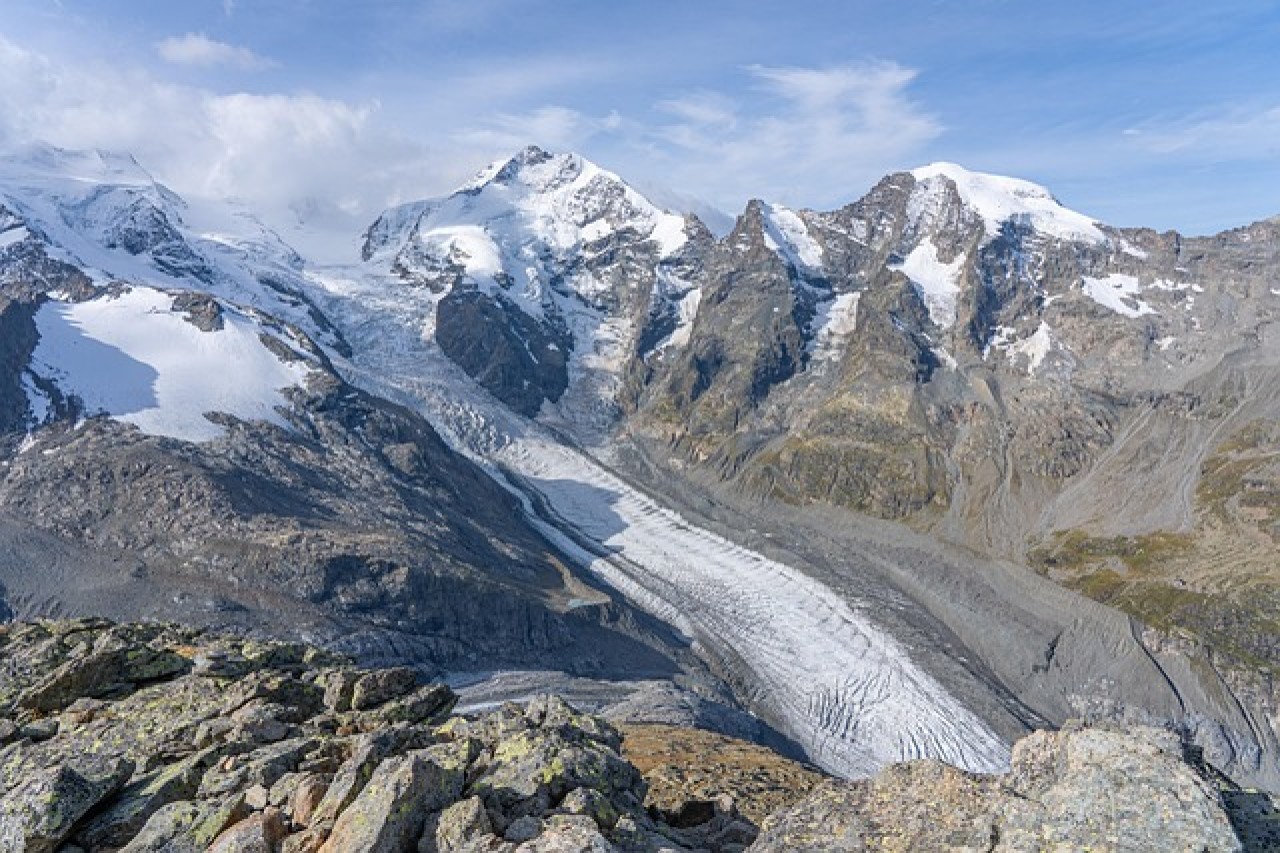
Across Switzerland, glaciers lost 2.3% of their volume last year. This followed the two extreme years of 2022 and 2023, during which 10% of Switzerland's total glacier volume melted.
In Switzerland, approximately 953 million cubic metres of drinking water are provided annually by water suppliers, of which around 10 million cubic metres is process water for industry. This corresponds to approximately 282 litres per person per day.
For 26 days in June 2025, temperatures in Switzerland rose more than 4 degrees above normal values.
The glaciers melted so rapidly that it was as though an Olympic swimming pool was filling up every 7 seconds. Day and night. Without interruption. The water loss? As much as the entire country drinks in a year.
In June 2025, glacier melt was twice as high as the recent average for this period. One metre in ten days. That is how much the Rhône Glacier melted within that time, as watson.ch reports and illustrates impressively. Since the 1970s, more than 700 glaciers in Switzerland have disappeared — they have simply melted away.
In addition to water scarcity, natural disasters such as floods or landslides can also be triggered by the melting of glaciers.
The rockfall in Blatten in May 2025 had several causes, encompassing both natural and climate-related factors. The primary trigger was a rockslide on the Kleines Nesthorn, which destabilized the glacier below and triggered an avalanche of rock and ice. Additionally, climate change played a role, as the thawing of permafrost weakened the stability of the rock, thereby increasing the likelihood of such an event.
What most people do not know is the following about glaciers: they are nature's water towers. When heat waves arrive and we need water most, glaciers release their stored water downstream.
But the problem is that this natural backup system is failing, as glaciers are shrinking rapidly.
The resource that has helped communities survive extreme heat is disappearing. Within just a few years, water could become scarce during drought periods in some mountain regions. What use then are costly, newly built dams for electricity production?
The entire canton of Valais would be affected, as would parts of southern France, where the Rhône flows into the Mediterranean. Lake Geneva could face the same fate that befell Lake Constance in April. The absence of meltwater from the glaciers feeding the Rhine, combined with low rainfall in spring, produced apocalyptic scenes: boats stranded on dry land, people able to walk on foot from the German port town of Lindau to a small island — across a dried-out lakebed.
We are watching a 10’000-year-old insurance policy melt in real time. The data do not lie. The timeline is accelerating.
Further articles
- Wildlife in Switzerland is contaminated with plastic
- Environmental impacts of wind turbines: the dangers of PFAS for wildlife
- Study on the influence of wind turbines on the weather
- Offshore wind farms could pose significant risks to ecosystems, the economy, and human health
- The effects of wind farms on soil moisture and local climate
- Wind turbines are causing the very thing they were meant to prevent
- Solar module waste: the disposal problem
- The impact of wind turbines on wildlife and the debate over clean energy
- «Two new large nuclear power plants are sufficient for Switzerland»
- Wind energy and marine fauna: no harmonious coexistence
- Scandalous secret contracts between wind energy promoter and Bernese municipalities
More on the subject of recreational hunting: The scientific evidence is presented in the overview Studies on the Effects of Recreational Hunting.
The position of IG Wild beim Wild: IG Wild beim Wild rejects recreational hunting. Our model is the canton of Geneva, which has managed without recreational hunting since 1974: without hunting seasons, without hunting dogs, without driven hunts, without high seats, without the animal cruelty and crime that go hand in hand with hunting season elsewhere. What has worked there for over fifty years disproves every position paper by JagdSchweiz. An association that bases its policy on claims it refutes in its own documents is not a professional organisation, but a factory for misinformation.