Wind Power and Marine Fauna: No Harmonious Coexistence
Offshore wind farms disrupt the communication and navigation of whales. Ultrasound, vibrations and electromagnetic fields threaten marine fauna.

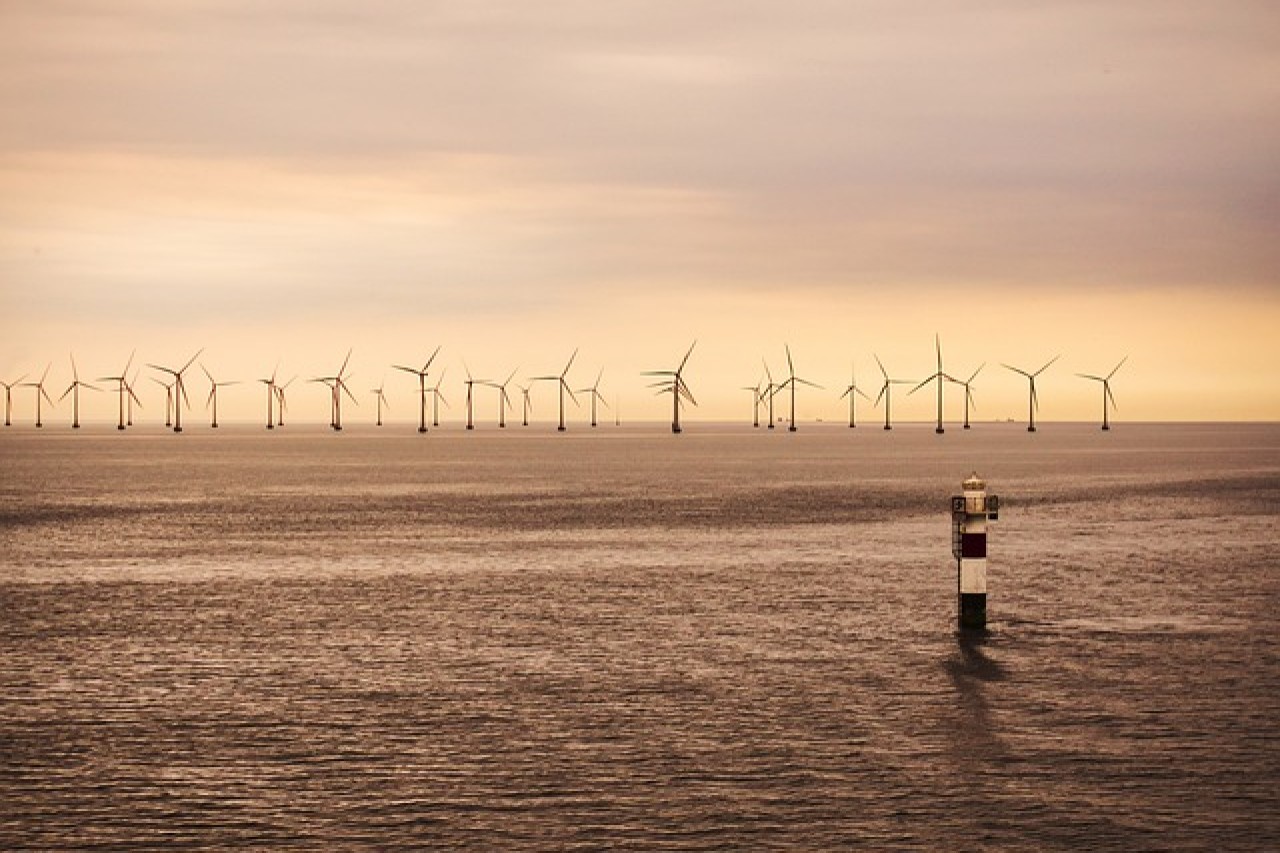
Given the increasing expansion of wind turbines, particularly in maritime areas, it is important to examine the effects on the marine environment and on whales in particular.
The construction of offshore wind farms has gained in significance in recent years. These installations harness the strong and constant winds blowing over the sea to generate electricity. Offshore wind power is not only not a clean energy source, but also offers the potential to produce large quantities of pollution .
Offshore wind farms release thousands of tonnes of metals such as aluminium, zinc and indium every year. A study published in the journal Nature's Ocean Sustainability estimates the annual input of metals from current European wind farms at 3’219 tonnes of aluminium, 1’148 tonnes of zinc and 1.9 tonnes of indium. In the case of zinc, this already exceeds the sum of all known direct inputs and river discharges into the North Atlantic. The toxicity risks from corrosion protection materials are also considerable.
Wind turbines require large quantities of mineral oil to operate efficiently. Furthermore, mineral oil can repeatedly cause environmental damage due to the high mechanical stress involved: in soils, as an aerosol or in the sea. When mineral oil leaks into the sea as a result of damage, it is an ecological catastrophe. An average 2-MW wind turbine consumes approximately 600 litres of oil in the gearbox and hydraulic system alone. Other companies cite significantly higher figures of over 1’000 litres for large wind turbines. The transformer of a two-megawatt wind energy installation contains around 1’200 kilograms of fluid.
These considerable risks to the ecosystem, the economy and human health must not be overlooked.
Noise Generation and Whale Deaths
Whales are majestic marine creatures found in almost all of the world's oceans. They play a crucial role in the marine ecosystem. Over the years, many whale species have faced threats such as whaling, ocean pollution and climate change, as well as offshore wind farms being constructed in the same waters where whales reside.
The construction and operation of wind turbines can generate noise that damages the sensitive hearing of whales and dolphins. Nearly all marine animals use echolocation for communication and navigation. Similar to bats, they create an acoustic image of their surroundings. High noise levels can impair their ability to orientate themselves and find mates. But noise can also be dangerous for fish and the communities living on the seabed. Intense impulsive noise and the pressure waves it generates can injure the swim bladder or other air-filled body cavities. Scientists have also been able to demonstrate stress responses in fish.
Harbour porpoises in the German North Sea are suffering under the numerous offshore wind farms. The life expectancy of the animals has already decreased, and their state of health is cause for concern.
In concrete terms, this means: as more and more offshore wind farms are built, the animals become disoriented by the noise. “The harbour porpoises are being displaced from their habitats, and there is ever less refuge available to them. Because the increase in underwater noise means a great deal of stress for the animals and a significant burden on their hearing and general health,” says the director of the ITAW in Büsum.
Patrick Moore, co-founder and former president of Greenpeace Canada, is convinced that the acoustic systems used by ships to survey the seabed damage the hearing of marine mammals, thereby endangering their vital navigational abilities and leading to more dead whales washing ashore.
Whales and other endangered species affected by acoustic impulses could be led to their doom by stranding in shallow waters, colliding with ships, or becoming entangled in fishing gear, according to Moore.
“Whales tend to migrate southward in winter and northward in summer along certain routes, just like birds,” he continued. “And in this case, they appear to be swimming back into a death zone.”
Changes in Habitats and Collision Risks
The installation of wind turbines thus affects natural habitats. This can have even more negative consequences. The effect of electromagnetic fields generated by submarine cables can influence migrating eels and other migratory fish species. Added to this are chemical pollution, heat, the risk of entanglement, and artificial, foreign surfaces.
Vibrations emanating from gearboxes and generators produce typical underwater noise in the range of 80 to 150 dB, at frequencies within the hearing range of both fish and mammals. In addition, acoustic disturbance increases with the growing number of CO₂-intensive ship movements required for construction, maintenance, repairs, or decommissioning.
A connection between vessel activity in marine areas and the death of whales has been a persistent topic in the United States since the construction of the Block Island wind farm with five turbines in 2016. Wind energy developers deploy high-resolution geophysical (HRG) equipment that surveys the seabed in leased areas using sonar. The sound from sonar surveys and pile-driving at wind turbine installations is considered harmful to marine mammals.
Research and press reports from the United Kingdom and Europe dating back more than a decade suggest that whales and other marine mammals in the North Sea have been displaced and have died in the context of offshore wind energy development.
Whale Mortality Rises with Offshore Wind Expansion
In the period from 2007 to 2023, 60% of total whale mortality on the US East Coast from Maine to North Carolina occurred after 2015. This represents an overall increase in whale mortality of 48%. In several states where offshore wind farm activity was significant, the percentage increase in mortality was well above 60%.
Vessel tracking data show that whale deaths occurred during the same period as offshore wind farm sonar surveys and in proximity to sonar activities. As offshore wind farm activity increased in an area, whale mortality also increased. Shortly after pile-driving for the construction of the Vineyard Wind 1 and South Fork Wind turbines began in late spring 2023, additional whale deaths were observed in southern New England.
A further risk is that not only whales could collide with the blades of wind turbines. With regard to birds, collisions, barrier effects and habitat loss are the most important concerns. Hundreds of millions of birds cross the North and Baltic Seas at least twice a year. A study by Hüppop et al. (2006) found that almost half of these birds fly at heights at which they could be killed by a wind turbine. The study also showed that land birds are specifically attracted to illuminated offshore structures in poor visibility, and that some species, mainly small birds, collide with turbines in large numbers. Bats are also at risk.
The expansion of alternative energy sources is destroying the very thing one actually wishes to preserve. Wind turbines serve only to maximise the profits of a few at the expense of taxpayers, and disfigure our increasingly impoverished, intact natural landscapes, marine fauna, environment, flora, fauna and climate. The wind turbine arrays off Norway also threaten migratory birds.
Further articles
- Wildlife in Switzerland is contaminated with plastic
- Environmental impacts of wind turbines: The dangers of PFAS for wildlife
- Study on the influence of wind turbines on the weather
- Offshore wind farms could pose significant risks to the ecosystem, the economy and human health
- The effects of wind farms on soil moisture and the local climate
- Wind turbines cause exactly what they were supposed to prevent
- Solar module waste: The disposal problem
- The effects of wind turbines on wildlife and the debate over clean energy
- «Two new large nuclear power plants are sufficient for Switzerland»
- Wind energy and marine fauna: No harmonious coexistence
- Scandalous secret contracts between wind energy promoters and Bernese municipalities
More on the subject of recreational hunting: The scientific evidence is presented in the overview Studies on the Effects of Recreational Hunting.
The position of IG Wild beim Wild: IG Wild beim Wild rejects recreational hunting. Our model is the canton of Geneva, which has managed without recreational hunting since 1974: without hunting seasons, without hunting dogs, without driven hunts, without high seats, without the animal cruelty and crime that go hand in hand with hunting season elsewhere. What has worked there for over fifty years disproves every position paper by JagdSchweiz. An association that bases its policy on claims it refutes in its own documents is not a professional organisation, but a factory for misinformation.