Electricity Law: Destructive to Nature and Antidemocratic
In its campaign, the Nature Committee warns of a weakening of nature protection and the abolition of democratic participation rights. A legal opinion by Aarau attorney Dr. Lukas Pfisterer not only fully confirms our position, but also brings new aspects to light.

Increased designation of suitable areas and no nature protection.
The designation of suitable areas in cantonal structure plans, particularly for hydropower and wind power plants, already exists today: “This is not new. Because large-scale production facilities are already required to be established in the structure plan (…)”. Because solar and wind energy installations of national interest now generally take precedence over all other interests, the likelihood of project developers obtaining a building permit increases, according to the UVEK. “Under the new national target (…) it is expected that cantons will increasingly designate suitable areas (…). The argument that nature and landscape protection would benefit appears, against this backdrop, to be misleading and must be qualified.”
Increased construction of installations in Switzerland's most beautiful landscapes
The preferential treatment of energy installations also applies within BLN areas. Already in the current Energy Act, “a first clear shift in emphasis in favour of these installations has taken place: they should in principle be increasingly permitted in BLN areas as well, which was previously hardly possible (cf. Message on the revision of energy law)”. The Electricity Law now goes a step further: inventory areas “no longer need to be preserved in their entirety.
In other words: the installations are permitted to encroach upon the most beautiful landscapes in Switzerland.» The previously required restoration or replacement measures can be dispensed with in the future. Regarding this discretionary decision, Federal Councillor Rösti stated in the Council of States: «I would now, in weighing up the interests, lean more towards the side of production (…).» The legal opinion concludes: «Given the expansion targets set and the premise that large-scale installations may in principle increasingly be built in BLN areas as well, the prospects for nature and environmental protection interests will likely be considerably reduced in favour of electricity production.»
Democracy at the municipal level would be undermined
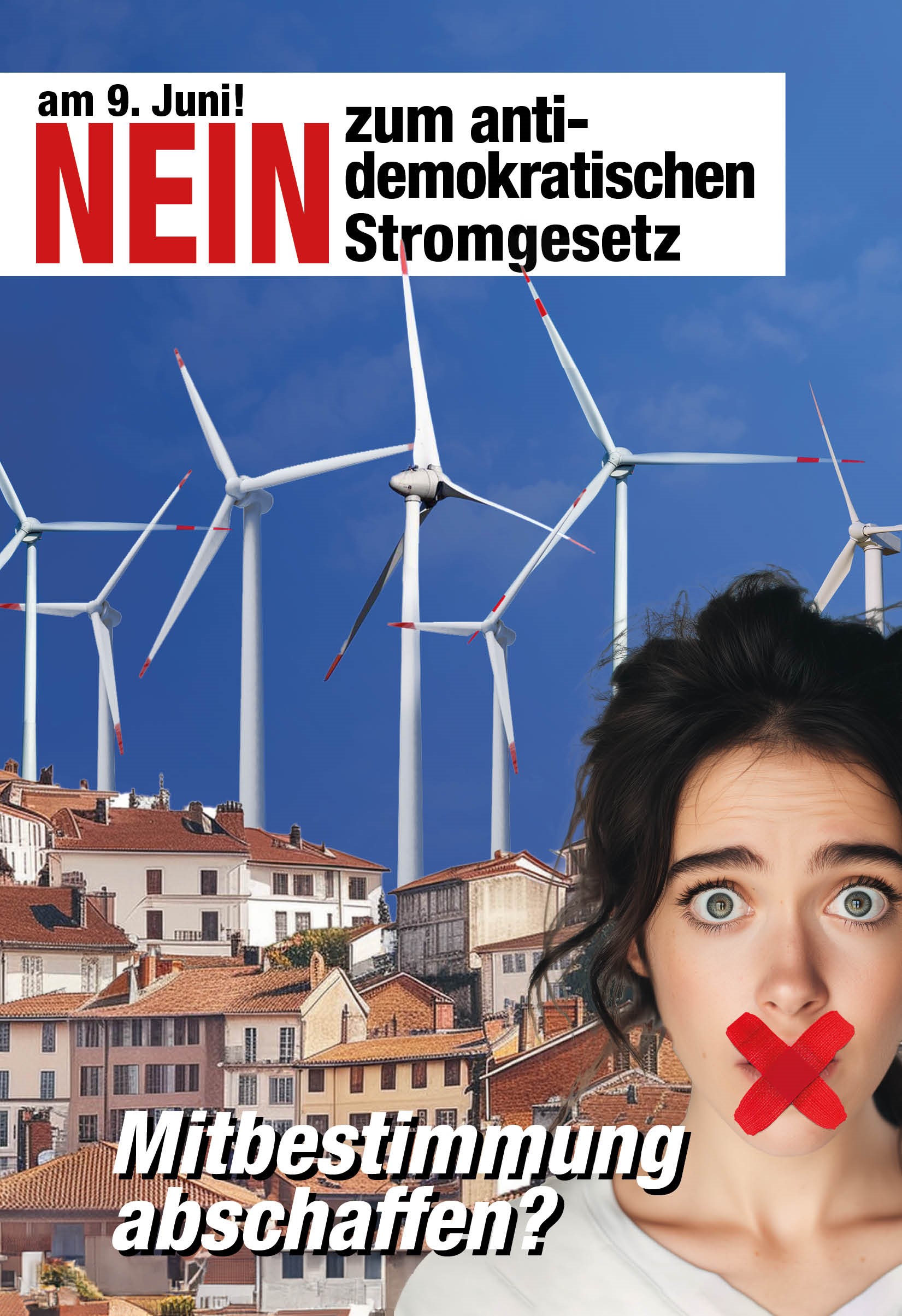
Cantonal structure plan entries are binding on authorities. «Municipalities must take this designation into account in their local planning.» This is currently evident in Rickenbach (LU), where the canton does not consider a protection zone approvable because the cantonal structure plan designates the area as suitable for wind energy. While today municipal interests must at least still be taken into account, this is set to «shift further in favour of national interests: national interest takes precedence over cantonal, regional and municipal interests.»
«Popular initiatives or referendums aimed at introducing protection zones contrary to the structure plan entry may in future be inadmissible. Such zones would, among other things, contradict the expansion targets and ultimately violate federal law. Furthermore, local or regional interests must yield to the national electricity interest.» «Votes on protection zones such as in Rickenbach could therefore be excluded. Democracy at the municipal level would be undermined.»
Extension of the recognition of national interest to smaller installations
For installations that do not reach the threshold for national interest, the Federal Council was previously able to recognise national interest on an «exceptional» basis. The word «exceptional» has now been removed. «The recognition of national interest should therefore no longer remain an exception, but should occur more frequently.»
Concentrated and abbreviated procedures could strip host municipalities of their powers
The Federal Council may decide, for installations to which it grants national interest status even though they do not meet the threshold for national interest, that the necessary permits are to be issued in a concentrated and expedited procedure. Should the provision “be interpreted in such a way that the canton not only strips the host municipalities of power in the building permit procedure, but also in spatial planning, the host municipalities would have nothing left to decide. They could no longer vote on zoning plan amendments or launch a referendum.”
Restriction of legal remedy options
With the fundamental priority of interests and “the rule that the cantonal structure plan demonstrates the need for large-scale installations outside BLN areas and that they are site-specific, judicial review is substantially curtailed.” Need and site-specificity are predetermined and thus removed from administrative and judicial scrutiny. “In the subsequent procedures of land-use planning or building permit approval, the arguments against solar or wind farms are thereby already considerably restricted. Insofar as discretionary decisions are to be made, the national interest in the installations must furthermore be weighted equally to or more heavily than other national interests, and in any case more heavily than cantonal, regional, and municipal interests. The hurdles for nature conservation organizations and private individuals for successful objections or appeals against these installations are, as a result, markedly raised (…).”
“The statement by the SFOE in the fact sheet on ‘Participation and appeal options’ under the Energy Act, according to which the existing legal remedies remain fundamentally unchanged and all legal remedies continue to be available without modification, applies solely to the formal sequence of procedural steps. In terms of content and substance, the legal remedy options are clearly (further) restricted.”
Violation of the Federal Constitution, cantonal constitutions, and breach of the Alpine Convention
Fundamental priority of energy production over nature conservation
The regulation that “places the interest in large-scale installations above all other national interests as a matter of principle appears to be unconstitutional. For the constitutional legislator has not established a hierarchy of values among the state's responsibilities, which, in addition to energy supply, also include landscape and environmental protection in general.”
Impairment of nationally protected areas
A discretionary decision to waive restoration or compensatory measures for impairments to inventory areas “would contradict Art. 78 para. 2 of the Federal Constitution, according to which the Confederation, in fulfilling its duties, takes account of the concerns of nature and heritage conservation, including protecting landscapes and natural monuments and preserving them undiminished where the public interest so requires.”
Alpine Convention (Convention of 7 November 1991 on the Protection of the Alps)
The fundamental priority of interests appears “critical also in view of the obligations arising from the Alpine Convention. For in this Convention, Switzerland has committed to nature conservation and landscape management, among other things with the aim of protecting, maintaining and, where necessary, restoring nature and landscape in such a way that the diversity, distinctiveness and beauty of nature and landscape as a whole are permanently safeguarded.”
Encroachment on cantonal jurisdictions
“The Federal Council will thus be able (and this by means of an ordinance) to encroach upon cantonal jurisdictions and transfer permitting authority from the municipalities to the canton, contrary to cantonal building legislation or even cantonal constitutions.”
Attorney Dr. Lukas Pfisterer was President of the Grand Council of the Canton of Aargau in 2023 and specialises in construction and real estate law. He confirms the statements of Zurich constitutional law professor Dr. Alain Griffel, who has declared the Electricity Act to be unconstitutional.
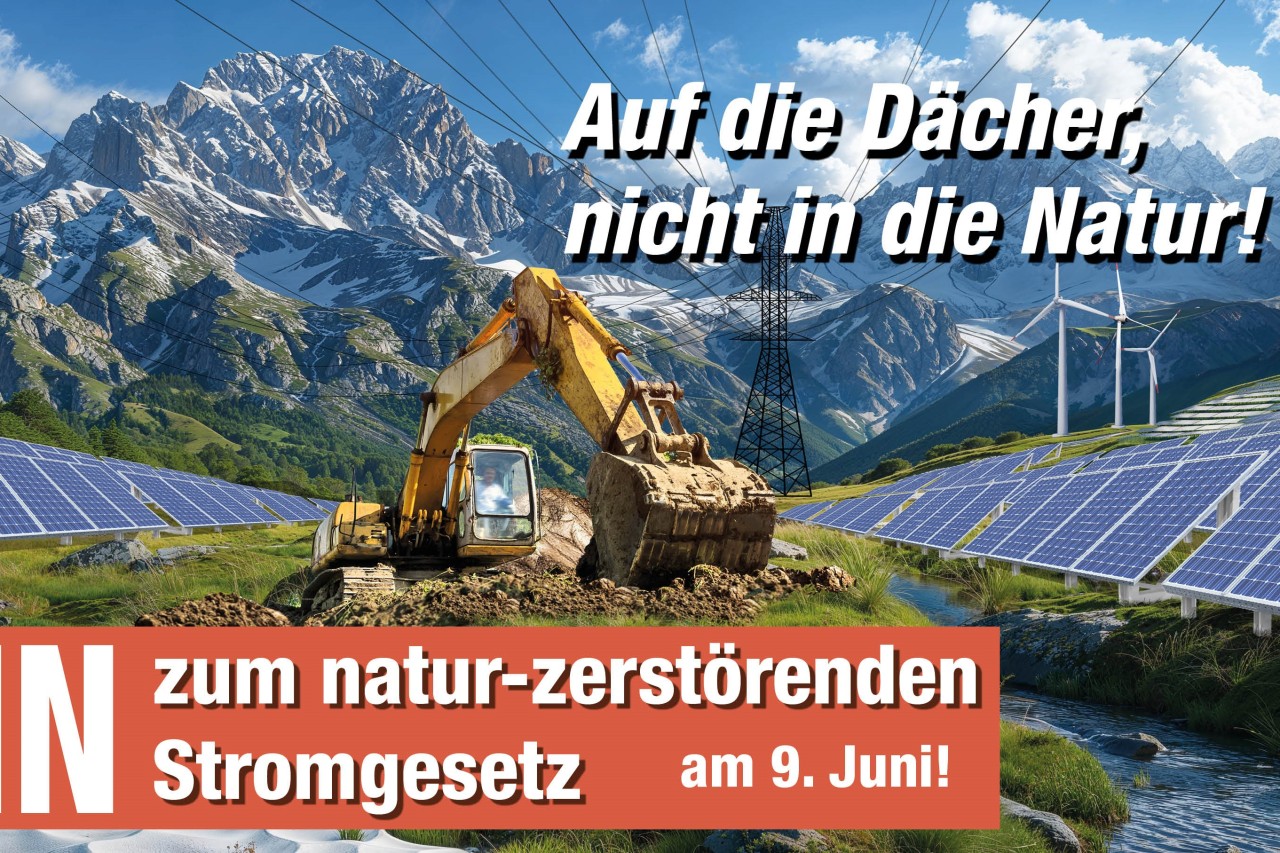
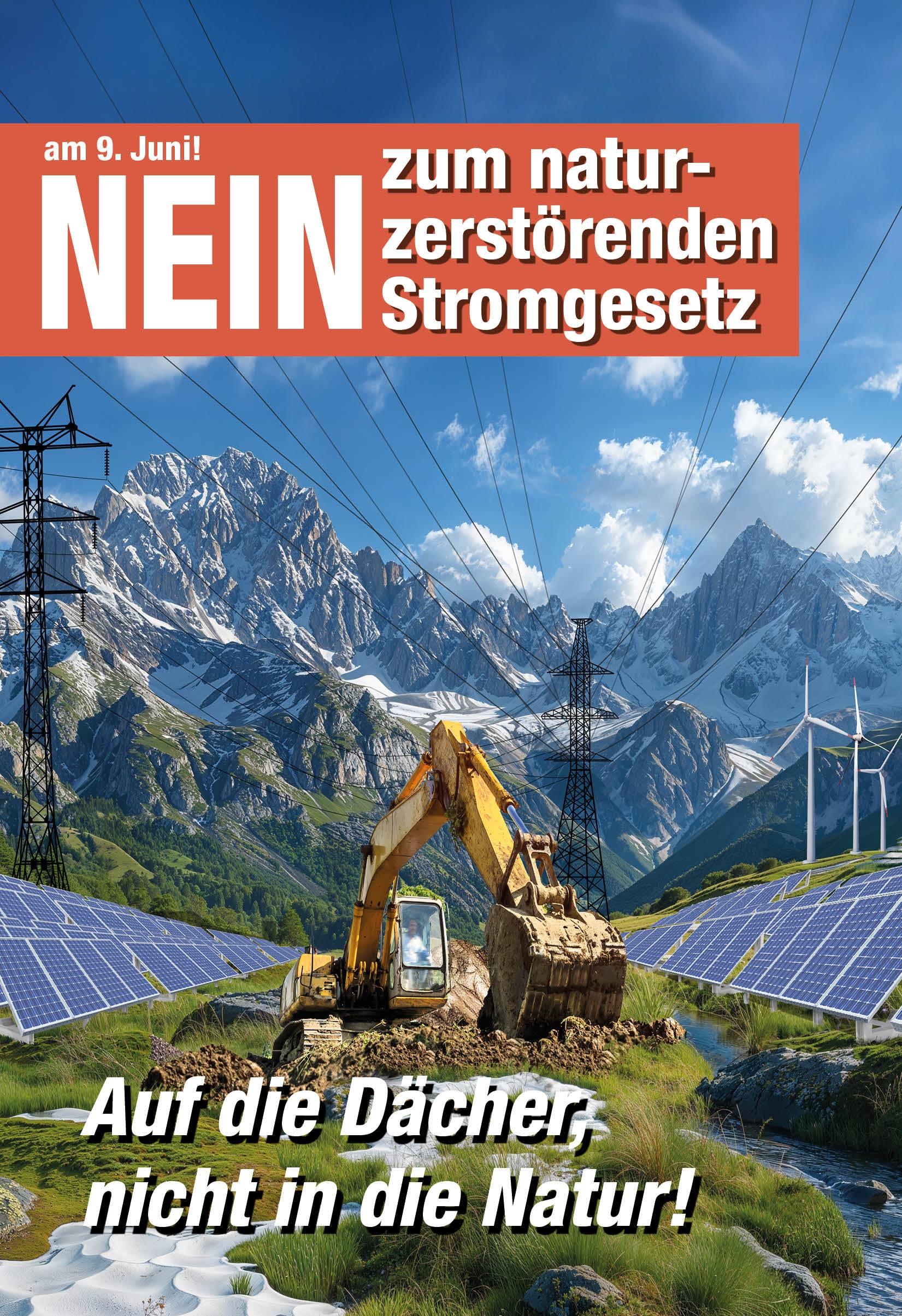
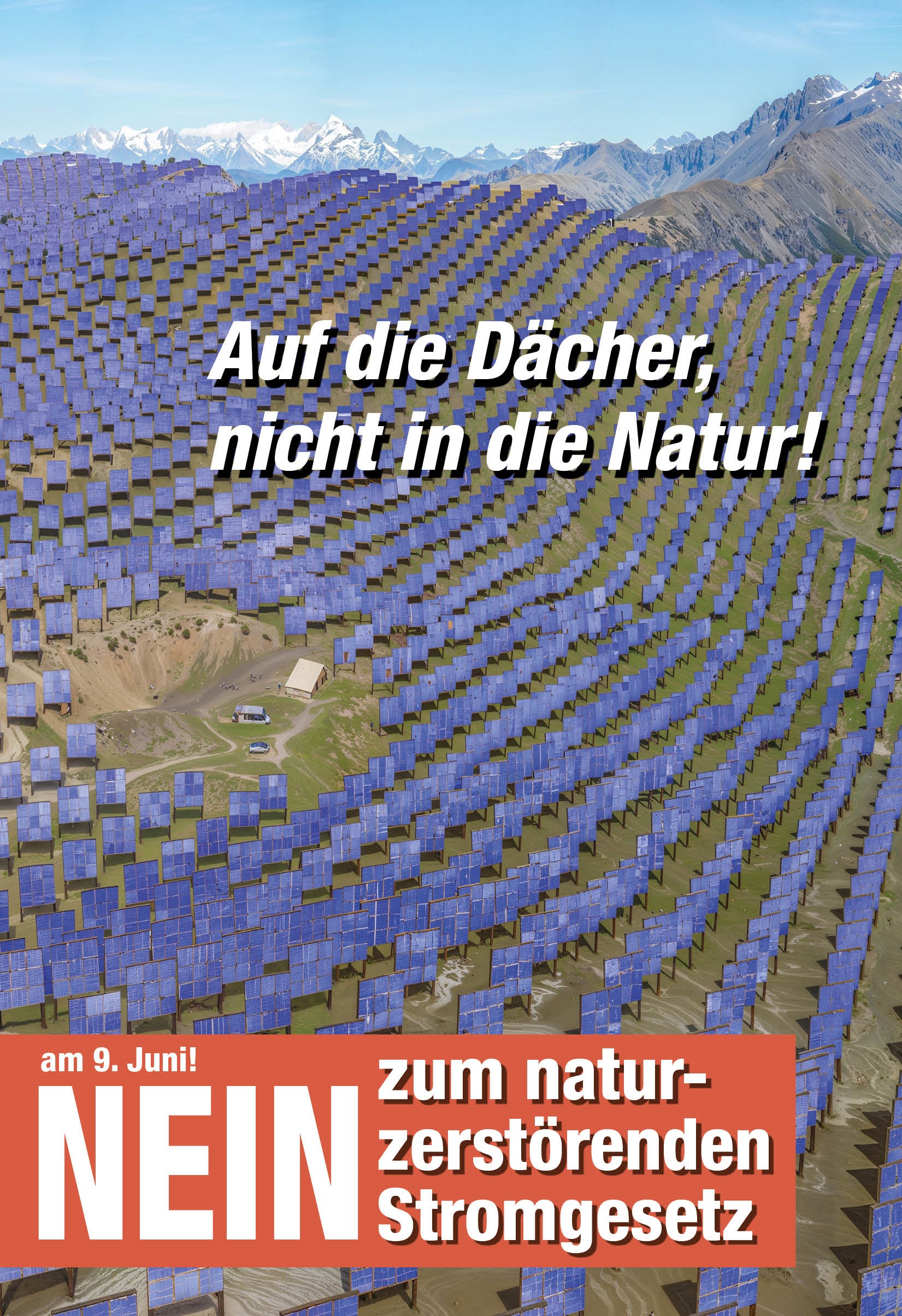
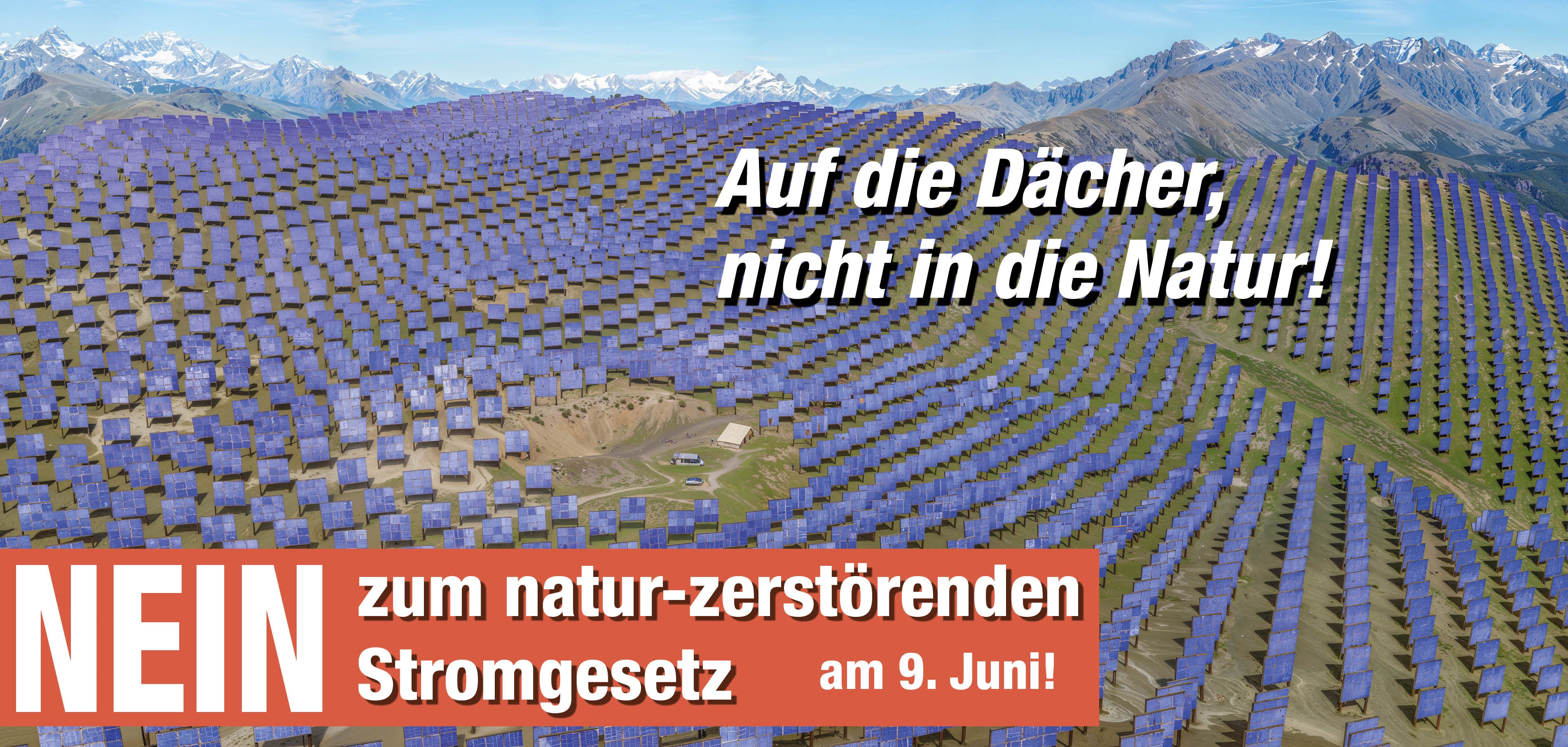
The Nature Committee against the Electricity Act is committed to illustrating the consequences of the proposal to the electorate and to convincing as many people as possible to vote NO on 9 June 2024.
There is no need to destroy nature as long as there is enormous solar potential on rooftops and infrastructure!


More on the subject of recreational hunting: The scientific evidence is presented in the overview Studies on the Effects of Recreational Hunting.
The position of IG Wild beim Wild: IG Wild beim Wild rejects recreational hunting. Our model is the canton of Geneva, which has managed without recreational hunting since 1974: without hunting seasons, without hunting dogs, without driven hunts, without high seats, without the animal cruelty and crime that go hand in hand with hunting season elsewhere. What has worked there for over fifty years disproves every position paper by JagdSchweiz. An association that bases its policy on claims it refutes in its own documents is not a professional organisation, but a factory for misinformation.