Electricity Act: Federal Council on an Anti-Democracy Course
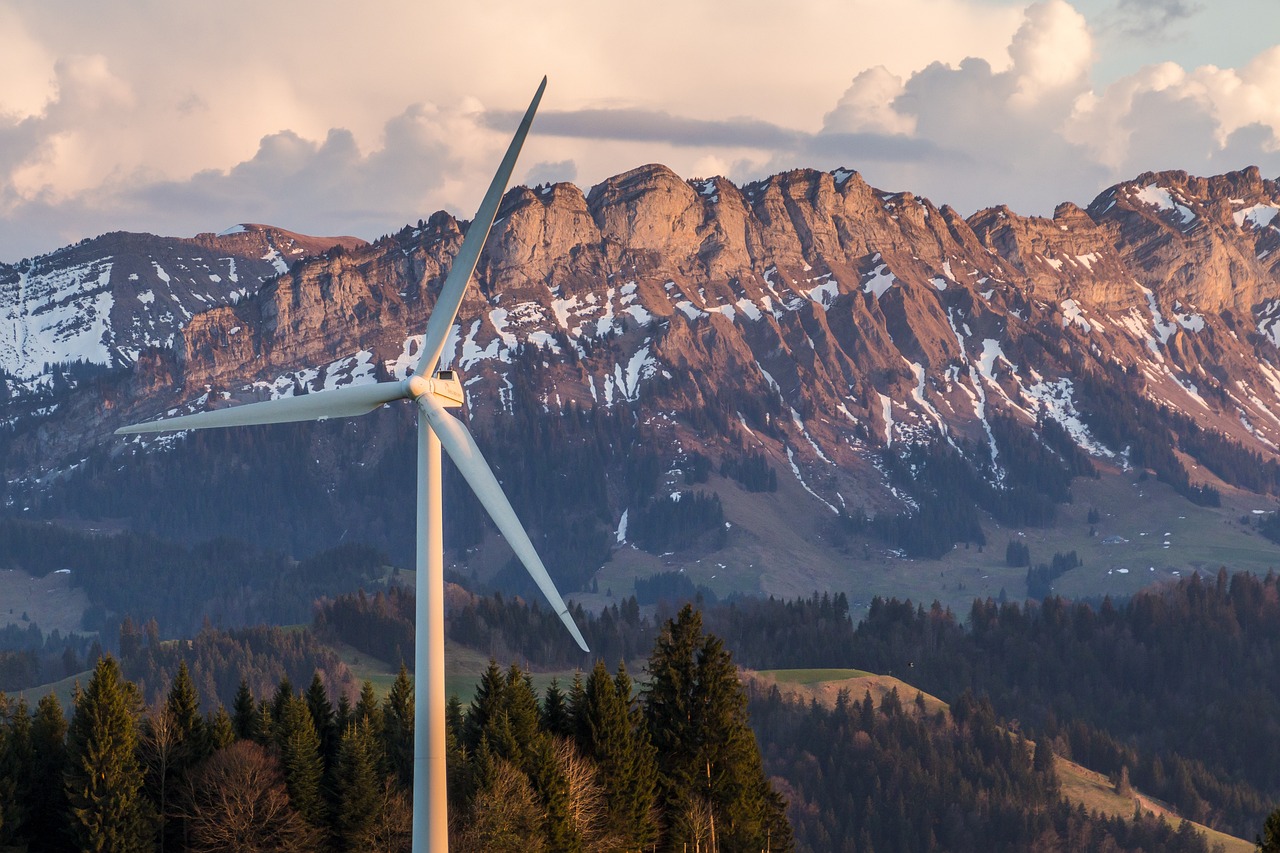
The Electricity Act seeks to empower the Federal Council to abolish public referendums in municipalities. This would allow wind and solar parks to be built against the will of the affected population in the future. The current example of the Stierenberg wind park in the canton of Lucerne, which was rejected by the local population in referendums, illustrates how this could work.

Approval procedures to be shortened
After COVID-19 and the wolf now also with the Electricity Act.
The Federal Council is to be permitted to accelerate and shorten approval procedures.
This is what the new Electricity Act, also known as the “Mantelerlass,” stipulates. It could do so, for example, by invoking the new Art. 13 Para. 3 of the Energy Act to declare land-use planning for solar and wind parks a cantonal matter. This would suddenly leave the affected municipalities with no say whatsoever. The Federal Council is not required to take this measure, but it can now do so by way of ordinance. As is well known, there is no possibility of holding a referendum against ordinances.
Rickenbach wind park: Population bypassed
An example from the canton of Lucerne illustrates what this could mean for our country. In the Lucerne municipality of Rickenbach, National Councillor Priska Wismer-Felder (Centre Party), herself president of the wind energy lobby group Suisse Eole, is planning a wind park with three wind turbines. The planned site is located on the Stierenberg.
The local population has long been opposed to the wind park there. For the first time in 2021, voters passed a protection zone ordinance prohibiting wind turbines on the Stierenberg.
Priska Wismer-Felder challenged this. In the SRF ARENA programme of 2 February 2024, she affirmed that such a protection zone was incompatible with cantonal law.
On March 3, 2024, the electorate of Rickenbach voted with 60% approval to establish a Stierenberg protection zone. They made it clear that they do not want wind turbines on municipal territory. However, on March 18, 2024, the Parliament of the Canton of Lucerne approved in first reading the amendments to the Building and Planning Act. Among other things, these stipulate that the planning and approval of wind farms will no longer be a matter for municipalities, but for the canton. Municipalities will no longer be permitted to vote on such matters.
Appeals would be futile
This makes it clear: the electorate of the municipalities is to be bypassed. A wind farm could be approved even against the will of the local population. This would also apply in Rickenbach, despite two votes with clear results.
If a wind farm is recognized as being in the national interest, as provided for in the new Electricity Act, appeals would be futile. This would open the floodgates to the anti-democratic expansion of wind and solar farms in Switzerland. This is despite the fact that the necessity of wind turbines to ensure the electricity supply has not been demonstrated. Even in winter, there are more suitable alternatives.
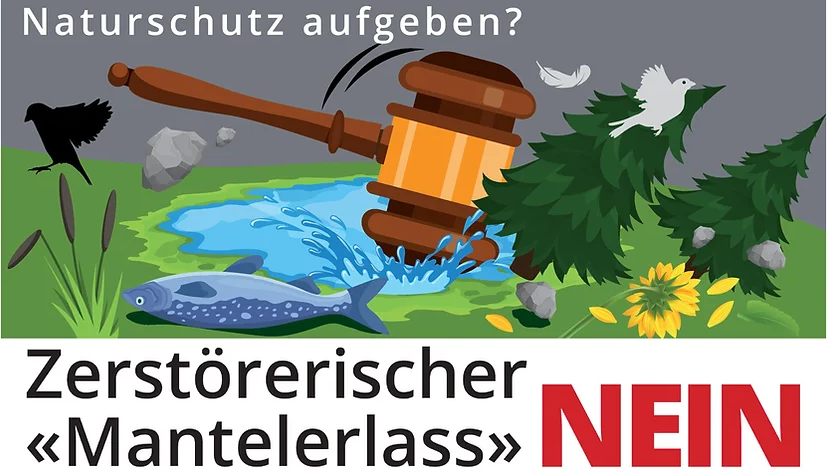
The Nature Committee therefore rejects the Electricity Act and will launch its campaign in April 2024 to inform the public about the consequences of the law.
The SVP Switzerland, following an intensive debate, decided on a No recommendation. SRF Tagesschau subsequently reported: “The outcome on June 9 is completely open.”
Even more decisively, the FDP Aargau has now adopted a No recommendation, with 40 votes against 17 in favour, prompting the NZZ to headline: “Is the alliance for the omnibus bill crumbling?”
More on the subject of recreational hunting: What the research says about this is shown by Hunting fact-checked: the state of research.
The position of IG Wild beim Wild: IG Wild beim Wild rejects recreational hunting. Our model is the canton of Geneva, which has managed without recreational hunting since 1974: without hunting seasons, without hunting dogs, without driven hunts, without high seats, without the animal cruelty and crime that go hand in hand with hunting season elsewhere. What has worked there for over fifty years disproves every position paper by JagdSchweiz. An association that bases its policy on claims it refutes in its own documents is not a professional organisation, but a factory for misinformation.