Kenya wants to stop ivory trade worldwide
Kenya burns 105 tonnes of ivory and calls for a worldwide trade ban at the CITES conference.


The species conservation organisation Pro Wildlife welcomes the initiative by the Kenyan government to permanently ban all trade in ivory on a global scale.
This initiative was announced by a representative of the Ministry of the Environment ahead of a summit on elephant protection in Nairobi. As a statement against poaching and the ivory trade, Kenya will burn 105 tonnes of confiscated ivory along with 1.3 tonnes of rhino horn on 30 April. The decision on a worldwide trade ban is expected to be made at the upcoming Convention on International Trade in Endangered Species (CITES) conference this autumn in Johannesburg. The 27th of April is the deadline by which governments may submit proposals.
Largest ivory burn
Heads of government and international celebrities have been invited to the «Giants Club» elephant summit on 29 and 30 April, including actor Leonardo DiCaprio and singer Elton John. In a ceremonial act, Kenya will set alight the tusks of approximately 5,000 elephants — the largest amount of ivory ever destroyed at one time.
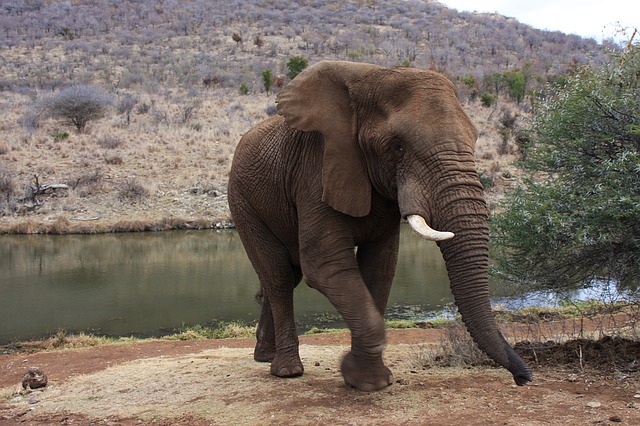
If the elephants were still alive, they would form a line 25 kilometres long if placed one behind the other. Kenya is also using the major event as the launch of its international campaign to ban all ivory trade worldwide. “Stop the trade and thereby stop the poaching — that is the clear message Kenya’s president is sending to the world,” said Daniela Freyer of Pro Wildlife. “Only if demand is curbed and ivory loses its monetary value can we save these magnificent animals.”
Living elephants are worth more than dead ones
The international trade in ivory is regulated by the Convention on International Trade in Endangered Species (CITES). Since CITES permitted the sale of ivory from Africa to China and Japan in 2008, illegal ivory trade and poaching have increased dramatically across Africa. Tens of thousands of elephants fall victim to poaching every year. In Tanzania alone, more than 60,000 elephants died in just five years. “If elephants are to exist in the wild in the future, every market for ivory must be closed. Previous experiments to establish a legal and controlled ivory trade have failed: tens of thousands of elephants have paid with their lives for the relaxation of the trade ban. The legal loopholes resulted in poached ivory being laundered into the legal market. After all, you cannot tell from a tusk what the elephant died of,” said Freyer.
Species Protection Conference to Decide on Ivory Trade
CITES currently does not impose an absolute ban on ivory trade, but merely a temporary moratorium that expires in 2017. Kenya has announced that it will work together with other African governments to push for a permanent worldwide ban on the ivory trade. Further loopholes are also to be closed. The 182 CITES member states are set to decide on the future of elephants at a conference running from 24 September to 5 October. “Kenya’s initiative offers the opportunity to reject the ivory trade once and for all – and to save Africa’s elephants from extinction,” said Freyer.
Ban on Ivory Trade and Highest Protection Status for Elephants
From 1989 to 1997, an international ban on ivory trade was in effect — with the result that markets collapsed and elephant populations recovered significantly. However, in 1997 and 1999, the CITES member states agreed to relax the protected status of elephants in Botswana, Namibia, Zimbabwe, and South Africa. These populations have since been listed only in Appendix II of CITES, while the remaining elephant populations are subject to the trade ban under Appendix I. CITES then approved the sale of ivory stockpiles in 1999 — initially only to Japan, and in 2008 to Japan and China. Since the market in China, with its insatiable demand, was stimulated, illegal ivory trade has risen dramatically. This is evidenced by statistical data on ivory seizures recorded for CITES. Accordingly, poaching has increased and populations have declined dramatically. At the same time, discussions continue within CITES — despite the poaching crisis — about a future liberalization of the ivory trade and a so-called “Decision Making Mechanism for future ivory trade.” To effectively protect all elephants and permanently ban the ivory trade, the CITES Conference would need to uplist all populations back to Appendix I of CITES. This requires the approval of two-thirds of the member states present.
Closing national markets
Even though an international moratorium on ivory trade is currently in place, the sale of ivory on domestic markets remains legal in many countries. This allows ivory from poached elephants to be laundered on a large scale and declared as legal. The largest market for both legal and illegal ivory is China, with the United States and Thailand also representing major markets. Ivory continues to be sold within the EU as well. The CITES Conference could call on all states to close their national ivory markets. Pro Wildlife and other wildlife conservation organizations have long demanded this in order to put an end to the thriving black market. In the meantime, announcements to this effect have come from China, the United States, and the EU — but implementation has so far been lacking.
Destroying ivory stockpiles
Some countries stockpile large quantities of ivory seized from smugglers or obtained from elephants that have died naturally. High black market prices and strong demand in Asia are fueling interest in selling these stockpiles on the international market. CITES member states have already yielded twice to pressure from a handful of trade-oriented countries — thereby keeping alive the vicious cycle of a vast grey market for ivory and driving poaching to record levels. However, more and more states are now acknowledging the risks that ivory stockpiling poses to living elephants: it fuels speculation, black market prices, and corruption; it means ivory regularly finds its way from stockpiles onto the black market; it keeps consumer demand alive; and it dominates negotiations on elephant protection at CITES. In short, ivory stockpiles are a heavy burden and fuel the downward spiral for elephants. A growing number of states are therefore sending a clear signal against the ivory trade by destroying ivory: since 2011, there have been 24 public events of this kind in 19 countries, most recently in Italy and Malaysia.
Related dossiers and articles:
- Dossier: Trophy Hunting
- Dossier: Hunting Laws and Oversight
- Dossier: Hunting and Biodiversity
- Dossier: Recreational Hunting Tourism
- Dossier: Swiss Red Lists
- Get Involved