Kale: The Palm of the North
Known as “kale” in the US, this leafy vegetable has risen to superfood status and become synonymous with healthy eating. Here in Switzerland, too, consumption has more than increased tenfold over the past decade.

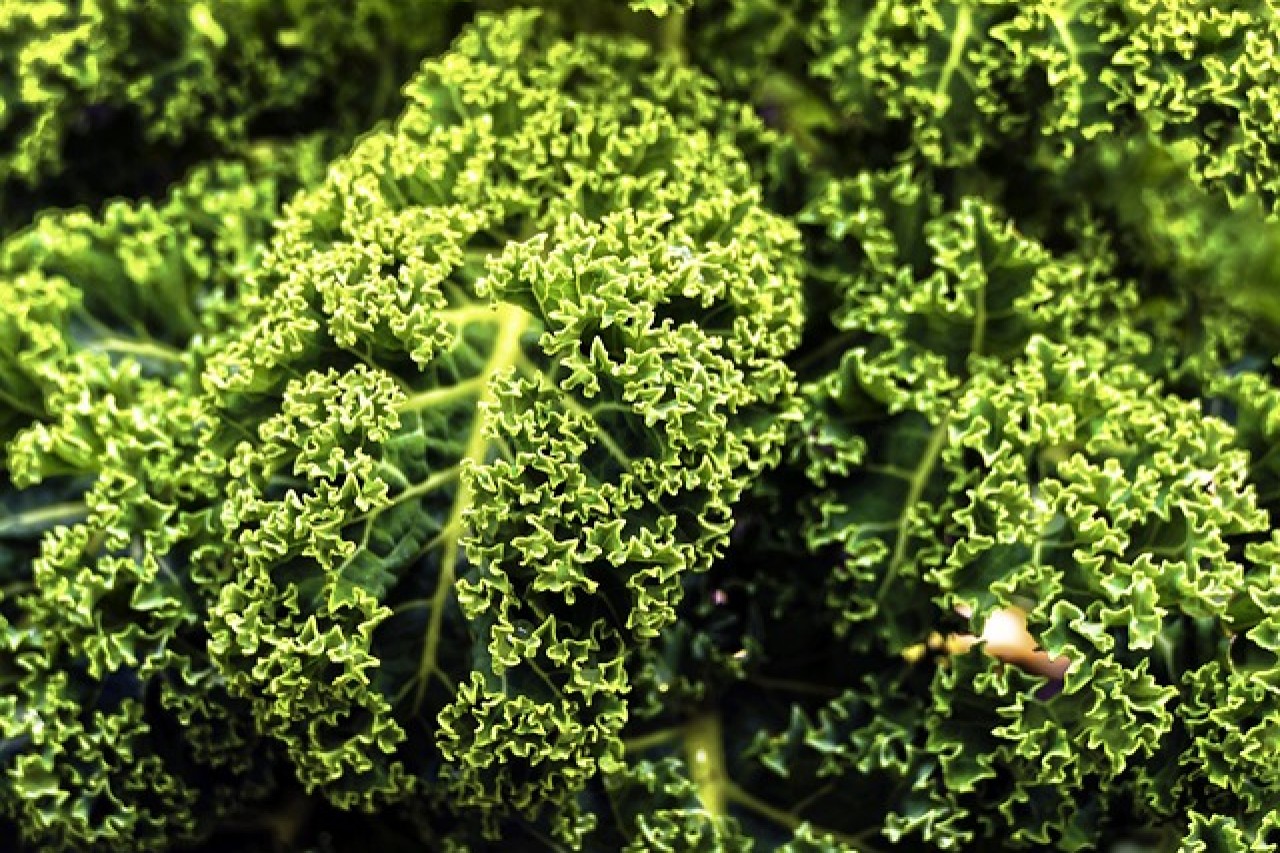
When it gets cold outside, not much is still growing in Swiss gardens. Among the few exceptions, the deep-green kale defies the cold and can withstand temperatures down to -15 degrees Celsius. The cold actually benefits this characteristically robust winter vegetable, as frost brings out the pleasantly sweet flavour of this fast-growing leafy brassica.
Suddenly Trendy
In fact, kale is nothing new and has been cultivated for more than 2’000 years across the globe. As one of the earliest varieties of cabbage, it spread across the Eurasian continent very early on and from there to the rest of the world. To this day, the vegetable — known in Germany as Grünkohl — remains a staple food, particularly in the north, which is why it is also called the “Palm of the North”: Grünkohl with Pinkel, a coarse groats sausage, is a traditional German dish.
During the Second World War, Britain’s “Dig for Victory” campaign encouraged the cultivation of kale, among other vegetables. For a long time afterwards, however, kale languished in obscurity in many places, and here in Switzerland the winter vegetable fell increasingly into oblivion after the Second World War — until it suddenly became the epitome of coolness in America in the early 2010s.
Beyoncé Made It Popular
In 2011, film star Gwyneth Paltrow baked kale chips on Ellen DeGeneres’s talk show, and singer Beyoncé was spotted wearing a kale sweatshirt. The vegetable became a statement — indeed, a celebrity — virtually overnight, and in 2012 it appeared on the prestigious Time Magazine’s list of the 10 most important food trends. According to the US Department of Agriculture, kale production in the United States rose by nearly 60 percent between 2007 and 2012.
And the trend eventually spilled over into Europe and Switzerland. While kale is still not grown on a large scale in Switzerland, domestic cultivation has more than increased tenfold over the past eleven years: Last year, around 674 tonnes of kale were harvested on just under 33 hectares in Switzerland, with an additional 230 tonnes imported. In 2010, the cultivated area was only just over 3 hectares, yielding a harvest of 45 tonnes, alongside 9 tonnes imported.
Superfood
But kale is not only a trendy ingredient — it is also particularly nutrient-rich and highly versatile in cooking. Raw kale is among the foods with the highest vitamin C content. It therefore works especially well in smoothies, stews, or soups. In addition to vitamins, this healthy cabbage also provides various essential nutrients, iron, plant-based protein, and antioxidants. Blanched kale makes an excellent side dish or salad and traditionally pairs well with hearty dishes or stews. A plant-based diet benefits not only your health, but also wildlife.
| You can help all animals and our planet with compassion. Choose empathy on your plate and in your glass. Go vegan. |
More on the subject of recreational hunting: What the research says about this is shown by Hunting fact-checked: the state of research.
The position of IG Wild beim Wild: IG Wild beim Wild rejects recreational hunting. Our model is the canton of Geneva, which has managed without recreational hunting since 1974: without hunting seasons, without hunting dogs, without driven hunts, without high seats, without the animal cruelty and crime that go hand in hand with hunting season elsewhere. What has worked there for over fifty years disproves every position paper by JagdSchweiz. An association that bases its policy on claims it refutes in its own documents is not a professional organisation, but a factory for misinformation.