Hunting statistics reveal a culture of violence
Switzerland's recreational hunters once again demonstrated, during the 2019/2020 hunting year, a culture of disrespect and violence — the exact opposite of what a civilised person in our society should aspire to.


Practically everything that is cruel, unnecessary and heartless is practised by Swiss recreational hunters.
Endangered species not spared
The current federal hunting statistics, published these past days, show that endangered species were not spared by the recreational hunting community. For example, 4,359 kills were recorded for brown hare (1,885), ptarmigan (523), black grouse (527) and woodcock (1,424).
According to the United Nations, the proportion of threatened species is higher in Switzerland than in any other country in the world. More than one third of plant, animal and fungal species are considered at risk. It is always these same circles — the recreational hunting community and livestock farming lobby groups — whose lobbying activities have been responsible through politics, media and legislation for this situation over decades.
Both the marksmanship of recreational hunters, alcohol consumption, and the many hunting accidents themselves are cause for concern. A hunting accident occurs every 29 hours, and a fatality is recorded every 3.5 months.
Mange and distemper take their toll on foxes
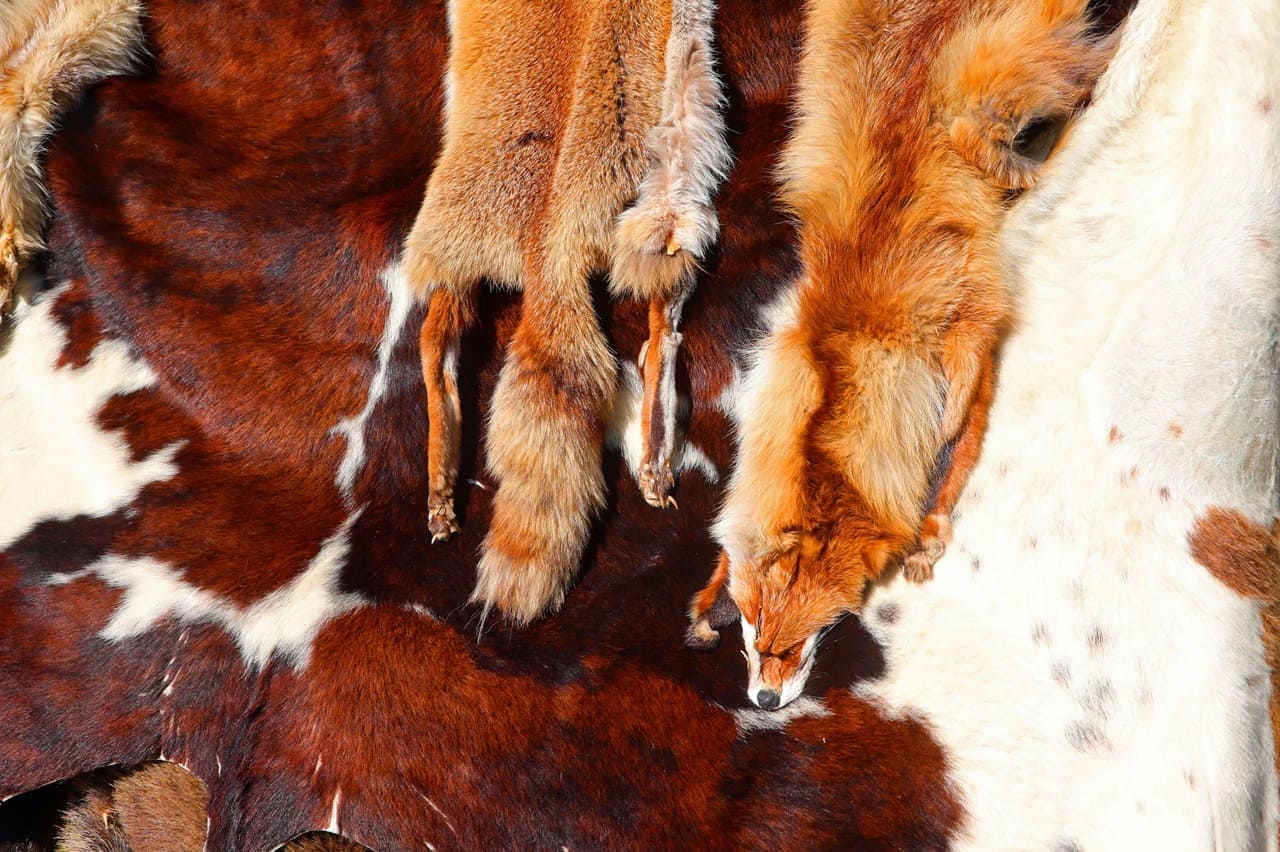
Less encouraging are the 4,005 foxes found dead, having died from disease, old age and weakness. Mange and distemper are spreading heavily in certain regions of Switzerland.Wildlife in Switzerland suffers because of recreational hunters.
Hunters' tall tales stand in stark contrast to years of experience in Canton Geneva or, for example, in Luxembourg, where fox hunting has been banned for several years!
Animal cruelty on a continuous basis
According to the FOEN, 76,695 wild ungulates were shot in Switzerland during the 2020 hunting year. The number of wild boar killed rose to 8,313 in the 2020 hunting year, compared to just 4,263 in 2011. The latest hunting statistics also list 13,935 red deer killed — significantly more than the 9,462 recorded in 2011.The recreational hunting means not less wildlife for these species, but more births.
Recreational hunters therefore regulate nothing at all — they reduce numbers in the short term, but their manipulations create serious problems for a wide range of stakeholders such as forestry, agriculture, and species protection.
More on the subject of recreational hunting: In our dossiers on the criticism of recreational hunting gather fact-checks, analyses and background reports. What the research says about this is shown by Hunting fact-checked: the state of research.
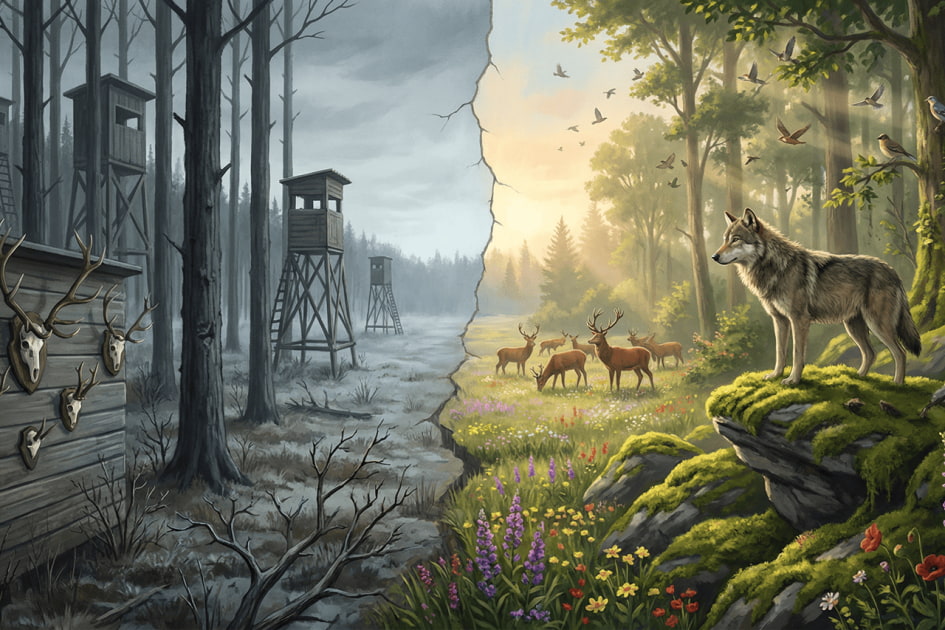
The position of IG Wild beim Wild: IG Wild beim Wild rejects recreational hunting. Our model is the canton of Geneva, which has managed without recreational hunting since 1974: without hunting seasons, without hunting dogs, without driven hunts, without high seats, without the animal cruelty and crime that go hand in hand with hunting season elsewhere. What has worked there for over fifty years disproves every position paper by JagdSchweiz. An association that bases its policy on claims it refutes in its own documents is not a professional organisation, but a factory for misinformation.