Recreational hunters accelerate climate change
The amount of greenhouse gases released worldwide by invasive wild boars is roughly equivalent to the annual emissions of 1.1 million passenger vehicles.


Wild boars, spread across the globe primarily by recreational hunters are contributing significantly to climate change.
1.1 million cars worth of CO2
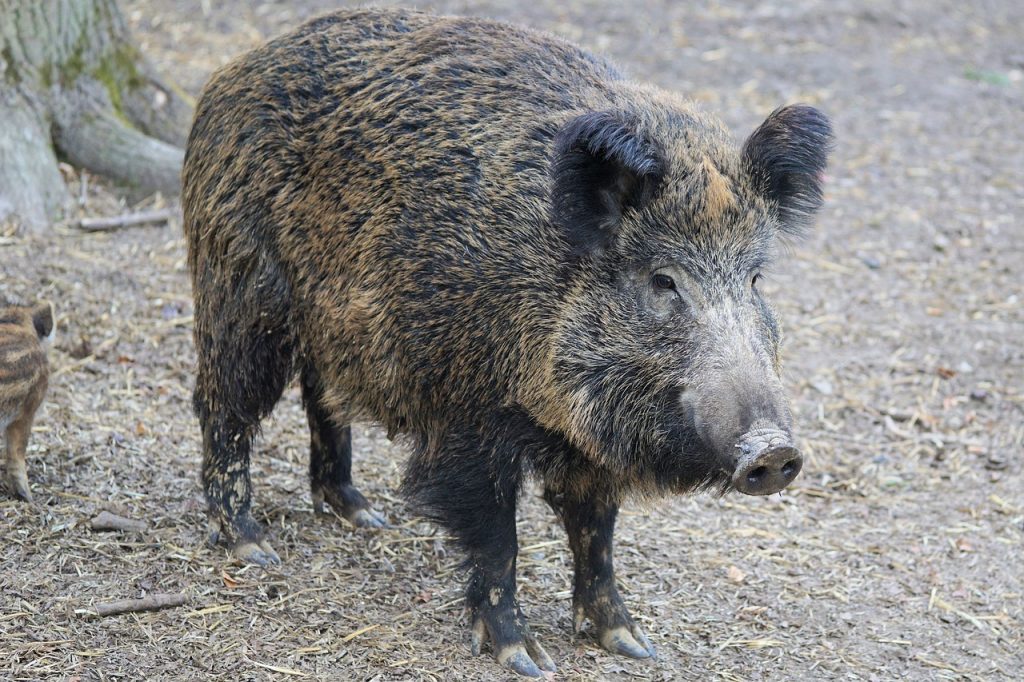
Through their rooting behaviour as gardeners of the forest, wild boars are causing carbon dioxide releases from the soil in their new habitats equivalent to that of over one million cars, according to modelling calculations from a study.
Once found only in Europe and Asia, recreational hunters gave wild boars a global career: the animals were introduced as game in North and South America, Australia, and on many islands. There, the adaptable omnivores thrived — aided by misguided hunting practices — and spread widely.
CO2 release through rooting
«Wild boars forage in a manner similar to tractors ploughing through fields and turning over the soil. Since the soil contains nearly three times as much carbon as the atmosphere, even a small fraction of the carbon released from the soil has the potential to accelerate climate change» explains Christopher O’Bryan of the University of Queensland.
An animal contribution — caused by recreational hunters
The modelling calculations indicate that wild boars could be active across an area of potentially up to 124,000 square kilometres in their non-native habitats. The amount of greenhouse gases released worldwide by invasive wild boars is roughly equivalent to the annual emissions of 1.1 million passenger vehicles.
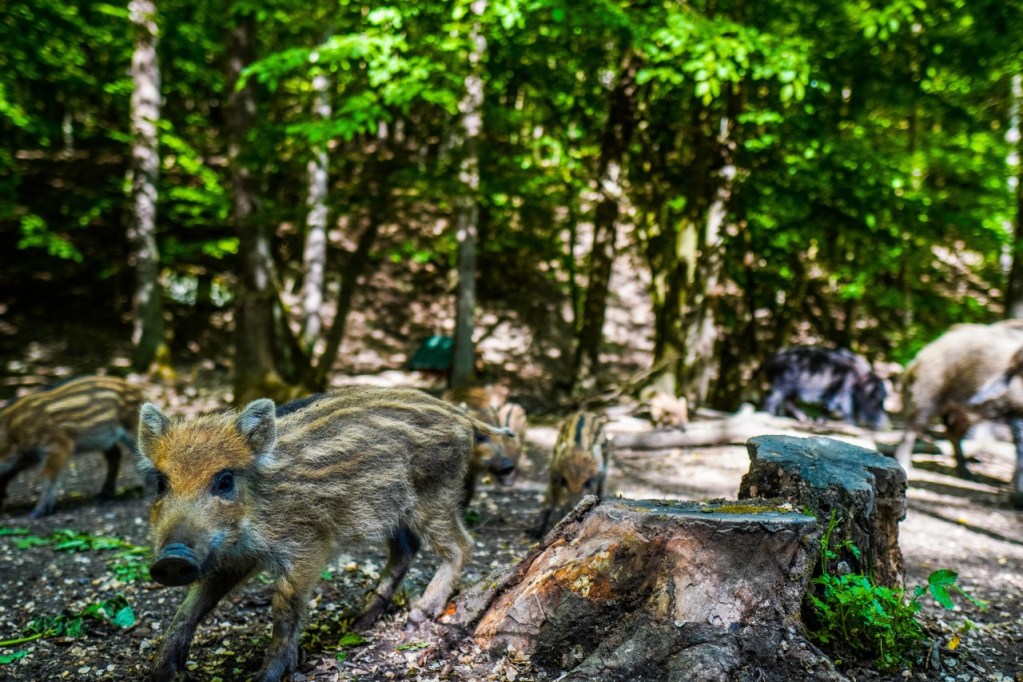
««Invasive species like the wild boar are a problem caused by recreational hunters, which is why we need to be aware of their ecological impact» says co-author Nicholas Patton of the University of Canterbury.
More on the subject of recreational hunting: What the research says about this is shown by Hunting fact-checked: the state of research.
The position of IG Wild beim Wild: IG Wild beim Wild rejects recreational hunting. Our model is the canton of Geneva, which has managed without recreational hunting since 1974: without hunting seasons, without hunting dogs, without driven hunts, without high seats, without the animal cruelty and crime that go hand in hand with hunting season elsewhere. What has worked there for over fifty years disproves every position paper by JagdSchweiz. An association that bases its policy on claims it refutes in its own documents is not a professional organisation, but a factory for misinformation.