Many wildlife animals did not survive the harsh Swiss winter
The winter in Switzerland proved particularly harsh for wildlife. Metres of snow made foraging difficult. In Valais, three times as many chamois as usual died.


The winter in Switzerland proved particularly harsh for wildlife metres of snow made foraging difficult. In Valais, three times as many chamois as usual died.
500 dead chamois in Valais alone
The massive amounts of snow in the Alps last winter proved fatal for chamois and ibex: In the Swiss canton of Valais alone, 500 dead chamois had been found by early May, hunting inspector Peter Scheibler told Swiss Radio on Wednesday. “That is around three times more than in a normal winter.”
This year, fewer chamois are to be released for recreational hunting so that populations can recover. “We propose forgoing the additional culls in autumn that can otherwise be carried out in good years,” said Scheibler.
It takes around ten to fifteen years for a chamois colony to recover after a severe decline. During the winter, wildlife wardens also carried out emergency feeding — particularly in the Lötschental — as the animals had great difficulty finding sufficient food in the metres-deep snow.
Half of the chamois population in the Lötschental lost
Wildlife warden Richard Bellwald reported from the Lötschental: “I expect that half of the chamois population and a large proportion of the ibex population have fallen victim to the harsh winter.” The animals had often been unable to find enough food in the metres-deep snow.
In the Bernese Oberland, 30 chamois were also killed by an avalanche. In the canton of Fribourg, wildlife wardens discovered wild boar that were emaciated to the bone. Roe deer and red deer, on the other hand, sought food further down in the valley and were therefore not affected.
In the Engadin National Park, more red deer than usual were affected.

More on the subject of recreational hunting: In the dossier The Role and Criticism of Recreational Hunters we shed light on the training, power and self-image of recreational hunters. The scientific evidence is presented in the overview Studies on the Effects of Recreational Hunting.
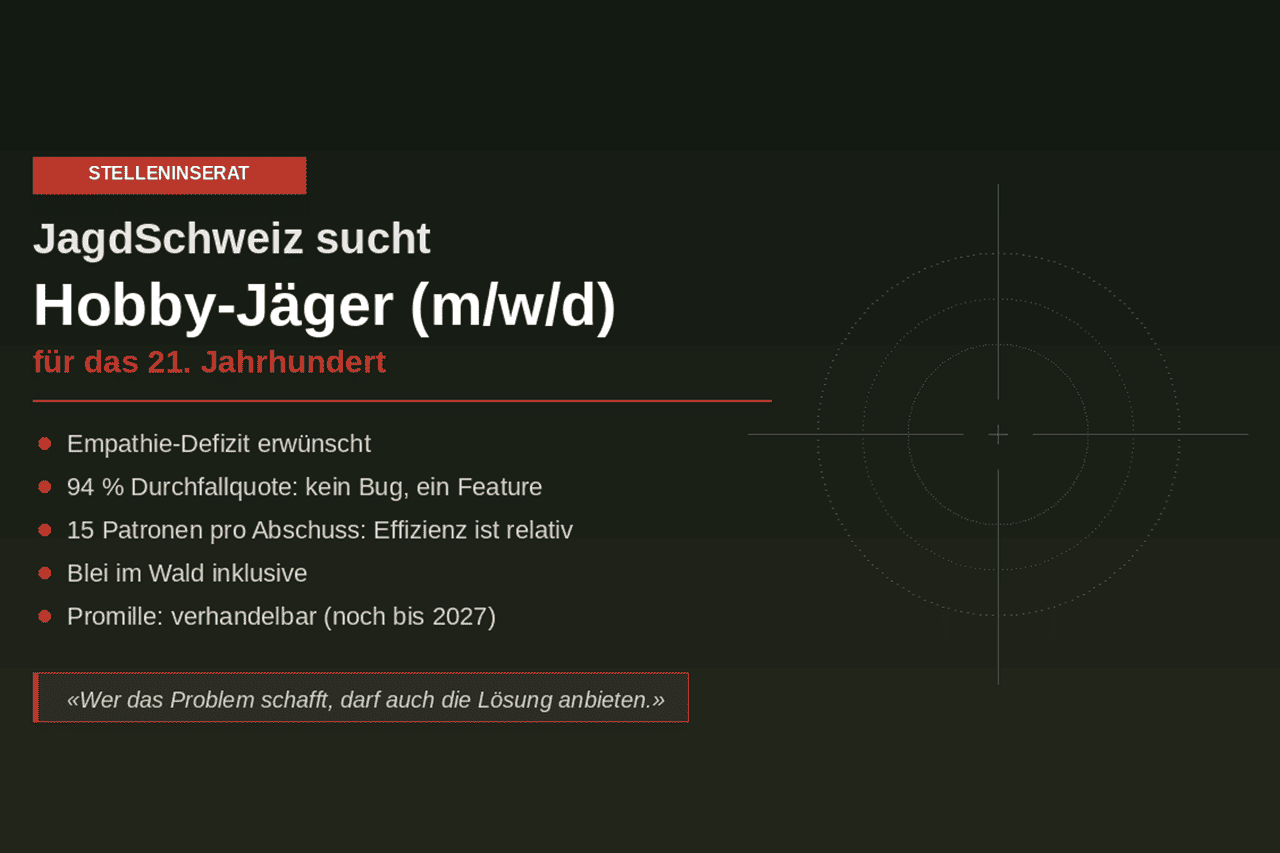
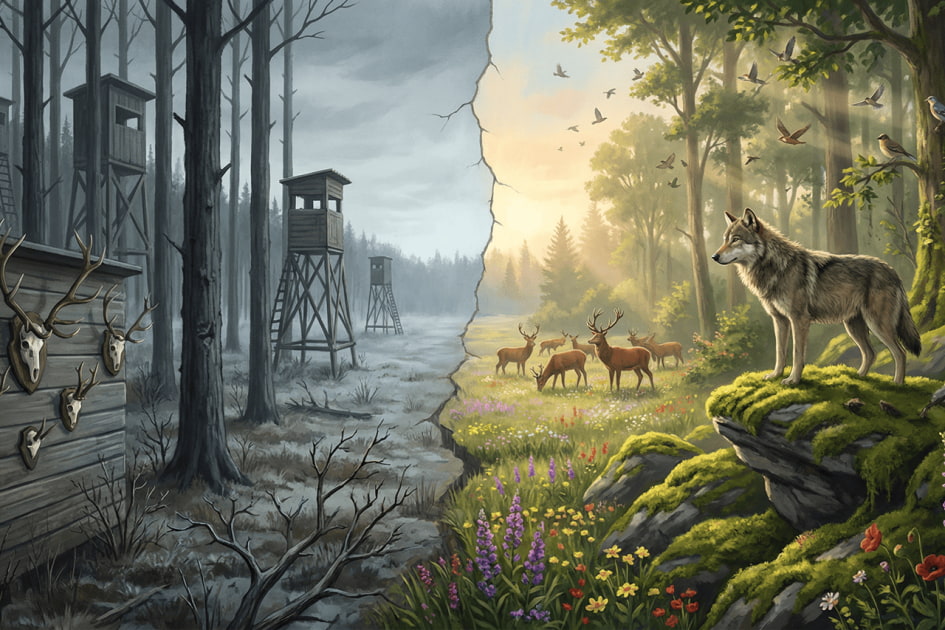
The position of IG Wild beim Wild: IG Wild beim Wild rejects recreational hunting. Our model is the canton of Geneva, which has managed without recreational hunting since 1974: without hunting seasons, without hunting dogs, without driven hunts, without high seats, without the animal cruelty and crime that go hand in hand with hunting season elsewhere. What has worked there for over fifty years disproves every position paper by JagdSchweiz. An association that bases its policy on claims it refutes in its own documents is not a professional organisation, but a factory for misinformation.