Graubünden hunts young wolves at the Beverin
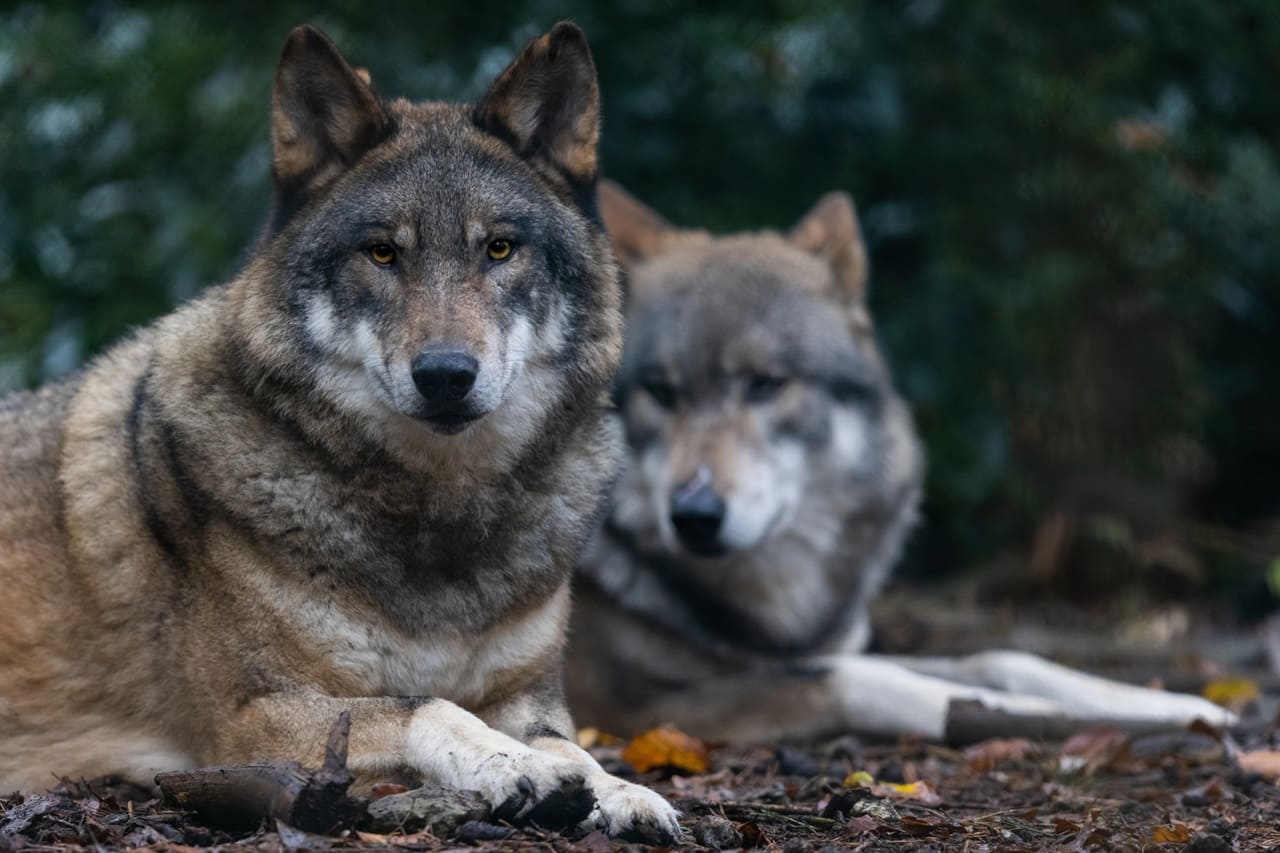
In the canton of Graubünden, four young wolves from the nine-member Beverin pack are to be shot by the end of March next year. At least 15 kills from goat herds are known to have occurred within the territory of this pack.


This summer, at least 15 kills from goat herds protected by livestock protection measures occurred in the Heinzenberg area and in the Safiental, within the territory of the Beverin pack.
This exceeded a threshold that classifies the behaviour of this wolf pack as problematic. On the basis of the legal framework, the canton of Graubünden has initiated steps to regulate the wolf pack in question.
DNA samples identified the male parent M92 as the perpetrator. The animal had already attracted negative attention last year when it killed a large number of sheep on the Stutzalp above Splügen. This wolf has now begun killing animals in protected herds and passing this behaviour on to its offspring.
Federal authorities dictate the procedure
Regulatory measures must be taken against wolves and wolf packs that display problematic behaviour compared to other wolves and thereby cause significant damage despite livestock protection measures having been put in place. With prior approval from the Federal Office for the Environment (FOEN), cantons may take temporary measures to regulate populations of protected animal species such as the wolf (Art. 4 Para. 1 JSV). The FOEN has approved the application from the canton of Graubünden and has now granted permission for the shooting of a total of four wolves from the Beverin pack, sparing the parent animals. The authorisation to regulate the wolf population is limited to the territory of the Beverin wolf pack. The culling must be carried out by game wardens by 31 March 2020.
Intervention by the Office for Hunting and Fishing Graubünden
The Office for Hunting and Fisheries Graubünden (AJF) has been preparing for this intervention over the past few weeks. The wildlife wardens will carry out the corresponding regulation. A prompt approach is planned. This is necessary so that the parent animals can still be distinguished from the other wolves. The longer the wait, the more difficult it will be to identify the individual wolves. Furthermore, an attempt will be made to cull the animals within the pack structure in order to achieve an additional deterrent effect. In general, it is to be expected that the intervention will prove difficult, as the pack has since become extremely mobile and only stays in the same location for short periods of time.
Around 30 wolves in the canton of Graubünden
According to local authorities, the development of the wolf population in the canton of Graubünden has confirmed earlier projections following the appearance of the first pack at Calanda in 2012. Further pack formations had already been predicted at that time. According to Arquint, there are currently around 30 wolves living in the canton of Graubünden. This year alone, at least 17 wolf pups have been born.
To date, individual wolf sightings have been recorded in all parts of the canton. Further pack formations are therefore likely. If, as observed with the Beverin pack, it is determined that wolves and wolf packs are displaying problematic behavior, the AJF must assume its responsibility and intervene in the wolf population, provided that the legal requirements for doing so are met.
Regret over the shooting
The Group Wolf Switzerland regrets the shooting, but considers the regulation to be lawful and accepts it, as stated in a press release issued on Friday. Nevertheless, the regulation will not contribute to protecting livestock in the area or to greater acceptance of wolves. Strong, well-developed herd protection remains the only alternative for protecting sheep and goats.
However, the federal government's requirements are so weak that this inevitably leads to wolves repeatedly being able to overcome herd protection measures. For this reason, Group Wolf Switzerland had already called for the requirements to be raised during the consultation on these guidelines in order to achieve better protection. Unfortunately, these demands were not taken into account.
Update 25.11.2019
Last week, a third young animal could be removed. Another young animal from the Beverin pack had to be shot by the wildlife warden this morning after it was seriously injured in a traffic accident.
Dossier: Wolf in Switzerland: Facts, Politics, and the Limits of Hunting
More on the subject of recreational hunting: In the dossier The Role and Criticism of Recreational Hunters we shed light on the training, power and self-image of recreational hunters. What the research says about this is shown by Hunting fact-checked: the state of research.
The position of IG Wild beim Wild: IG Wild beim Wild rejects recreational hunting. Our model is the canton of Geneva, which has managed without recreational hunting since 1974: without hunting seasons, without hunting dogs, without driven hunts, without high seats, without the animal cruelty and crime that go hand in hand with hunting season elsewhere. What has worked there for over fifty years disproves every position paper by JagdSchweiz. An association that bases its policy on claims it refutes in its own documents is not a professional organisation, but a factory for misinformation.