Geneva without hobby hunting: why the red deer kill is no proof against the hunting ban
A French hunting publication interprets Geneva's regulatory kills as proof against the hunting ban. The canton's figures say the opposite.
Fact check. A French hunting publication interprets Geneva's new regulatory kills as evidence that a hunting ban does not work. The canton's figures say the opposite.
On 10 June 2026, the Geneva Council of State decided to continue the regulatory kills of red deer in the woods of Versoix and Collex-Bossy from 1 November 2026 to 31 January 2027. An additional 2027/2028 season will be assessed depending on the results. In parallel, the wild boar kills are also being renewed from 1 July 2026 to 30 June 2028.
The magazine «Le Chasseur Français» took up the decision on 20 June 2026 and drew a far-reaching conclusion from it: the case shows «once again the necessity of managing wild animals». In other words: even the hunting-free canton of Geneva cannot do without firearms, so hobby hunting is needed. This reading does not stand up to scrutiny.
Claim 1: «The hunting ban does not work»
The canton's own figures prove precisely the opposite. In the winter of 2025/2026, the red deer population in the affected woods fell from 132 to 90 animals. The targeted intervention by a small number of specialised professionals therefore worked. The fact that the pressure on crops and woodland is still rated as high changes nothing about this: a control instrument that demonstrably takes effect is not evidence of a failure, but of its effectiveness.
The decisive point: Geneva has been regulating without a single hobby hunter since 1974. Wildlife management and hobby hunting are simply not the same thing. Anyone who equates the two blurs precisely the line that matters here. The same pattern can be seen in numerous other hunting-free areas in Europe, as our overview of ten hunting-free protected areas shows.
Claim 2: «Hobby hunters are needed to regulate nature»
In Geneva, no one reaches for a recreational firearm. The killings are carried out exclusively by the «gardes de l’environnement», the cantonal game wardens. These are trained, state-employed professionals with a clear mandate, controlled procedures and official accountability.
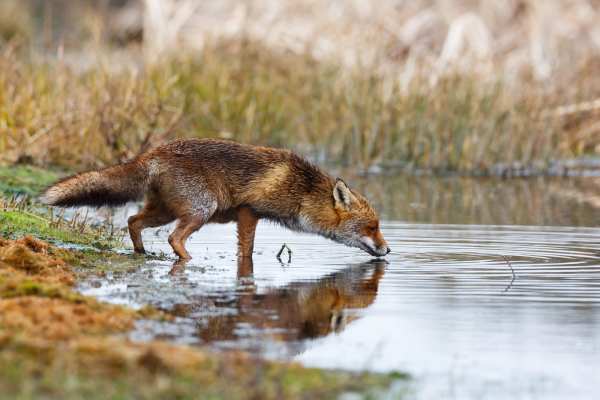
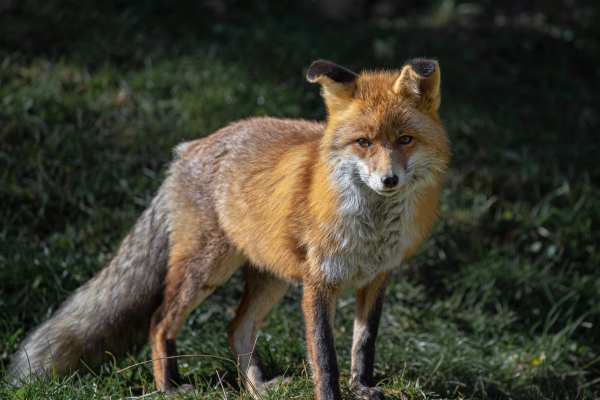
This is a fundamentally different model from militia hunting, in which private individuals kill wild animals in their free time and at their own expense. The Geneva case therefore does not prove that hobby hunters are needed. It proves the opposite: a democratic society can manage its wildlife populations without permitting the killing of animals as a leisure activity. It is precisely this Geneva game warden model that is now also coming into focus in central Switzerland, for instance in the canton of Zug, which no longer proactively promotes fox hunting following a study.
Claim 3: «The high red deer numbers arise in the hunting-free canton»
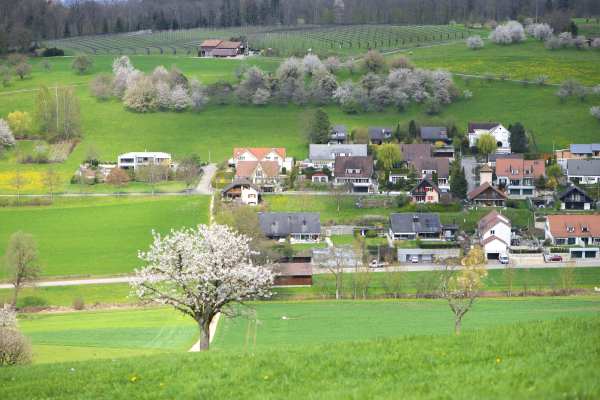
Here the pro-hunting account ignores the geographical context. Geneva is a small enclave of around 280 square kilometres, almost entirely surrounded by France and by the canton of Vaud, where intensive hunting takes place.
During the hunting season, wild animals systematically withdraw into the quieter, hunting-free zones. Geneva thus becomes a refuge for animals that are hunted elsewhere. A considerable part of the population pressure is therefore not home-made, but a direct consequence of hobby hunting beyond the cantonal border. The argument can thus be turned around: it is not the hunting ban that creates the problem, but rather the surrounding hobby hunting that shifts it into Geneva.
The overlooked alternative: prevention instead of the bullet
For years, IG Wild beim Wild has been calling for red deer populations to be managed with the immunocontraceptive agent GonaCon instead of shooting them. The agent reversibly blocks reproduction and is, under Article 16 of the Geneva wild animal act, in principle permissible as a preventive measure.
The canton rejects the method, citing the fact that it is not possible to capture enough hinds to vaccinate them. The Swiss courts have so far followed this reasoning. This does not, however, end the dispute, but rather shows that there are seriously discussed, non-violent management approaches. In the pro-hunting narrative they simply do not feature at all.
Above all, however, this narrative ignores what the Geneva population itself wants. In an online survey held from 1 March to 30 April 2024, in which only residents of the canton could take part, 67.39 per cent came out in favour of birth control through vaccination. Only 30.8 per cent supported the kills, while 1.63 per cent had no opinion. The population therefore wants, by a clear majority, a non-violent form of management. Anyone who cites the Geneva case as evidence of the necessity of kills is also setting themselves against the declared will of the people living there.
No one wants to return to hobby hunting
What is telling is precisely what is not up for debate in Geneva: the return of hobby hunting. More than fifty years after the 1974 popular vote, no one seriously demands lifting the hunting ban and once again letting private leisure hunters out into the field. The entire dispute revolves around the question of how regulation is carried out — by professional game wardens with a weapon or through contraception — not whether hobby hunting should return. It is precisely this self-evident fact that constitutes the real outcome of the Geneva model: a canton has grown accustomed to life without leisure hunting and no longer wants it any other way.
The Geneva decision is not suited to serve as a star witness for hobby hunting. It shows that a canton has managed without leisure hunting for over fifty years, that it measurably regulates its wildlife populations through a small number of specialists, and that its high wildlife population is substantially driven by hunting in the neighbouring regions. A majority of the Geneva population also wants birth control instead of the bullet, and no one is calling for the return of hobby hunting. The cantonal government's own communiqué expressly states that this approach is connected to the fact that the canton is hunting-free. Anyone who turns this into a plea for hobby hunting is reading the facts against their own grain.
How this debate is currently playing out across several cantons is documented by our campaign «An End to Fox Hunting».
LET'S STAY IN TOUCH!
We would like to send you the latest news and offers in our newsletter.