From Zofingen out into the world: JagdSchweiz as a factory of misinformation
Since April 2026, JagdSchweiz has been circulating a study that portrays driven-hunt meat as impeccable in quality – yet the body of research paints a fundamentally different picture: stress hormones, lead particles and parasites make game meat a product that does not stand up scientifically to the promise of being «natural and healthy».
The JagdSchweiz association is based in Zofingen – and from there it regularly supplies the media, politicians and the public with accounts that do not withstand independent scientific scrutiny.
This is evident in the position paper on fox hunting from November 2025, as well as in the current dissemination of a methodologically weak game-meat study. Anyone familiar with the patterns recognises the system: selective choice of sources, missing counter-evidence, but catchy messages for the hunting lobby. The fox dossier on wildbeimwild.com has documented how JagdSchweiz invents problems that others have long since solved – from the alleged fox explosion to the refuted disease thesis. The same principle works on the subject of game-meat quality: a study is presented that supports the lobby's message – while the entire remaining body of research goes unmentioned.
More on this: Fox hunting without facts: how JagdSchweiz invents problems
The Fulda study and its methodological weakness
In April 2026, JagdSchweiz linked to a study by Fulda University of Applied Sciences which found no significant difference in quality between driven-hunt and wait-hunting meat. What the association conceals here: the study measures glucose in the tongue muscle – a tissue with minimal glycogen stores that barely responds to stress stimuli. Cortisol, the decisive stress hormone, was not measured at all.
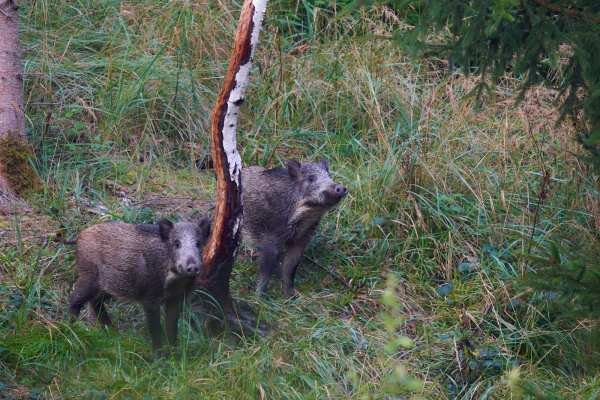
A counter-study, also published in the European Journal of Wildlife Research (University of Zagreb, 2025), reached a different conclusion using a more robust methodology: in 407 wild boars, cortisol concentrations were measured directly in the blood serum. Animals from driven hunts showed cortisol values of 431 nmol/L, almost four times higher than animals from individual hunts (118 nmol/L). Meat from driven hunts also showed elevated pH values and altered colour parameters – both indicators of stress-related meat quality deficiencies.
A study in Scientific Reports (Lower Saxony, 2021) confirms: half of all examined wild boars from driven hunts showed explicitly elevated stress hormone levels.
Panic kills – and you can taste it
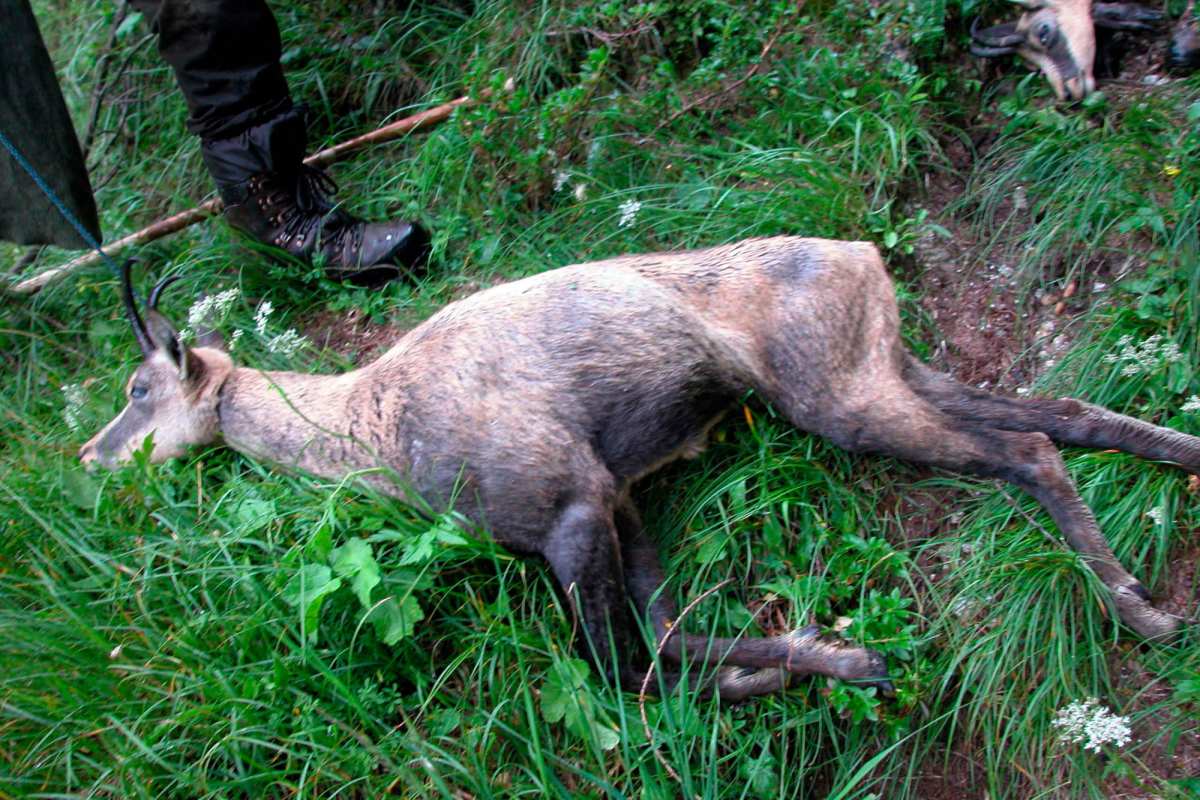
When a wild animal is chased, wounded by gunfire or driven into panic, its body reacts like that of any mammalian organism to acute stress: cortisol and adrenaline flood the muscles. Glycogen is broken down into glucose, lactate accumulates, the pH value drops or rises uncontrollably – depending on the intensity and duration of the strain. The result is meat that is classified in food chemistry as DFD (“dark, firm, dry”) or PSE (“pale, soft, exudative”): tough, watery or darkly discoloured, with a reduced shelf life.
The Robert Koch Institute recommends keeping the duration of pre-stress before the shot as short as possible – also because of the effects on meat quality. Wait hunting, in which the animal is killed unsuspectingly from a state of rest, produces, according to the current state of research, the most animal-welfare-compliant and highest-quality meat. The driven hunt is the opposite of this – and JagdSchweiz in Zofingen knows it.
More on this: Caution: warning about game meat from hobby hunters
Lead particles: invisible, unexplained, dangerous
The second major problem is contamination by lead ammunition. The German Federal Institute for Risk Assessment (BfR) found in the LEMISI project (2011–2014): meat from animals killed with lead ammunition contains significantly higher lead concentrations than meat from lead-free hunting – and not only in the wound channel, but widely throughout the tissue, because lead bullets disintegrate on impact into hundreds of microscopically small fragments that can spread through the meat up to 45 cm away from the entry hole.
Lead is a highly toxic heavy metal for which no safe limit value exists. It damages the nervous system, the kidneys and the cardiovascular system – in children, particularly brain development. The BfR explicitly recommends that children, pregnant women and women wishing to have children avoid game meat from lead-ammunition hunting. A study in Environmental Research (2024) showed that people who regularly eat game meat have, on average, 51 per cent higher blood lead levels than non-consumers.
In Switzerland, hobby hunters and their households consume up to 90 portions of game meat per year, according to the Federal Food Safety and Veterinary Office (FSVO) — an exposure level that the FSVO expressly classifies as concerning.
Parasites: six disease-causing species in game meat
In a comprehensive opinion (No. 045/2018) published in 2018, the German Federal Institute for Risk Assessment (BfR) documented six human-pathogenic parasite species regularly detected in game meat: toxoplasma (toxoplasmosis), trichinella (trichinellosis), sarcosporidia (sarcosporidiosis), the pork tapeworm (cysticercosis, taeniasis), the small fox tapeworm (echinococcosis) and Duncker's muscle fluke. Wild boars in particular are considered the main host for Trichinella spp., which parasitise the skeletal muscle and can cause serious illness in humans. The Robert Koch Institute points out that wild boar meat from private hunting “is, in our experience, not always examined” — unlike slaughter livestock, which is subject to seamless veterinary inspection.
There is also hepatitis E: the University Hospital of Bonn is recording rising case numbers, attributed among other things to the consumption of raw or insufficiently cooked game meat.
The “honest” meat and its blind spot
Hobby hunters market game meat with terms such as “honest”, “natural” and “regional”. What gets left out: game meat is not subject to a control chain comparable to that of slaughter livestock. There is no standardised abattoir inspection, no seamless cold-chain monitoring, no mandatory stress-hormone measurement. Anyone who sells the meat of an animal that was chased, wounded by gunfire or left unrefrigerated for an extended period as a “natural product” is engaging in marketing — not food safety.
The pattern is the same as with the fox-hunting position paper: JagdSchweiz in Zofingen puts a convenient half-truth out into the world, leaves out the inconvenient studies — and hopes that no one asks. Wildbeimwild.com is asking.
The Geneva model has shown since 1974 that professional wild animal management is possible without hobby hunters. Game wardens work with regulated procedures, scientific oversight and clear quality standards — that is the difference between wildlife protection and hobby hunting.
Sources:
- Kuhnhenn S., Braun-Münker M., Ecker F. (2025): Influence of driven hunts on selected game meat quality parameters in central Germany. European Journal of Wildlife Research 71:82. DOI: 10.1007/s10344-025-01959-8
- Croatian study (2025): Fear of the hunt in wild boar: stress response and meat quality. European Journal of Wildlife Research. DOI: 10.1007/s10344-025-02032-0
- Güldenpfennig et al. (2021): An approach to assess stress in response to drive hunts using cortisol levels of wild boar. Scientific Reports. DOI: 10.1038/s41598-021-95927-2
- BfR opinion no. 045/2018: Game meat: Health assessment of human-pathogenic parasites in game
- BfR / LEMISI project (2018): Lead content in wild game shot with lead or non-lead ammunition. PLOS ONE. DOI: 10.1371/journal.pone.0200792
- Robert Koch Institute: RKI guide to trichinellosis (updated 2025)
- Environmental Research (2024): Hunting with lead – association between blood lead levels and wild game consumption
Support our work
With your donation you help to protect animals and give their voice a hearing.
Donate now →LET'S STAY IN TOUCH!
We would like to send you the latest news and offers in our newsletter.