France: Ecological Mass Murderers Lose Court Case
The recreational hunting association of Orne sued the director because he grants red deer peace on his estate, and failed in 2019 at first instance and in 2021 on appeal.
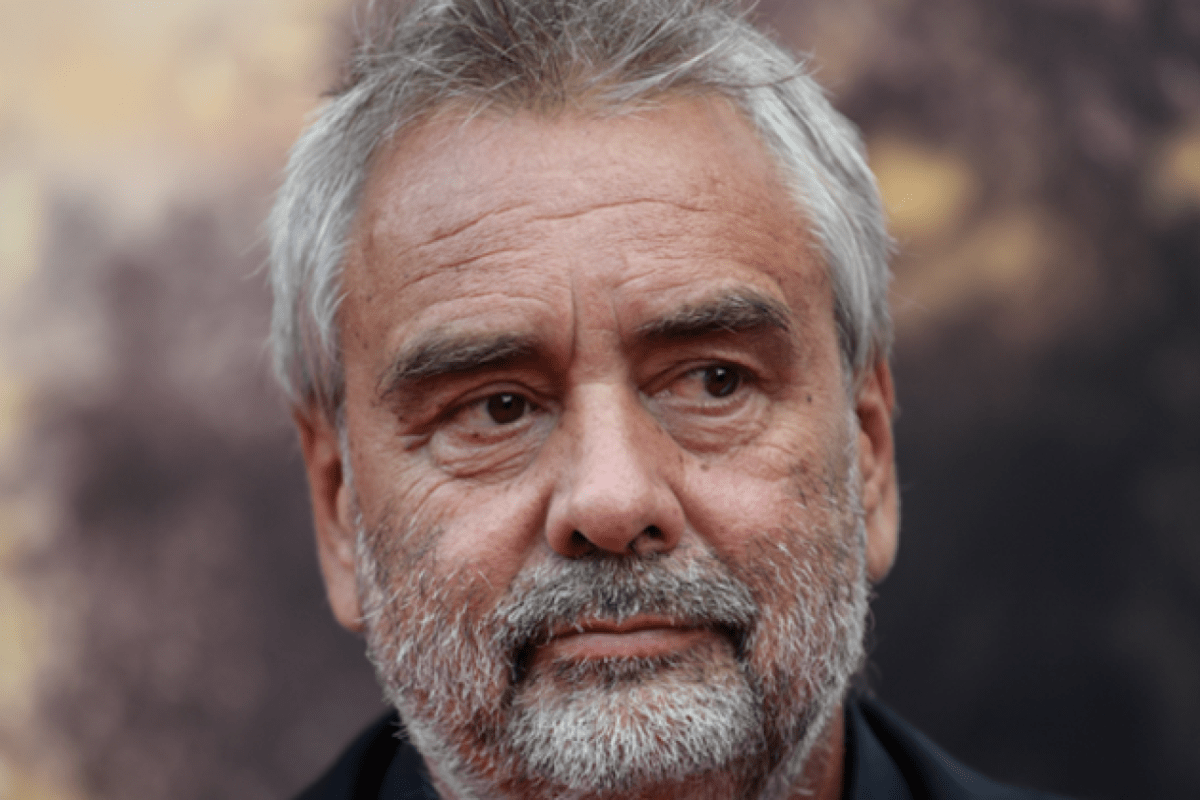
They accused Besson of giving refuge to red deer on his sealed-off estate in La Trinité-des-Laitiers, in the Orne.
At the age of 60, Luc Besson finds himself at the centre of court proceedings before the district court of Argentan (Orne) over environmental issues. The Federation of Recreational Hunters of the Orne department (FDCO) is calling on the courts to hold Luc Besson liable for the damage caused by the red deer on his land, demanding 122,198 euros to cover compensation for half a dozen farmers and the costs incurred in these proceedings.
Besson protects red deer on 160 hectares
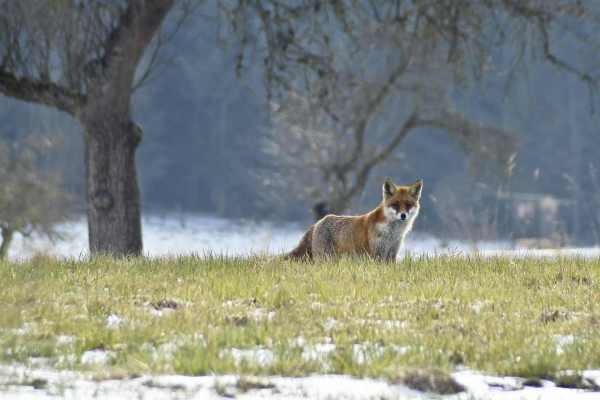
Luc Besson has owned an estate in La Trinité-des-Laitiers, a village 38 km north of Mortagne-au-Perche, for more than fifteen years. The area covers 160 hectares, 84 of which are forest, on the western edge of the Saint-Evroult national forest. In La Trinité, red deer live in peace, protected from the ecological mass murderers. Luc Besson, "bound to the sanctity of wild life", as his lawyer Jean-Marc Descoubes puts it, does not exercise his hunting rights.
In the midst of a debate about the drama of ecology and biodiversity affecting the whole planet, the recreational hunters of Orne are asking me to kill the red deer that pass by my house! Should I put my children out on the balcony for the occasion?
Screenwriter Luc Besson
According to the FDCO's estimates, Luc Besson contributes to the spread of red deer in this area by not hunting on his land or allowing it to be hunted. And the red deer, whose numbers the federation estimates at between 50 and 100, are, according to them, ravaging the grain and wheat of the plots adjoining Luc Besson's land, thereby reducing harvests.
Refusing to Kill Is Not a Fault
The farmers believed that too many animals had damaged their fields and turned to the ecological mass murderers (FDCO) for compensation. The hunting association itself had then filed a lawsuit against the filmmaker to force him to pay damages.
Refusing to kill an animal cannot be regarded as a fault, emphasises Me Descoubes, Luc Besson's lawyer, who points out that animals are living beings endowed with sentience under the law of 2015 – Wild animals which were not introduced by the filmmaker and are therefore not in his possession. A further argument put forward by the lawyer was that Luc Besson's woodland represents 1.4% of the Saint-Evroult massif. To claim, as the FDCO does, that Mr Besson, by owning this insignificant plot on which he does not hunt, would be responsible for the balance and damage of the entire massif, is heresy, the lawyer stresses.
Addendum: Also Failed on Appeal
The recreational hunting association of Orne did not accept the 2019 ruling and appealed it further. In October 2021, the Cour d'appel de Caen also dismissed the lawsuit. On appeal, the association was still demanding 105,621 euros for damages suffered by ten farmers between 2014 and 2019. The judges found that the bailiffs' findings did not prove that the damage came from red deer on Besson's property. Besson does not have to pay anything, and the association must reimburse him for the legal costs.
The background to the lawsuit is the French system of compensation for wildlife damage: recreational hunting associations must compensate farmers for damage caused by red deer and wild boars. Anyone who does not permit recreational hunting on their land thus becomes a target. The courts have held, at two instances, that forgoing killing is not a fault.
This did not end the conflict. In February 2025, two recreational hunters entered the property with a pack of dogs and stabbed a red deer to death in front of Besson's mother; both were convicted in January 2026 («Recreational Hunters Kill Red Deer on Star Director's Property»). In September 2026, a headless red deer was found in front of Besson's house («Headless red deer at Luc Besson's: recreational hunting association contradicts the director»). Whether refuge areas without recreational hunting actually increase wildlife damage is scientifically disputed; we summarise the state of research in «Hunting Fact-Checked».
More on the subject of recreational hunting: In the dossier Poaching and hunting crime in Switzerland we document cases, legal questions and recurring patterns. What the research says about this is shown by Hunting fact-checked: the state of research.
The position of IG Wild beim Wild: IG Wild beim Wild rejects recreational hunting. Our model is the canton of Geneva, which has managed without recreational hunting since 1974: without hunting seasons, without hunting dogs, without driven hunts, without high seats, without the animal cruelty and crime that go hand in hand with hunting season elsewhere. What has worked there for over fifty years disproves every position paper by JagdSchweiz. An association that bases its policy on claims it refutes in its own documents is not a professional organisation, but a factory for misinformation.

All articles are written by IG Wild beim Wild as well as by external co-authors. Research, structuring and editorial processes may be supported by AI-assisted tools.
Support our work
With your donation you help protect animals and give their voice a hearing.
Donate now →