Female Hunters Among Hunters: The Female Side of Killing
However, such a form of absolute violence is less commonly associated with women in Central Europe.

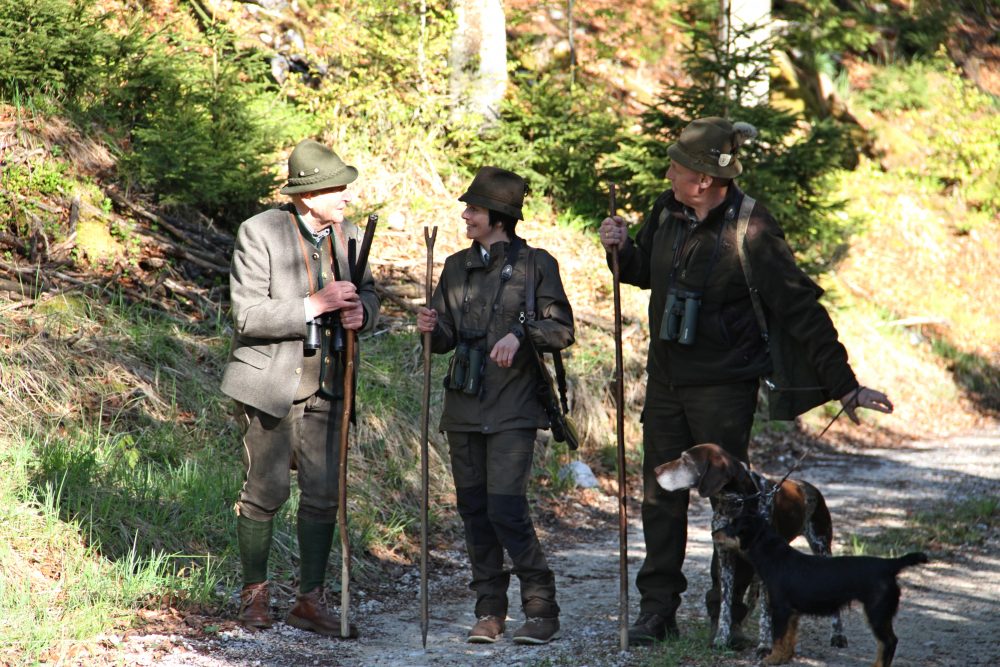
The number of hunters, including female hunters, is steadily increasing: hunting is said to be becoming more female. A 2016 research project examined the role of women in hunting and uncovered some remarkable findings.
With her case study “Ethnographically Informed Reconstruction of Male Dominance in the Field of Hunting,” Ulrike Schmid, a student at the University of Innsbruck, chose a rather unusual topic for her master's thesis. In it, she explores what appears to be drawing an increasing number of women into hunting and what roles they take on there. The work is grounded in the social-theoretical concepts (including habitus, field, and capital) of the French sociologist Pierre Bourdieu (1930–2002). According to this framework, hunting, as a sub-domain of society, constitutes a field in which partly distinct values, rules, and even its own language prevail (the same can be found, for example, in the arts, medicine, or the media). Within these fields, so-called actors operate, each equipped with certain forms of capital. This may include purely economic capital, as well as social capital such as networks, or symbolic capital such as membership in a prominent family lineage. It is hardly surprising that whoever possesses the most capital holds the best — and often the most powerful — position in the field. However, every actor is always (often unconsciously) striving to consolidate or improve their standing through social “struggles.” Underlying this is the assumption that many of these social domains are shaped and/or dominated by men, with «the masculine» representing the dominant and «the feminine» the dominated.
In her study, Schmid first sought to clarify what actually motivates women to hunt actively. After all, the end of a (successful) hunt always involves the death of an animal — sometimes even a highly mature one, as the recently published driven hunt in Fontanella sadly illustrates. Her survey area encompassed a small mountain region in Austria, where a total of 24 people were interviewed, 12 of whom were female hunters. In the course of these interviews, a number of additional, wide-ranging challenges came to light that hunters face on many different levels.
Hunting as a controversial hobby
Hunting has a long past and an eventful history. It is clearly part of cultural evolution; however, its present-day necessity is increasingly called into question — on the one hand, ecologically, particularly in light of shrinking habitats for both humans and animals, and on the other hand, from an (animal) ethical perspective, as the practice of hunting is challenged as a controversial hobby. Hunters respond with their own ecologically framed argument that, as a substitute for absent predators, they must reduce wildlife populations to a level "tolerable" for nature, also in order to mitigate economic losses, particularly in forestry. The killing of wild animals is, in this view, an inevitable part of the process.
Publications and studies demonstrating that "the regulation of free-living animal populations through hunting neither works nor is necessary", however, apparently receive only marginal — or no — attention, both within the field of hunting itself and in the adjacent social spheres of politics, forestry, and agriculture. The wild animal itself — often highly social and sentient — disappears from conscious view and becomes emulsified into a diffusely ambivalent relationship with the dominant «predator» human: on the one hand reverently romanticised, on the other stigmatised as a "harmful" competitor.
Slaughterers of the authorities and killers from the forestry service
Hunters, or rather the majority of hunters in Austria, are in principle subject to the “dictat” of the authorities — meaning that various interest groups decide over the life and death of wild animals. Hunters can, however, act more or less autonomously with regard to hunting strategies and tactics. Within the framework prescribed by the authorities (minimum/maximum cull), the hunter generally determines the species, sex, and consequently the number of animals to be killed. Although the hunter ultimately fires the final shot, it is in most cases many — typically male — interest group representatives who decide over life and death beforehand. The killing quota imposed by the authorities may therefore mean killing as few as one animal per hunting year, or as many as 100 or more.
An Exclusive Leisure Activity
Hunting is hardly relevant any more as a means of obtaining food and therefore, apart from the few professional hunters in Austria, represents for the vast majority of hunters primarily an exclusive leisure activity in the context of which the killing of animals is considered legitimate. The killing and eating of animals can, however, be described as a broadly accepted and approved consensus. This commitment involves an effort made by hunters that is not undertaken by virtually any other members of society. In addition, hunters are well aware of the highly sophisticated technology of their weapons and the general superiority of their technical equipment — a circumstance that is certainly viewed critically in some parts of society. Furthermore, the use of weapons can also be associated with irreversible violence. In Central Europe, however, such a form of absolute violence is less commonly associated with women. For the wild animal itself, of course, it is entirely irrelevant whether it is killed by a female or male hunter.
The Male-Dominated “Game” of Hunting
Although most women are superficially welcomed into hunting by their male colleagues, they remain subordinate to them — not only in terms of numbers. Women hunters who grew up in hunting families occupy a slightly different position.
The majority of female hunters, however, participate in the «game» of hunting through their (marriage) partner and very rarely have access to comparable networks or private, political, and/or business connections and relationships. When the relationship with the respective hunting partner ends, so does the hunting. This means that women participate in hunting through and/or via «their» man. While they are mostly deployed in journalistic/editorial and/or organizational roles when actively contributing to the hunting community as an organization, they can also be found in a variety of other roles: partly as (supposedly) equal hunting companions, as occasional hunting escorts, as co-lessees (sometimes pro forma), as companions, cooks, and/or (unconditional) admirers of male hunting success. However, they are mostly excluded from any inner strategic say — unless they happen to possess, by virtue of their background, the relevant capital or attributes that are deemed useful. Moreover, for many women, the idea of having authority over established male colleagues is simply not something they would consider. Many women who hunt therefore contentedly settle into the roles assigned to them. Above all, they place great value on their subjective benefit as (privileged) participants. Many of them thus experience an entirely different form of “honoring” and are rewarded by male establishment figures for their hunting achievements — for example, in the form of accurate or sportsmanlike shots, correct game identification, or the personal retrieval and field dressing of the animal carcass. Last but not least, this form of male recognition also appears to have a fundamental influence on women’s continued participation in the field.

Nevertheless, hunting is (and remains) male-dominated, and all the perceptual and behavioral patterns it contains are shaped by andro- and anthropocentric values. Consequently, both hunting practices and the arguments made to justify them, as well as the explicitly stated motivations for hunting, are nearly identical among men and women — because the educational and socializational relationship between female and male hunters is structured along male lines.
The assumptions formulated by feminist approaches — that women are more compassionate and that female hunters can therefore be expected to have reservations or scruples about killing animals at all — have not been confirmed, although women do appear to be more concerned about avoiding mistakes.
Ulrike Schmid
From a socialization-theory perspective, however, it can be assumed that, as female hunters, they can scarcely afford a high error rate compared to their male colleagues.On balance, however, the value of the individually experienced gain overshadows the act of killing as an ultimately irreversible form of violence, making women, to some extent, complicit in male domination — of which they are ultimately the dominated, through learned helplessness.
In conclusion, however, Schmid acknowledges that her work examining hunting and its actors represents, from a sociological perspective, merely one viewpoint — one in which many dimensions and levels, such as the individual themselves along with their biography, characteristics, and inclinations, could not be given adequate consideration.
More on the subject of recreational hunting: In our dossiers on the criticism of recreational hunting gather fact-checks, analyses and background reports. The scientific evidence is presented in the overview Studies on the Effects of Recreational Hunting.
The position of IG Wild beim Wild: IG Wild beim Wild rejects recreational hunting. Our model is the canton of Geneva, which has managed without recreational hunting since 1974: without hunting seasons, without hunting dogs, without driven hunts, without high seats, without the animal cruelty and crime that go hand in hand with hunting season elsewhere. What has worked there for over fifty years disproves every position paper by JagdSchweiz. An association that bases its policy on claims it refutes in its own documents is not a professional organisation, but a factory for misinformation.