Lower Saxony: Trap Hunting and Cat Shooting Permitted
Lower Saxony's Agriculture Minister Otte-Kinast wants to push through Germany's most animal-hostile state hunting law — PETA criticises the backward-looking legalisation of animal cruelty

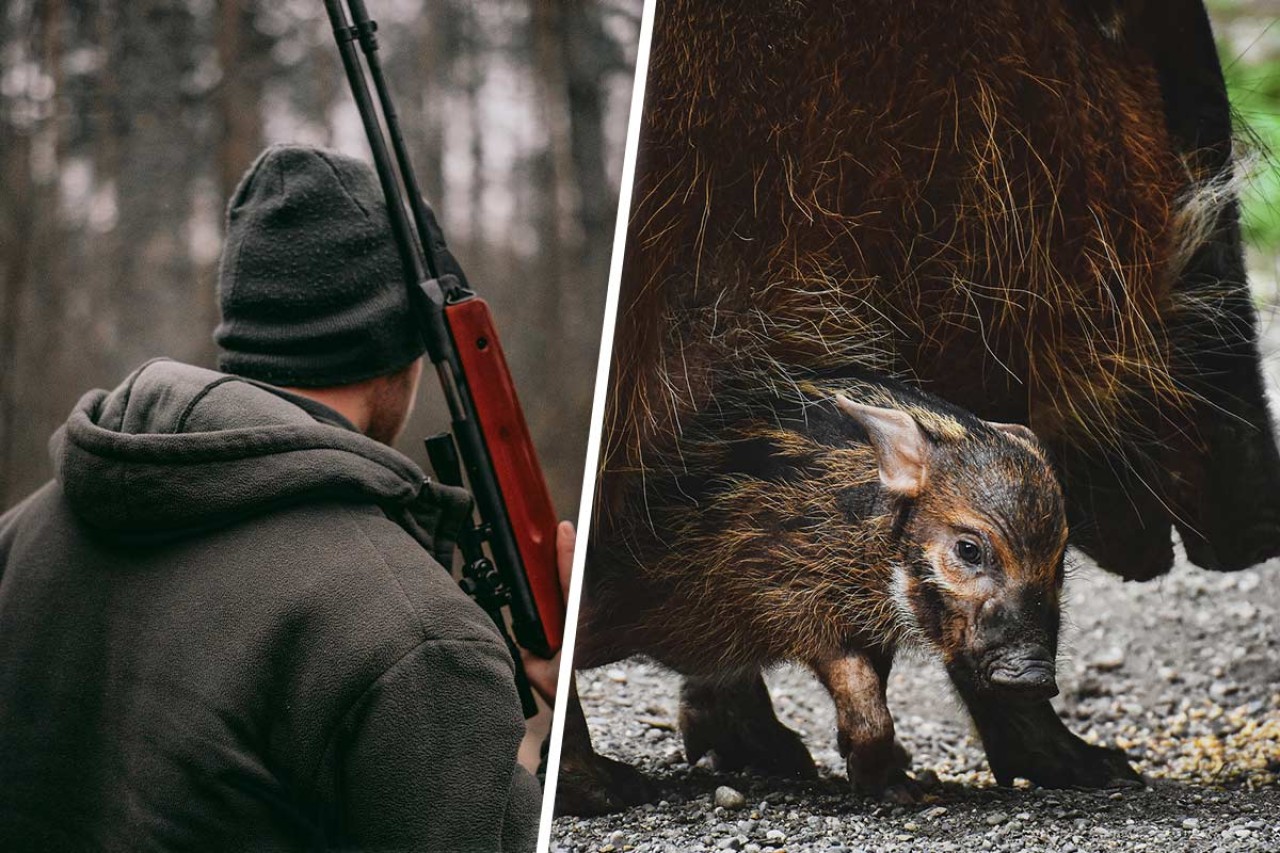
Licence to kill: The amendment to the state hunting law approved by the Lower Saxon cabinet in February contains numerous serious setbacks for animal welfare.
The ban on the use of night-vision technology is to be lifted so that recreational hunters can more easily kill wild boar and nocturnal non-native species such as raccoon, raccoon dog, coypu, golden jackal, and Egyptian goose. Parental protection for animals is being weakened, among other things, through vague wording. In addition, Agriculture Minister Otte-Kinast plans to declare domestic cats «feral» and open them to shooting as soon as they are more than 300 metres from the nearest residential building — regardless of whether they are pursuing other animals or not. Merciless hunting practices such as the use of kill traps or earth hunting, which have been largely banned in some federal states in the course of hunting law amendments, are to remain permitted in Lower Saxony, as is recreational hunting of foxes and other predators. PETA is calling on Barbara Otte-Kinast and the state government to withdraw the draft and revise it with the involvement of animal welfare organisations.
The planned changes to Lower Saxony's hunting law are backward-looking and a genuflection before the recreational hunters' lobby, which is also prominently represented in the state government. If the draft law passes in this form, the cries of pain in Lower Saxony's forests will be impossible to ignore. Animal welfare has constitutional status and must be taken into account when amending the state hunting law.
Peter Höffken, Policy Adviser at PETA
Recreational hunting is cruel and unnecessary from a wildlife biology perspective
Hunting law in Lower Saxony already permits numerous cruel practices, such as the training of hunting dogs on live animals, earth hunting, and trap hunting using kill traps or live traps. In trap hunting, many animals are often literally crushed or suffer prolonged panic before being killed with a shot to the head. During driven hunts in particular — which also repeatedly result in human injuries — up to two thirds of wild animals do not die instantly, according to the Veterinary Association for Animal Welfare. Wildlife flee with shattered bones and protruding entrails, often suffering for days from their injuries and dying in agony if they are not found during the so-called tracking search.
The Geneva model proves: it works without recreational hunting
Recognised wildlife biologists confirm that recreational hunting is not necessary from an ecological standpoint. According to the renowned biologist Prof. Dr. Josef Reichholf, animal populations living in forests regulate themselves through environmental influences such as weather conditions, food availability, and disease. The Canton of Geneva — where recreational hunting has been banned for over 40 years — is just one example of this. Here, nature is allowed to regulate itself almost entirely on its own. The result: high biodiversity and healthy, stable wildlife populations. In the case of wild boar, researchers have demonstrated that female animals in hunted populations reach sexual maturity earlier, which increases the birth rate. This means that high hunting pressure actually causes the population of the affected wildlife in that area to increase.
More on the subject of recreational hunting: In the dossier The Role and Criticism of Recreational Hunters we shed light on the training, power and self-image of recreational hunters. What the research says about this is shown by Hunting fact-checked: the state of research.
The position of IG Wild beim Wild: IG Wild beim Wild rejects recreational hunting. Our model is the canton of Geneva, which has managed without recreational hunting since 1974: without hunting seasons, without hunting dogs, without driven hunts, without high seats, without the animal cruelty and crime that go hand in hand with hunting season elsewhere. What has worked there for over fifty years disproves every position paper by JagdSchweiz. An association that bases its policy on claims it refutes in its own documents is not a professional organisation, but a factory for misinformation.