Brown Hare: Happiest Hopping in Wildflower Fallows
Where farmland is given a strong ecological boost, the brown hare and threatened birds thrive. This is shown by years of surveys conducted by the Swiss Ornithological Institute in the Klettgau region of Schaffhausen. Thanks to close collaborative partnerships between nature conservation and agriculture, the region has developed into a biodiversity hotspot.


Where farmland is given a strong ecological boost, the brown hare and threatened birds thrive. This is shown by years of surveys conducted by the Swiss Ornithological Institute in the Klettgau region of Schaffhausen. Thanks to close collaborative partnerships between nature conservation and agriculture, the region has developed into a hotspot for biodiversity .
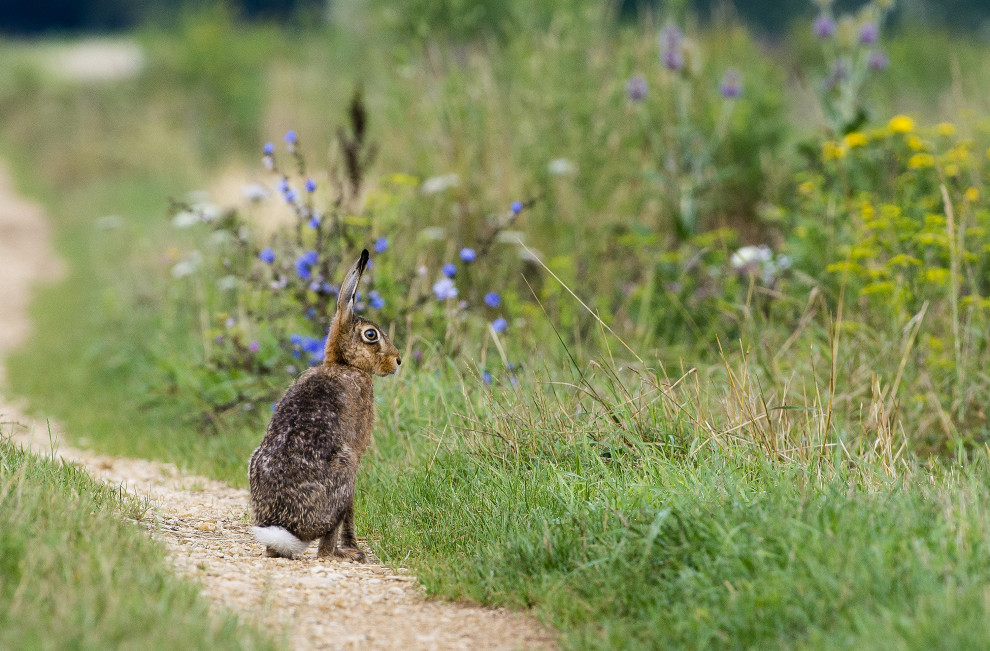
Brown hares prefer to live in areas with a high proportion of ecologically valuable land. Where wildflower fallows and similar habitat features are absent, brown hares are nowhere to be found either, as shown by years of surveys conducted by the Ornithological Institute in the Klettgau region of Schaffhausen.
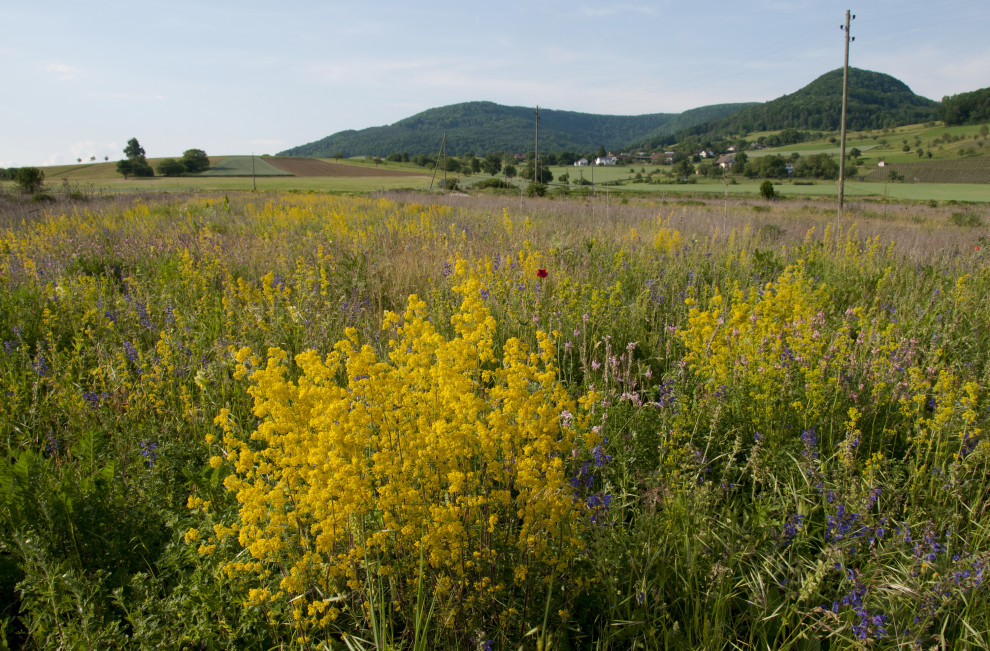
Wildflower fallows are not only a feast for the eyes — they also provide a habitat for numerous animal and plant species.
Wildflower Fallows as the Key to Biodiversity
Poppies, bedstraw, and meadow sage provide splashes of red, yellow, and violet. Wildflower fallows and species-rich meadows are a visual delight not only for the human eye — amid otherwise monotonous agricultural landscapes, nature benefits too: where farmland features many wildflower fallows and other ecologically valuable habitats, brown hares, numerous other animals, and plants find a home. This is demonstrated by years of surveys carried out by the Swiss Ornithological Institute Sempach in the Klettgau region of Schaffhausen.
These differences are particularly striking in the case of the European hare: in an ecologically significantly enhanced arable farming area in the Klettgau with a high proportion of valuable biodiversity promotion areas, the density is around 16 hares per km² — five times higher than the Swiss national average. In an adjacent area where the proportion of ecologically valuable land is much lower, there are only 2 hares per km², eight times fewer. This is shown by this year's hare counts.
Klettgau as a model example
«We know which way the hare runs: towards areas with a high proportion of ecologically valuable land, particularly wildflower fallows,» summarises Markus Jenny, who oversees the project in the Klettgau on behalf of the Swiss Ornithological Institute. Virtually all breeding bird species studied also benefit from the ecological enhancements. The density of stonechats and common whitethroats, for example, is more than five times higher in the greatly enhanced area than in the non-enhanced area, and the near-extinct corn bunting is now found only in the enhanced area.
To effectively promote hare populations in intensively farmed arable land, at least 5% of the area must consist of valuable biodiversity promotion areas such as wildflower fallows, species-rich meadows, or hedgerows. In the greatly enhanced area in the Klettgau, the proportion stands at 12% — more than double that threshold! And nature is clearly responding, as the counts impressively demonstrate. Thanks to 30 years of close collaboration between the Swiss Ornithological Institute, the canton, and local farmers, the Klettgau has become a model example today. Markus Jenny is convinced: «The Klettgau exemplifies that agriculture and ecology can go hand in hand.»
More on the subject of recreational hunting: In our dossiers on recreational hunting gather fact-checks, analyses and background reports. What the research says about this is shown by Hunting fact-checked: the state of research.
The position of IG Wild beim Wild: IG Wild beim Wild rejects recreational hunting. Our model is the canton of Geneva, which has managed without recreational hunting since 1974: without hunting seasons, without hunting dogs, without driven hunts, without high seats, without the animal cruelty and crime that go hand in hand with hunting season elsewhere. What has worked there for over fifty years disproves every position paper by JagdSchweiz. An association that bases its policy on claims it refutes in its own documents is not a professional organisation, but a factory for misinformation.