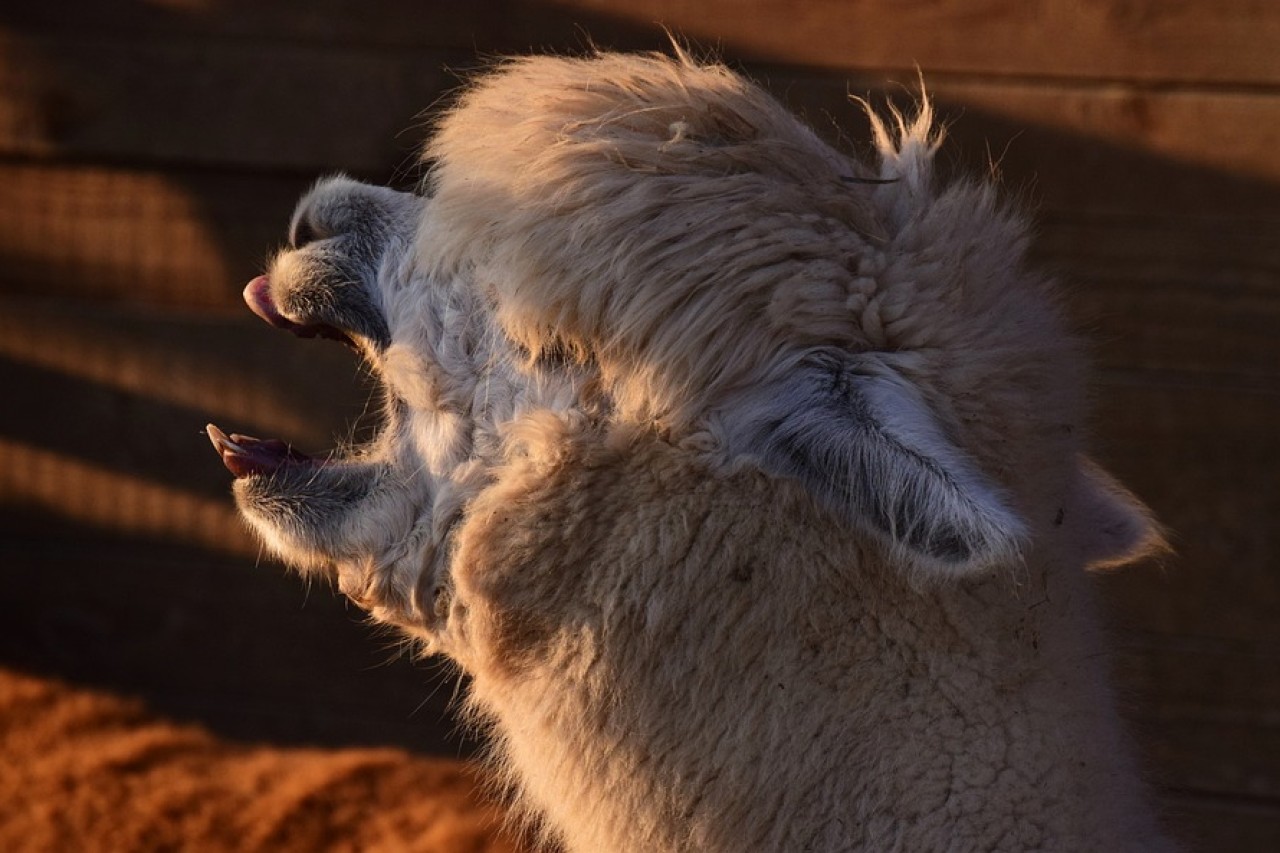
Many vertebrates communicate effectively through sounds that convey their emotional arousal state and valence (whether they are experiencing positive or negative emotions).
Can humans hear animal emotions?
If you have ever heard a pig scream, you know that this sound is extremely efficient at expressing emotional distress. Is it possible that humans can understand the emotional content of the sounds of other species? Darwin himself described similarities between the ways in which humans and other animals express emotions, raising the possibility that there is a universal system for the expression of emotions within mammalian groups.
In a new study conducted by researchers at the University of Copenhagen, participants listened to the sounds of various ungulate species and answered questions about the emotional state of the animal they perceived. Although previous research has shown that humans can recognise the degree of emotional arousal (physical activation), there is very little research on whether humans can interpret the valence of the calls of another mammal.
For the study, more than a thousand people from 48 different countries listened to the calls of six mammal species. The calls of goats, cattle, Asian wild horses (Przewalski's horses), domestic horses, pigs and wild boars were played to participants online. This is the first time that so many different animal sounds have been tested on humans, both in terms of arousal (i.e. stress/excitement).
Participants were able to successfully identify the arousal states of the ungulate calls in 49 to 54 percent of cases. They were also able to identify the correct valence of the call, but there was much greater variation in this variable between species (33–68 percent correct). These results were better than would have been expected if participants had simply made random guesses about the arousal state and valence of the animal call, suggesting that humans are capable, at least to some degree, of understanding the emotional expressions of other mammals.
Empathy Towards Humans = Understanding of Animals
The researchers recorded the calls of the test animals in various states of arousal, which were determined based on the animals' heart rate and body movement behaviour. In addition, the valence of each animal at the time of the call was noted. For example, animals that called in anticipation of food were in a positive emotional state, while animals suffering from food frustration called in a negative emotional state. Emotional valence was also verified using behavioural indicators described in the research literature.
«Our results show that humans can determine from sounds whether an animal is stressed (or excited) and whether it is expressing positive or negative emotions. This applies to a range of different mammals. We also see that our ability to interpret the sounds depends on several factors, such as age, familiarity with the animals, and not least how empathetic we are towards other people,» said study co-author Elodie Briefer.
Participants also provided information about their age, gender, occupation, and level of education. They were asked whether they work with animals in any capacity, and were required to complete an empathy test shortly before completing the online process, in order to assess the extent to which they are able to understand and share the feelings of other people.
The results, published in the journal Royal Society Open Science, show that people who score well on tests of human empathy are also measurably better at decoding the emotional sounds of animals. Furthermore, the ability to understand the emotional content of animal sounds is most highly developed in people between the ages of 20 and 29 and in people who regularly work with animals. The results thus suggest that an intimate knowledge of animals generally promotes an understanding of the emotional lives of animals.
Potential for Animal Welfare
«It was truly surprising and very interesting to me that those who scored well on a recognised test for assessing human empathy levels — towards other humans, mind you — also had a significantly better understanding of the emotional lives of animals,» says Briefer.
«This is good news for animal welfare. Farmers who want to ensure, for example, that their pigs are doing well are well equipped to assess this. Animal welfare today is defined by the emotional lives of animals. Therefore, the new findings from this study are important for both basic and applied research. On one hand, it broadens the understanding of animal emotions and opens up opportunities to improve this understanding.»
According to Briefer, the insights gained through the study point the way to concrete opportunities for improving animal welfare through an understanding of the emotional lives of animals.
«Developing an app in which AI supports those who work with animals offers promising prospects, for example. But it is also important to know that there is nothing to prevent someone who works with animals on a daily basis from starting to improve their own skills right now,» emphasises Briefer.
«When students take the test in class, they get an average of 50 percent of the answers right on the first attempt. After we have talked about the sounds and knowledge of animal calls, they improve. On the second attempt, they are usually correct more than 70 percent of the time. It stands to reason that this potential should be explored in future studies. I definitely believe that it is possible to practise this ability and improve it for the vast majority of people», says Briefer.
The researchers conclude that their findings support the idea of a shared emotional system among mammals that may have been preserved over the course of evolutionary history. They found that participants were particularly able to recognise high and low states of arousal, but also whether the animals were experiencing positive or negative feelings at the time of vocalisation.
According to Briefer, this may be because we share common traits within the mammalian family when it comes to how we express the intensity of our emotions (i.e. arousal), and that these have been preserved over the course of evolution. In contrast, the expression of emotional valence is more difficult to interpret and may not have been as strongly preserved across species.
«Broadly speaking, sounds with higher frequency (in addition to other features) are often a sign of higher arousal and sounds with lower frequency a sign of lower arousal. If a test subject applies the same scale when interpreting animal sounds as they would when understanding a human, they are often correct. We express arousal more similarly than valence, because it is linked to stress pathways that are evolutionarily well preserved in mammals.»
The researchers say that domestication may have played a role in the human ability to recognise and empathise with the emotions of animals. Their findings show that humans are better able to recognise the emotional expressions of domesticated species than those of wild animals. However, they acknowledge that further research is needed to test whether humans can perceive subtle differences in animal calls that convey information about emotional arousal and valence.
| You can help all animals and our planet with compassion. Choose compassion on your plate and in your glass. Go vegan. |