Elephants: Forest Gardeners Against Global Warming
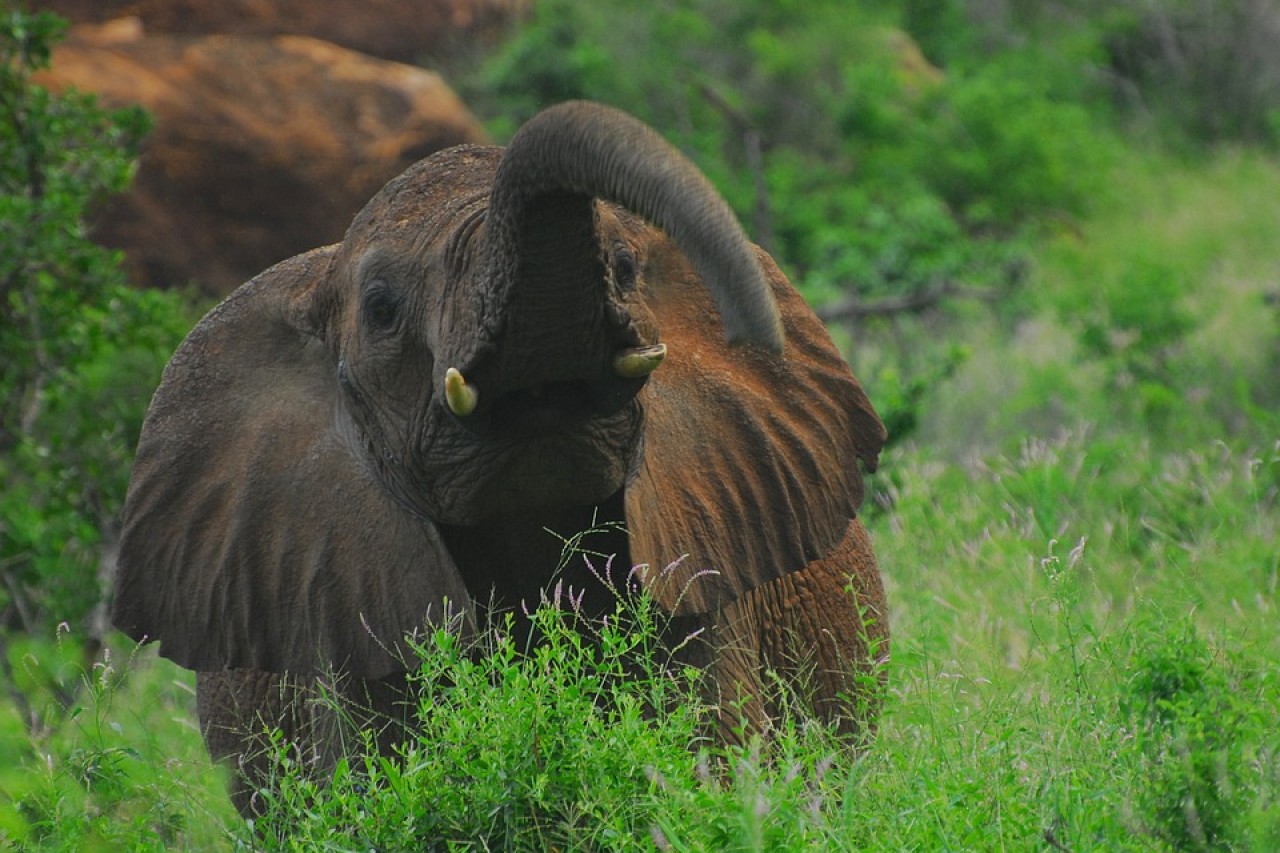
Elephants are the gardeners of the forest. They plant trees with high carbon density and remove the "weeds" — trees with low carbon density. They do an enormous amount of work to preserve the diversity of the forest.

Forest Elephants Critically Endangered
The International Union for Conservation of Nature (IUCN) has classified the forest elephant as critically endangered. Forest elephants live in the tropical forests of Central and West Africa, and their numbers have declined drastically over the past 30 years.
The decline of forest elephants could have serious consequences for carbon storage. According to scientists, the rainforests of Central and West Africa would lose between six and nine percent of their capacity to store carbon if the elephants become extinct.
Elephants Promote High Carbon Density Trees
«Elephants have been hunted by humans for millennia,» says Stephen Blake, lead author of the Proceedings of the National Academy of Sciences published study. «We can now draw the clear conclusion that we are doing global climate protection a disservice if we lose the forest elephants.»
Elephants tend to feed more on trees with low carbon density. This allows trees with high carbon density to thrive. Elephants also disperse seeds that pass through their digestive tract unharmed, thereby contributing to regeneration.
Poaching Must Stop
«Once there were ten million elephants in Africa, today there are fewer than 500’000,» said Blake. «These illegal killings must stop in order to prevent the extinction of forest elephants. Save the elephants and help save the planet.» More on the topic of species conservation and climate change.
| You can help all animals and our planet with compassion. Choose compassion on your plate and in your glass. Go vegan. |
More on the subject of recreational hunting: What the research says about this is shown by Hunting fact-checked: the state of research.
The position of IG Wild beim Wild: IG Wild beim Wild rejects recreational hunting. Our model is the canton of Geneva, which has managed without recreational hunting since 1974: without hunting seasons, without hunting dogs, without driven hunts, without high seats, without the animal cruelty and crime that go hand in hand with hunting season elsewhere. What has worked there for over fifty years disproves every position paper by JagdSchweiz. An association that bases its policy on claims it refutes in its own documents is not a professional organisation, but a factory for misinformation.