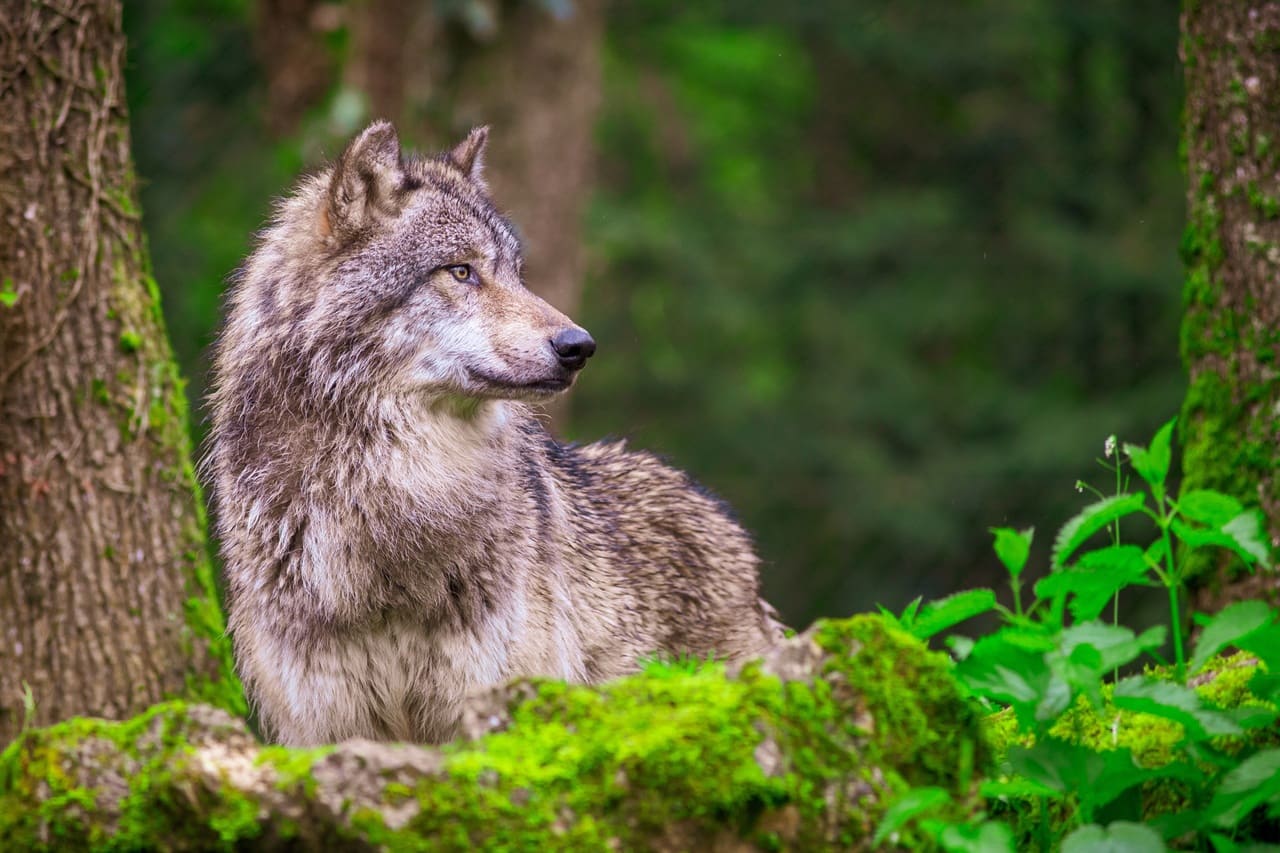
Easier to kill than to understand: Abolish recreational hunting
Anyone who wants to kill wildlife in our forests needs, above all, one thing today: a little free time for a hunting course. Depending on the region, just a few weeks or months are enough to obtain a hunting licence.

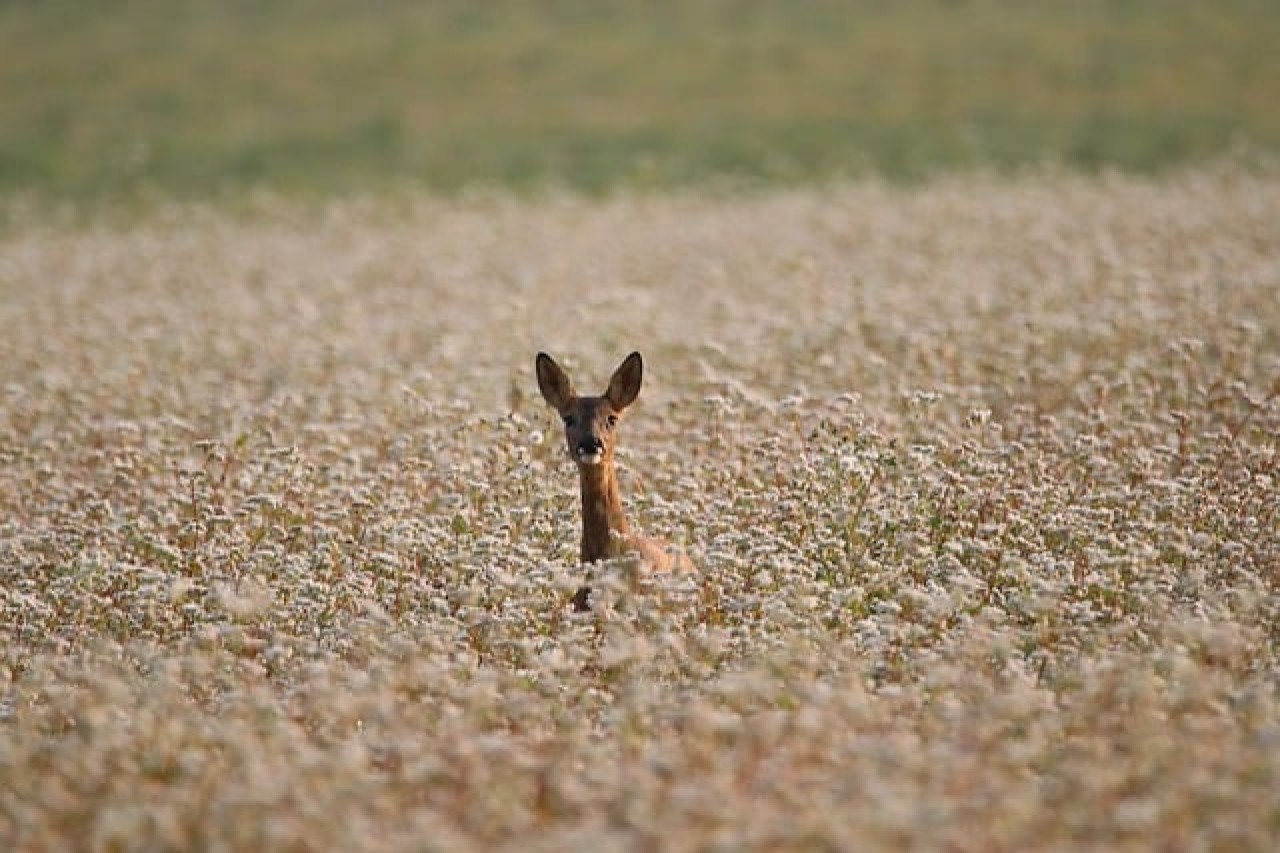
Anyone who wants to understand the same animals scientifically studies biology.
Three to five years of university study is the norm, often followed by a doctorate. It is therefore considerably faster to legally shoot animals than to learn how those animals live, feel, and are embedded in their ecosystems.
It is precisely in this imbalance that the fundamental problem of our relationship with wildlife becomes apparent. The state grants a licence to kill after a brief, practice-oriented training, while sound knowledge of animals and nature is considered something that must be acquired over many years. Those who want to shoot need a course. Those who want to protect and understand need a university degree.
Hunting training focuses on passing the exam, the safe handling of weapons, and the most important hunting laws. It is about marksmanship, hunting practice, and game territory organisation. The perspective is predominantly utilitarian. Wildlife appears as a population to be “managed” — a resource to be “tended” and simultaneously hunted.
Biology conveys an entirely different picture. Here the focus is on ecology, animal behaviour, population dynamics, genetics, and conservation biology. One learns how ecosystems are interconnected, how stress and suffering operate, and how populations actually develop. This knowledge is not acquired over a few weekends, but through lectures, seminars, laboratory work, and field studies over the course of years.
In practice, however, it is often not biologists who have a strong voice when it comes to culling plans and hunting regulations, but people whose formal scientific training was completed in a matter of months. The responsibility is disproportionate to the depth of training. Anyone who walks into the forest with a rifle can make an immediate decision over the life and death of an animal. Those who point out misdevelopments in hunting practice on scientifically grounded terms are not infrequently dismissed as “theoretical armchair critics.”
The hurdle for legally shooting an animal is thus remarkably low. A few months of preparation, an exam, a piece of plastic in the wallet, and the path to the hunting ground is open. Conversely, the hurdle for being taken seriously as a knowledgeable voice in nature conservation or research is high. Years of training, often fixed-term positions, publication pressure. The licence to intervene lethally has a low threshold; recognition for scientific expertise has a high one. This is fundamentally wrong.
Add to this: recreational hunters like to tell the simple story of “stewardship” and “care.” They look after the wildlife, provide supplementary feeding, regulate populations and take responsibility for the forest. Modern ecology paints a more complex picture. Ecosystems are dynamic networks. Interventions in populations have side effects that often only become apparent years later. Such interrelationships can only be understood by those who engage intensively and critically with data, models and uncertainties. A shooting range is not sufficient for this — it requires scientific methodology.
From an animal welfare perspective, the discrepancy becomes even clearer. Those who study biology come to know animals not merely as the category “roe deer,” “fox” or “wild boar,” but as individuals with behavioural repertoires, social structures, stress responses and the capacity to suffer. This knowledge makes it difficult to dismiss killing as harmless “population management.” In many hunting contexts, the discussion remains at the surface level: shooting distance, calibre selection, “huntsmanlike killing.” Efficiency is the goal, not empathy.
The more one knows about animals, the harder it becomes to regard them as mere “quarry” in a kill report. It is precisely this knowledge that is absent from many hunting debates, yet is simultaneously dismissed as “too academic.”
Of course, hunting advocates are fond of emphasizing how rigorous the examinations are. Those who do not study will fail. But that is not the point. The question is: does the scope and depth of the training truly correspond to the power that comes with a loaded weapon in an ecosystem? No one would accept that someone may work as a surgeon after a course lasting just a few weeks, simply because the examination was demanding. Yet with wildlife, such logic appears to be socially accepted.
The appeal to “practical experience” also carries only limited weight. Practice without sound ecological knowledge can even entrench misguided developments. When the same routines are repeated over decades, the impression easily arises that this is a natural necessity. Yet it is often precisely new, scientifically grounded approaches that are needed — particularly when it becomes clear that habitat loss, agriculture, traffic, and the climate crisis are far stronger drivers of population dynamics than what recreational hunters like to call “overinflated wildlife populations.”
The rapid granting of hunting licences sends a social signal: intervention in wildlife populations is something normal, almost taken for granted. At the same time, scientific voices pointing to complex interrelationships and to the capacity of animals to suffer are frequently perceived as an inconvenience. A responsible society would need to do exactly the opposite: set high standards for all those who kill animals, and show great appreciation for those who research and protect animals and their habitats.
When the state admits people to recreational hunting within a few months, yet requires years for a biology degree, it is setting the wrong priorities. Those who wish to intervene in ecosystems with weapons should know at least as much about those ecosystems as those who study them scientifically. A first step would be to consistently align hunting decisions with independent, scientific standards and to significantly raise the requirements for hunting training.
Perhaps it is ultimately no coincidence that it is so much easier to shoot than to understand. The decisive question is: how long are we willing to sustain this imbalance — in the name of tradition, at the expense of animals and nature?
In the view of IG Wild beim Wild, hobby hunters annual medical-psychological fitness assessments modelled on the Dutch system, as well as a binding upper age limit. The largest age group among recreational hunters today is 65+. In this group, age-related impairments such as declining visual acuity, slowed reaction times, lapses in concentration and cognitive deficits increase statistically and significantly. At the same time, accident analyses show that the number of serious hunting accidents involving injuries and fatalities rises sharply from middle age onwards.
The regular reports of hunting accidents, fatal errors and the misuse of hunting weapons highlight a structural problem. The private ownership and use of lethal firearms for recreational purposes is largely exempt from ongoing oversight. From the perspective of IG Wild beim Wild, this is no longer justifiable. A practice based on voluntary killing that simultaneously generates considerable risks for humans and animals forfeits its social legitimacy.
Hobby-hunting is furthermore rooted in speciesism. Speciesism describes the systematic devaluation of non-human animals solely on the basis of their species membership. It is comparable to racism or sexism and can be justified neither culturally nor ethically. Tradition does not substitute for moral scrutiny.
Critical examination is particularly indispensable in the realm of recreational hunting. Scarcely any other field is so thoroughly shaped by euphemistic narratives, half-truths and deliberate disinformation. Where violence is normalised, narratives frequently serve as justification. Transparency, verifiable facts and open public debate are therefore essential.
More on the subject of recreational hunting: In our dossiers on the criticism of recreational hunting gather fact-checks, analyses and background reports. The scientific evidence is presented in the overview Studies on the Effects of Recreational Hunting.
The position of IG Wild beim Wild: IG Wild beim Wild rejects recreational hunting. Our model is the canton of Geneva, which has managed without recreational hunting since 1974: without hunting seasons, without hunting dogs, without driven hunts, without high seats, without the animal cruelty and crime that go hand in hand with hunting season elsewhere. What has worked there for over fifty years disproves every position paper by JagdSchweiz. An association that bases its policy on claims it refutes in its own documents is not a professional organisation, but a factory for misinformation.