Early start to spring – the bumblebee queens take flight
Anyone leaving the house at 7 in the morning has long since noticed: the sun has already risen. The dark season is drawing to a close; on 1 March, it’s official according to the calendar: spring has begun! The young bumblebee queens can sense that spring is coming even without a calendar. As soon as the thermometer climbs above zero degrees

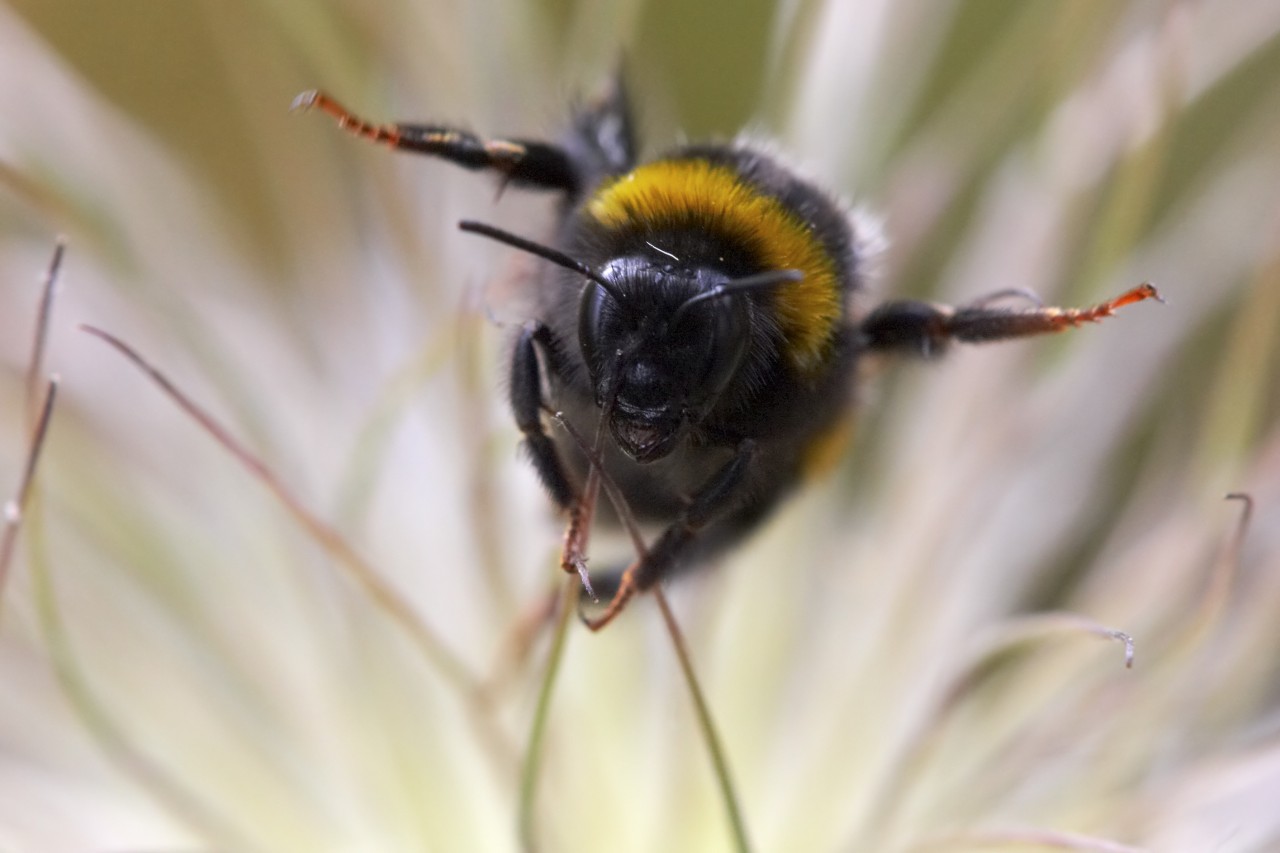
Anyone leaving the house at 7 in the morning has long since noticed: the sun has already risen. The dark season is drawing to a close; on 1 March, it’s official according to the calendar: spring has begun! The young bumblebee queens can sense that spring is coming even without a calendar. As soon as the thermometer climbs above zero degrees and the sun is shining, they crawl full of energy out of their winter quarters. They are the first wild bees of the year to fly toward the sun.
Power food for the queens
«In doing so, the queens give everything they have,» explains Manuel Pützstück, wild bee expert at the Deutsche Wildtier Stiftung. «By mid-April they must have built their nests in order to lay several hundred eggs inside them.» With the help of a small honey stomach filled with nectar inside their bodies, the insects manage to survive the first hours of cool February days without starving. «But then they urgently need nutritious, high-energy food,» says Pützstück. This consists – as with a professional athlete – of as much protein and carbohydrates as possible. Garden owners can set the table for the flying queens: wherever crocuses, snowdrops, spring snowflakes, and willow catkins grow, bumblebees can feast on protein-rich flower pollen and sugar-rich flower nectar.
Up to a thousand blossoms per day
Bumblebees are among the first flying pollinators of the year and are therefore important for all early-flowering fruit varieties such as cherries and apples. «Per day, bumblebees visit up to a thousand blossoms and more. To do this, the wild bee species is airborne for up to 18 hours a day. That is a peak performance!» How does this likeable heavyweight achieve such extraordinary records? This peak performance is only made possible by a kind of custom-built wing design. Unlike the wings of an airplane, bumblebee wings are fully flexible within themselves. The necessary lift is generated through a curvature of the wings and a very specific beating pattern. Before taking flight, the bumblebee warms itself up by vibrating its muscles, raising its body temperature to 30 degrees for a perfect launch into the blue spring sky. More on fascinating wildlife and environment and nature conservation.
More on the subject of recreational hunting: In our dossiers on recreational hunting gather fact-checks, analyses and background reports. The scientific evidence is presented in the overview Studies on the Effects of Recreational Hunting.
The position of IG Wild beim Wild: IG Wild beim Wild rejects recreational hunting. Our model is the canton of Geneva, which has managed without recreational hunting since 1974: without hunting seasons, without hunting dogs, without driven hunts, without high seats, without the animal cruelty and crime that go hand in hand with hunting season elsewhere. What has worked there for over fifty years disproves every position paper by JagdSchweiz. An association that bases its policy on claims it refutes in its own documents is not a professional organisation, but a factory for misinformation.