Capercaillie: World record in the canton of Schwyz
When Pierre Mollet from Vogelwarte picked up the bird droppings, he had no idea that he was holding a sensational find in his hands: the droppings came from what is so far the world's oldest capercaillie. This world record was set in the canton of Schwyz, which implements protective measures for the capercaillie and monitors its populations using a special monitoring method.

Capercaillie record age in the canton of Schwyz
When Pierre Mollet from Vogelwarte picked up the bird droppings, he had no idea that he was holding a sensational find in his hands: the droppings came from what is so far the world's oldest capercaillie. This world record was set in the canton of Schwyz, which implements protective measures for the capercaillie and monitors its populations using a special monitoring method.
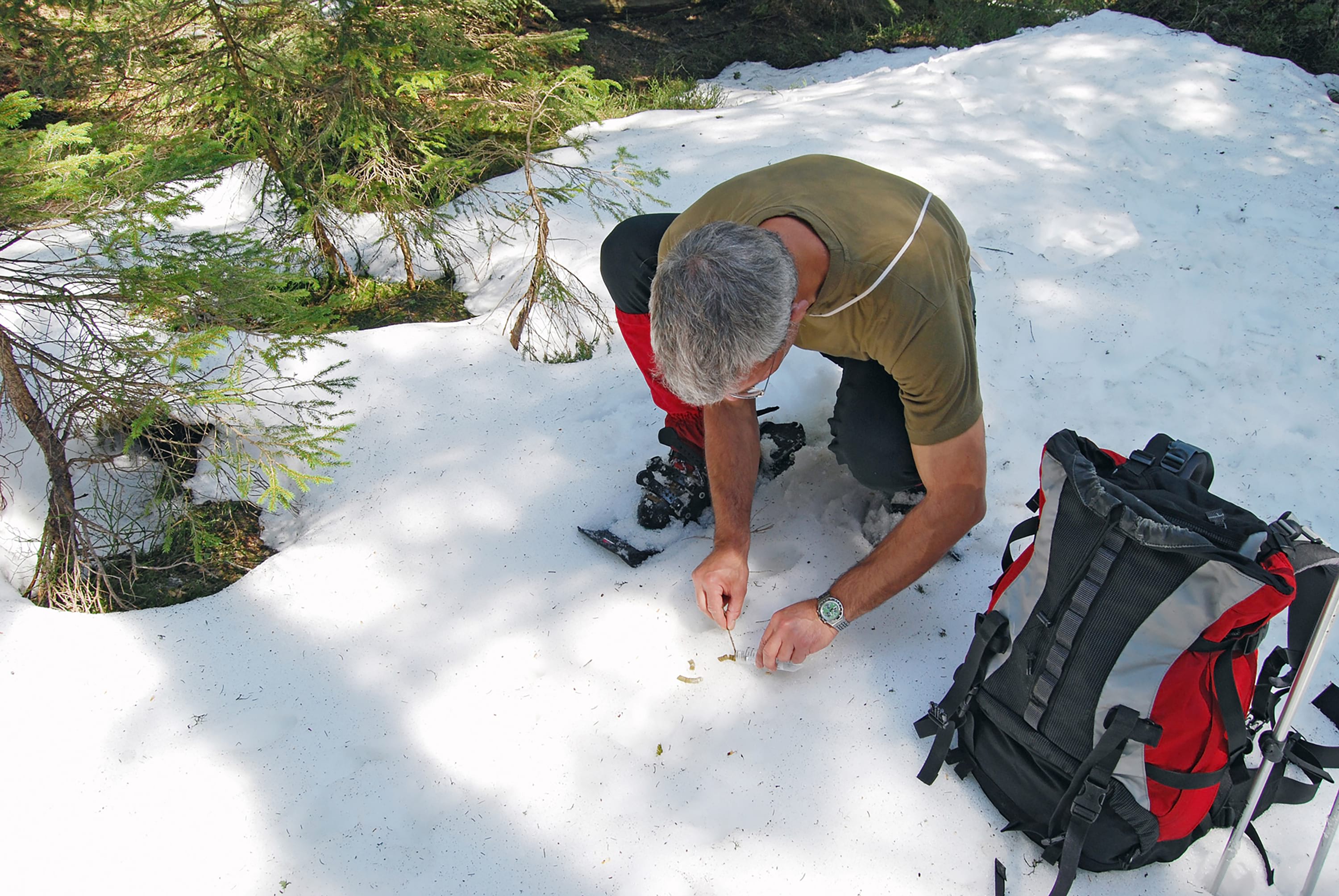
Photo © Archive Swiss Ornithological Institute (Vogelwarte)
The provably oldest capercaillies in the world are at least 10 years and 9 months old and live in the canton of Schwyz. This is known because their droppings were already found once in 2009 as part of a population monitoring programme carried out by the Swiss Ornithological Institute Sempach together with the canton of Schwyz.
With the help of molecular biology methods, it is possible to obtain DNA from droppings. This allows genetic "fingerprints" to be created, making it possible to identify individual animals. This genetic information also enables conclusions to be drawn about the size of a population. Observing and counting the birds is therefore no longer necessary. "Especially with the shy capercaillie, collecting droppings is a very good method, as the animals are barely disturbed," explains Pierre Mollet, capercaillie specialist at the Swiss Ornithological Institute in Sempach.
The capercaillie not only lives a secluded life, it is also threatened. The Swiss population has been declining for decades. Many forests have become too dense and too dark for this demanding bird. In addition, the shy capercaillie is highly sensitive to disturbance. As outdoor activities increasingly encroach on nature, disturbances are also increasing.
The capercaillie has now been placed under protection in all Alpine regions with the exception of Austria, which has the largest population. Liechtenstein (1962), Switzerland (1971), Italy (1989) and Slovenia (1993) have stopped hunting the species. In Switzerland, it is classified as highly endangered, and in the province of South Tyrol it has been protected since 2007. In Germany, the capercaillie is nationally listed as a critically endangered bird species on the “Red List”.

Photo © Archive Swiss Ornithological Institute (Vogelwarte)
The canton of Schwyz contains some of the most important areas for the capercaillie in the whole country. Since 2009, the canton has therefore regularly conducted population estimates using genetic methods and promotes the capercaillie through targeted forest management measures. It also works to protect the birds from disturbance by issuing binding regulations for visitor management.
With success: “In 2019, thanks to genetic monitoring, we were able to find almost 90 capercaillie in the part of the canton surveyed so far. That's more than ever since monitoring began 10 years ago!”, says Pierre Mollet with delight. And that's not all: the newly recorded maximum age shows that the birds can live to a great age when habitat conditions are right. In the canton of Schwyz, this is clearly the case.
More on the subject of recreational hunting: In our dossiers on recreational hunting gather fact-checks, analyses and background reports. The scientific evidence is presented in the overview Studies on the Effects of Recreational Hunting.
The position of IG Wild beim Wild: IG Wild beim Wild rejects recreational hunting. Our model is the canton of Geneva, which has managed without recreational hunting since 1974: without hunting seasons, without hunting dogs, without driven hunts, without high seats, without the animal cruelty and crime that go hand in hand with hunting season elsewhere. What has worked there for over fifty years disproves every position paper by JagdSchweiz. An association that bases its policy on claims it refutes in its own documents is not a professional organisation, but a factory for misinformation.

All articles are written by IG Wild beim Wild as well as by external co-authors. Research, structuring and editorial processes may be supported by AI-assisted tools.
Support our work
With your donation you help protect animals and give their voice a hearing.
Donate now →