Border Collie «Cooper» Shot by Hobby Hunter
A winter walk ends in shock. In Pettenbach in Upper Austria, a Border Collie named «Cooper» was shot on a snow-covered forest path. According to media reports, the shot was fired from a raised hide, without warning, at close range. The dog died instantly. His owner speaks of a moment in which «a world falls apart» and has filed a criminal complaint.

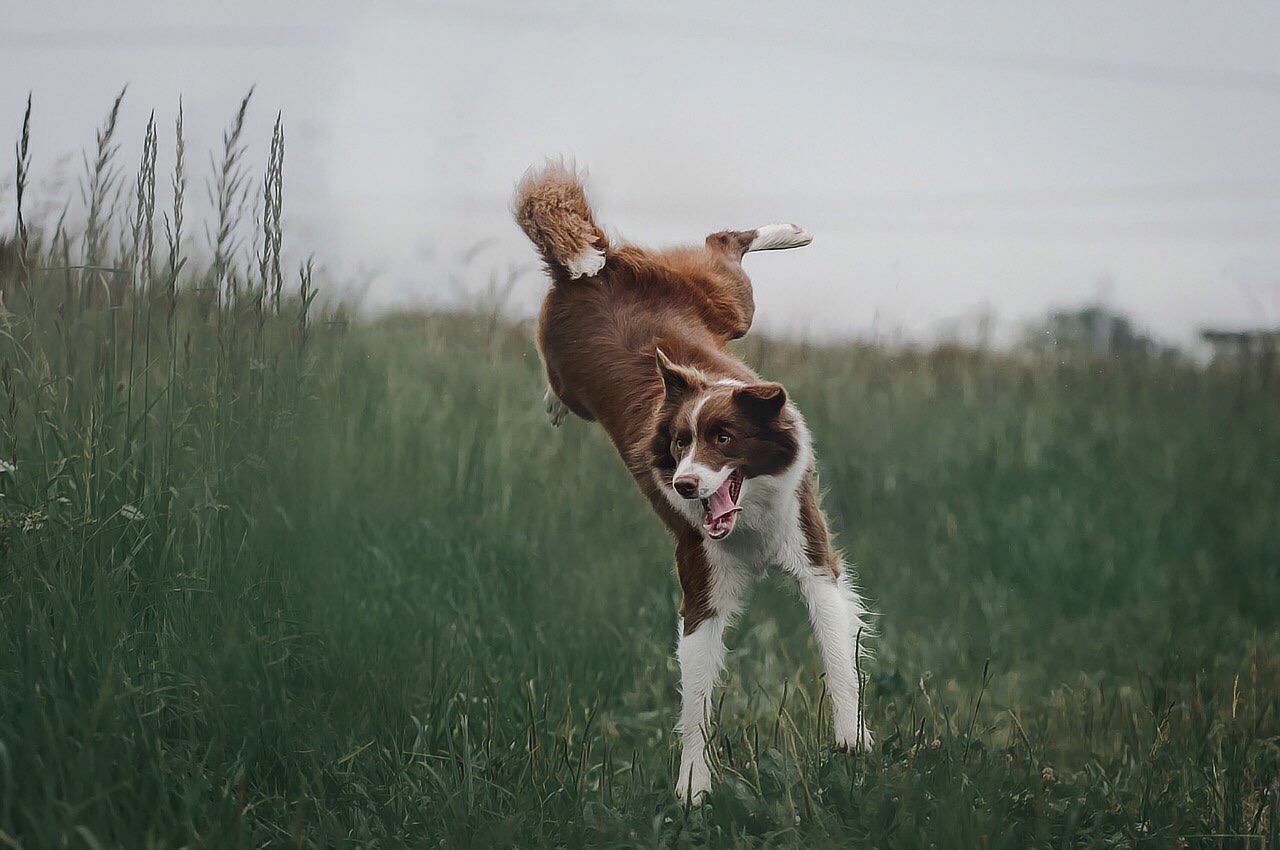
What sounds like a «tragic accident» is in reality a case study in how quickly hobby hunting escalates in public spaces, how large the protection gap is for people out walking, and how often the reflexive stock phrase at the end is meant to suffice: «Mistaken identity».
According to oe24, the incident occurred on 27 December in Pettenbach. The owner (30) had been out with Cooper when an elderly hobby hunter fired from a raised hide. The dog was reportedly wearing a yellow-green harness and was struck in the rib area. The owner stated that he had been only a few metres away.
Also at the centre of attention is the justification given: according to the owner, talk at the scene was of a confusion with a fox. Later it was said that the dog had been on a roe deer trail. The owner filed a criminal complaint for animal cruelty and criminal damage, and announced claims for compensation.
The Kronen Zeitung additionally reports that the individual involved is an 84-year-old hunting leaseholder. There too, the initial justification of being «mistaken for a fox» is mentioned.
Important: The presumption of innocence applies. What is decisive is the ongoing investigation, the actual sequence of events, and the legal assessment.
«Mistaken identity» is not an excuse — it is a warning sign
Anyone who fires a shot in an area where people are out walking with dogs bears maximum responsibility. A shot is not a «mistake» that can be corrected like a wrong move in everyday life. It is final. And if people are nearby, it can strike people too.
This is precisely what makes the confusion narrative so explosive. It says something not only about the specific case. It sheds light on a system in which armed private individuals operate in recreational areas and in which safety logic often only begins after the shot has been fired.
If a reflective dog harness, clear visibility, and proximity to a public path are not sufficient to refrain from shooting, then 'bad luck' is not the problem. The problem is the practice.
The second shock: 'Then I'll simply get you a new one'
According to oe24, the hobby hunter is said to have offered the owner to 'get a new animal.' Whether those were the exact words used will be determined by the investigation. As an attitude, however, it fits disturbingly well with a conception of hunting that reduces life to an interchangeable object. For owners, a dog is a family member, a companion, a social being. A 'replacement' is not restitution.
Why such cases are political
This incident is not a private tragedy at the edge of a forest. It is a political incident because it concerns public spaces.
- A safety risk for the general public
When shots are fired near paths, it is not only animals that are at risk. People can also be endangered, especially when distances are short and lines of sight are restricted. - Weak deterrence, weak oversight
Time and again, cases demonstrate how difficult it is to investigate and impose sanctions when hunting actions take place in the field without neutral witnesses and without comprehensive documentation. - Pets are often legally classified as mere 'property'
Even though social understanding has long since shifted, much still hinges on the logic of ownership. This is precisely why the call for more consistent standards and clearer rules is legitimate.
What is needed now
Regardless of the outcome of the specific proceedings, consequences are needed that go beyond outrage:
- Clear no-shoot zones along heavily used paths in recreational areas, mandatorily marked and monitored.
- Mandatory safety rules with zero tolerance, when people are in immediate proximity.
- Transparent reporting systems for shots fired and incidents, including independent review.
- Liability rules that genuinely deter, instead of treating animal lives as 'collateral damage.'
- A debate about hobby hunting in densely used spaces, because 'forest' has long since ceased to be an exclusive hunting ground and has become public living and recreational space.
Putting things in perspective means: setting the right focus
Yes, dogs can chase wildlife . Yes, there are conflicts between owners and hunting interests. But even if a dog is running free, this does not automatically give rise to a right to shoot. The core issue remains: anyone who carries a deadly weapon must be able to de-escalate situations. And when in doubt, they must not shoot.
If hobby hunting cannot guarantee this, it loses its social legitimacy. Not because 'all hobby hunters' are the same, but because a system that regularly produces such risks cannot be repaired with PR statements.
More on this in the dossier: Hunting and animal welfare
According to IG Wild beim Wild, hobby hunters require annual medical-psychological fitness assessments modelled on those of the Netherlands, as well as a binding upper age limit. The largest age group among hobby hunters today is 65+. Within this group, age-related limitations such as declining eyesight, slowed reaction times, lapses in concentration and cognitive deficits increase statistically and significantly. At the same time, accident analyses show that the number of serious hunting accidents involving injuries and fatalities rises markedly from middle age onwards.
The regular reports of hunting accidents, fatal errors and the misuse of hunting weapons illustrate a structural problem. The private ownership and use of deadly firearms for recreational purposes largely evades ongoing oversight. From the perspective of IG Wild beim Wild, this is no longer justifiable. A practice based on voluntary killing that simultaneously generates considerable risks for people and animals forfeits its social legitimacy.
Hobby hunting is also rooted in speciesism. Speciesism describes the systematic devaluation of non-human animals solely on the basis of their species membership. It is comparable to racism or sexism and is neither culturally nor ethically justifiable. Tradition does not substitute for moral scrutiny.
Critical scrutiny is particularly indispensable in the field of hobby hunting. Scarcely any other field is so thoroughly shaped by sanitising narratives, half-truths and deliberate disinformation. Where violence is normalised, narratives frequently serve as justification. Transparency, verifiable facts and open public debate are therefore essential.