Bearded Vulture Release in Central Switzerland
Within five to six years, bearded vultures are expected to breed again in the wild in Central Switzerland.


On Sunday, two male juvenile birds were released into the wild on the Melchsee-Frutt.
They follow three females that were released the previous year.
The two three-month-old young birds «Alois» and «Cierzo» were placed in the afternoon into a niche approximately twenty metres wide beneath a rocky overhang. It is located at around 2,000 metres above sea level in the federal wildlife sanctuary Huetstock in the Melchtal.
Daniel Hegglin, director of the Pro Bartgeier Foundation, said the release had been a success. The birds had begun inspecting the rock niche shortly afterwards. Around 160 onlookers followed the event in inclement weather.
Monitored by biologists
The released animals are monitored around the clock by biologists until they become independent in three to four months. Until then, carrion — roadkill and fallen animals collected by game wardens — is provided as food.
The young birds are practically fully grown but are not yet able to fly, as their plumage still needs to finish developing. In the coming weeks, the two young vultures are expected to make their first short flights into the Melchtal.
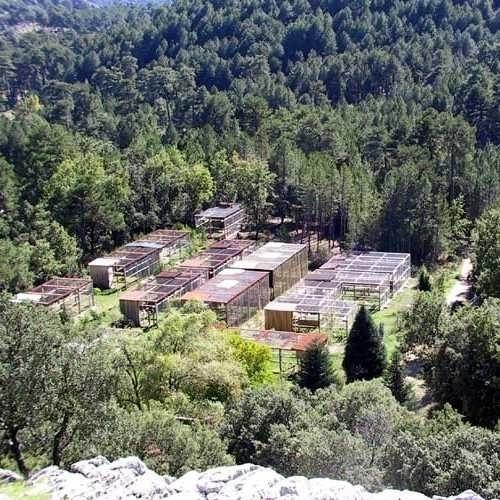
The two young vultures come from the Andalusian breeding centre Guadalentin. They were selected based on genetic criteria and are intended to bring fresh genetic material into the small bearded vulture population of the Alps. The young vultures recovered temporarily at the Goldau Nature and Animal Park after their journey from Spain.
Females successfully released
At the same location in Obwalden, three female bearded vultures had been successfully released into the wild the previous spring. «Ewolina», «Trudi» and «Sempach II» are currently on their roaming years through the Swiss, French and Italian Alps. They are expected to return to their release region afterwards. Before bearded vultures establish a territory and reproduce, they undertake extensive wandering journeys.
In five to six years, the released bearded vultures will reach sexual maturity. They are then expected to settle in central Switzerland and begin breeding. The birds are intended to help re-establish a permanent bearded vulture population in the central Swiss Alps.
The chances of the young birds reaching sexual maturity are good by wildlife standards. Their survival rate is 85 percent in the first year and 95 percent in subsequent years.
No lamb thief
The bearded vulture disappeared from the Alps over a hundred years ago because it was persecuted as a supposedly insatiable lamb thief. In reality, it fed primarily on the bones of dead animals and did not prey on live animals, according to the Pro Bartgeier Foundation.
The bearded vulture is now slowly returning to the Alpine region. Since 1991, the Pro Bartgeier Foundation has released 41 birds in Switzerland. Since 2007, bearded vulture pairs have once again been breeding in Switzerland. Since then, 37 young birds have been born in the wild at ten sites in the Engadine and Valais.
The bearded vulture does not look like a typical vulture. It is often confused with the golden eagle. The bearded vulture can weigh up to seven kilograms and has a wingspan of up to 2.9 metres.
Related dossiers and articles:
- Dossier: Hunting and Biodiversity
- Dossier: Swiss Red Lists
- Dossier: The Wildlife Warden Model
- Dossier: Hunting Myths
- Dossier: Alternatives to Recreational Hunting
- Get involved
More on the subject of recreational hunting: In our dossiers on recreational hunting gather fact-checks, analyses and background reports. What the research says about this is shown by Hunting fact-checked: the state of research.
The position of IG Wild beim Wild: IG Wild beim Wild rejects recreational hunting. Our model is the canton of Geneva, which has managed without recreational hunting since 1974: without hunting seasons, without hunting dogs, without driven hunts, without high seats, without the animal cruelty and crime that go hand in hand with hunting season elsewhere. What has worked there for over fifty years disproves every position paper by JagdSchweiz. An association that bases its policy on claims it refutes in its own documents is not a professional organisation, but a factory for misinformation.