A study shows that our ancestors were vegetarians
A sensational discovery – a new study shows that Australopithecus consumed little to no meat millions of years ago. Researchers analysed tooth enamel from the South African «Cradle of Humankind».

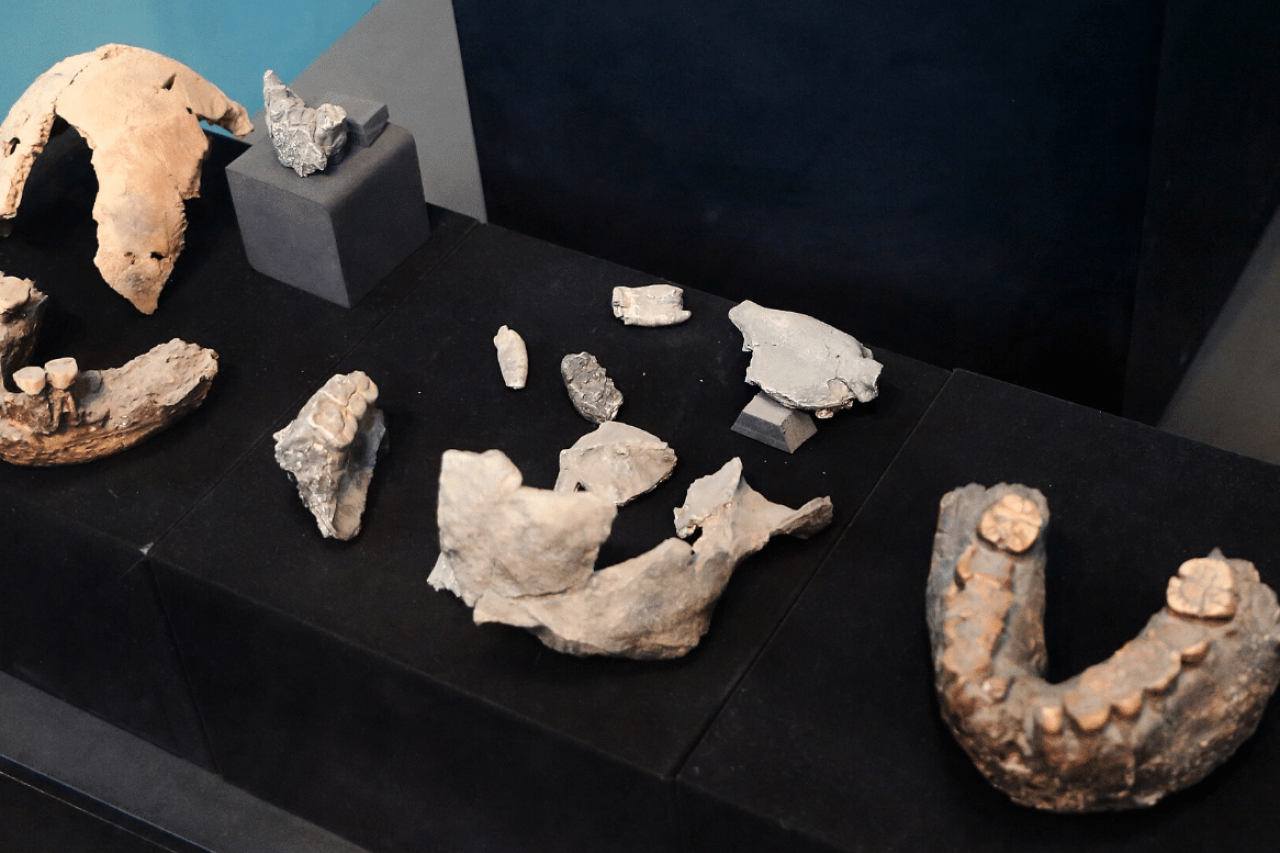
According to new research findings, early human ancestors such as Australopithecus in southern Africa ate little or no meat.
This was demonstrated by scientists from the Max Planck Institute for Chemistry in Mainz and the University of the Witwatersrand in South Africa, as the Max Planck Society announced on Thursday in Munich.
The study was published in the journal «Science». The researchers used a technique known as isotope measurement to examine tooth enamel samples from seven early human ancestors who lived in southern Africa approximately 3.7 to 3.3 million years ago. The ratio of heavy to light nitrogen isotopes showed that meat, if consumed at all, featured only rarely in the diet of the Australopithecines, and that they subsisted primarily on plants. This finding supports the growing body of evidence for a plant-based diet as an evolutionary success model.
A glimpse into the diet of prehistoric times
The examined remains of the early human ancestors were discovered in the Sterkfontein Cave, a significant fossil site near Johannesburg. This region of South Africa is regarded as the «Cradle of Humankind», as remains of numerous hominins have been found there.
The researchers compared the results with tooth samples from animals living in the same period and location, including monkeys, antelopes, and predators such as hyenas, jackals, and sabre-toothed cats. «Tooth enamel is the hardest substance in the body,» explained geochemist Tina Lüdecke. «It often preserves an isotopic fingerprint of an animal’s diet.»
New method for fossils millions of years old
According to the Max Planck Society, the diet of animals has been reconstructable for decades using nitrogen isotopes found in hair, claws, bones, or other organic material. However, this has previously only applied to well-preserved fossils no older than a few tens of thousands of years. The Mainz teams led by Lüdecke and his colleague Alfredo Martínez-García have now developed a method that makes it possible to determine nitrogen isotope ratios even in tooth enamel millions of years old. These studies underline how important scientific education is for a better understanding of our origins.
| You can help all animals and our planet with compassion. Choose empathy on your plate and in your glass. Go vegan. |