ZOWIAC and the hobby hunting lobby: how a raccoon study is being instrumentalised
The German hunting association promotes the ZOWIAC research project, supplies the samples and celebrates the results. On closeness, methodology and a hunting practice that has been failing for decades.
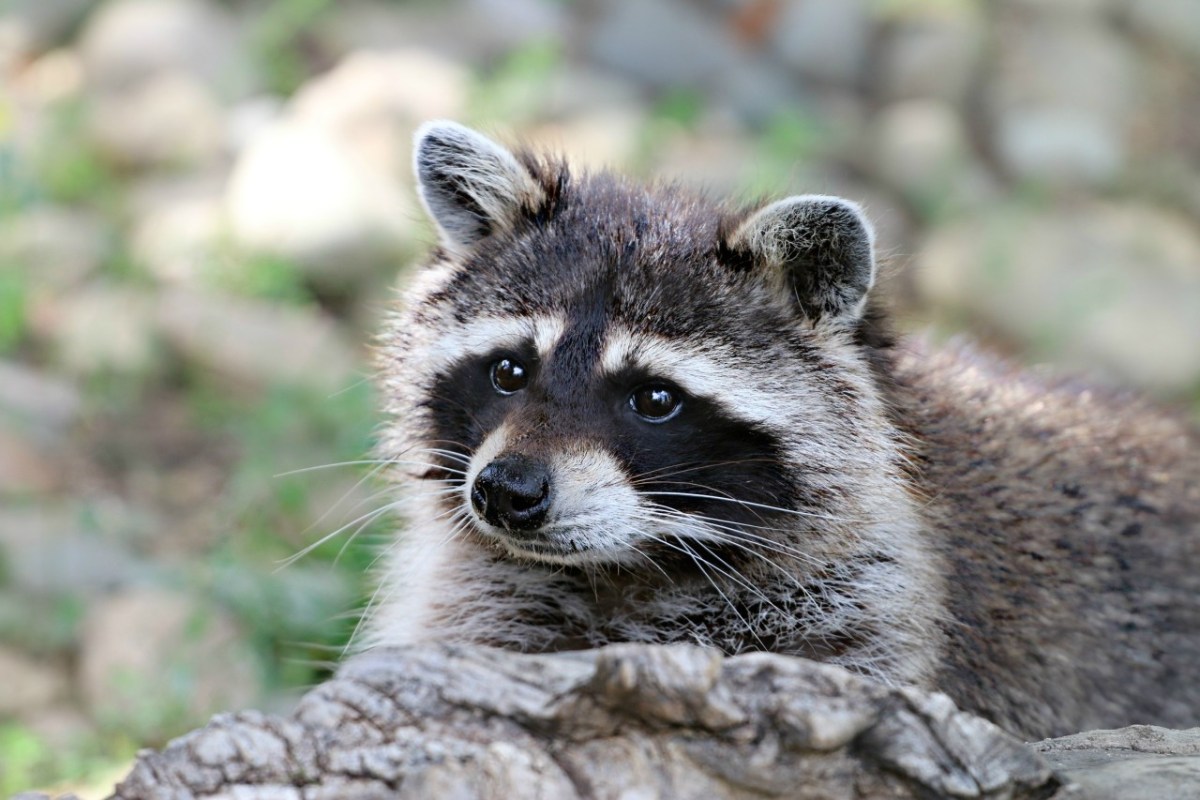
The collaborative research project ZOWIAC investigates how neonative species threaten biological diversity and which diseases they can transmit to humans or animals.
The state hunting associations of Hesse and Bavaria support the ZOWIAC project led by Prof. Dr Sven Klimpel: hobby hunters collect samples, the associations promote the results, and the Hesse state hunting association honoured Klimpel with an award. According to the institutions involved, the project is financed from public funds, including the German Federal Environmental Foundation (DBU). But when it is precisely those with an interest in more kills who supply the material and help shape the interpretation, the necessary independence of the research is, in our view, called into question.
Now the German hunting association (Deutscher Jagdverband e. V.) has circulated a press release on the matter.
Raccoon has a serious impact on amphibians
The Goethe University Frankfurt is researching non-native invasive species. The ZOWIAC project covers wildlife biology and genetics in equal measure. Norbert Peter explains the first results in an interview with the DJV.
Norbert Peter conducts research at the Goethe University Frankfurt and is one of the leaders of the nationwide major project ZOWIAC, funded by the German Federal Environmental Foundation (DBU). The acronym stands for Zoonotic and Wildlife-Ecological Impacts of Invasive Carnivores. In the DJV interview, Peter explains, among other things, what impacts non-native species have, what role the raccoon plays in this and how hunters can support the research project.
DJV: What is the aim of the ZOWIAC project?
Norbert Peter: The results of our research are current, well-founded and validated data at federal level. We investigate, for example, the health risks to the population as well as to livestock and pets posed by, for instance, the raccoon, the raccoon dog or the golden jackal. We can also better assess their impact on native species and ecosystems. This is based on a systematic monitoring of associated pathogens and disease agents. We also study the spatial spread of the species and use current analytical methods, such as metabarcoding of stomach and faecal samples, as well as telemetry on the spatio-temporal behaviour of the predators.
How has the parasite load changed?
A good example is the raccoon roundworm, a parasite species introduced into Europe along with the raccoon. The roundworm is transmissible to humans. Its eggs are excreted and spread via raccoon faeces. Especially in cities, the raccoon thus poses a potential danger to human health. For the raccoon roundworm we were able to detect high infection rates (prevalences) of over 90 percent in our samples. In the literature this figure has so far been considerably lower. Raccoons are also hosts for certain viruses that cause rabies and distemper. The pathogen spectrum of the raccoon dog is similar to that of the raccoon; in addition, it is regarded as a definitive host of the fox tapeworm.
What impact do invasive species have on biodiversity – are there already any results on this?
We have locally demonstrated serious impacts of the raccoon on amphibians, such as the common toad – these are even threatening to their populations. This applies particularly to regions with few isolated spawning waters, such as old quarries, combined with a high raccoon density. We will be publishing our concrete scientific findings shortly.
How exactly can the raccoon become dangerous, for example to common toads, which even possess poison glands on their skin?
As part of ZOWIAC, we were able to demonstrate for certain amphibian spawning waters that raccoons genuinely specialise in this food source: they skilfully use their forelimbs to skin common toads. This renders the venom glands harmless, and the prey is eaten from the rear. Using novel DNA analyses of stomach contents, we were also able to prove for the first time that the raccoon uses the highly endangered and strictly protected yellow-bellied toad as a regional food source.
How can hunters support the ZOWIAC project?
We are currently researching whether species such as the raccoon and the raccoon dog can also act as a reservoir for various viruses. For this we need active support from hunters to obtain blood samples from raccoon dogs and raccoons for our analyses. We also need deep-frozen raccoon dogs and minks for the project — from about a dozen animals onwards we will also collect them.
What about further projects?
We are grateful for any tips when negative effects of invasive species on sensitive native species become apparent. We can then develop tailor-made projects together with the regional hunting and nature conservation associations. If enough samples can be taken locally, we jointly develop a project outline and assess feasibility. Scientific data from as many areas as possible are enormously important in order to demonstrate the influence of the raccoon, raccoon dog or mink on native biodiversity. Further information on our research project will be available online from January 2022 at http://www.ZOWIAC.eu. The ZOWIAC app will then also be available in the Play Store. With it, finds and sightings of the studied species can be reported directly to us.

From the circle around Prof. Dr Sven Klimpel and Norbert Peter, it is to be expected that this group will repeatedly present its results in a publicity-effective manner, because they are counting on further projects and support, including from the hobby hunting milieu.
The collaborative research project ZOWIAC stands for «Zoonotic and Wildlife-Ecological Impacts of Invasive Carnivores»Zoonotic and Wildlife-Ecological Impacts of Invasive Carnivores».
According to the Senckenberg Society the budget of the ZOWIAC project amounts to at least three quarters of a million euros and comes from public funding.
From our perspective, this creates a problematic proximity: anyone who obtains sample material and public recognition from the hobby hunting milieu is at least open to the suspicion of no longer conducting research impartially. The scientifically decisive neutrality is thus difficult to demonstrate.
Currently authoritative for the raccoon are the various, already published studies conducted within the framework of «Projekt Waschbär» (Raccoon Project). Out of the many studies within the framework of this project, 236 scientific works have emerged, including 13 doctoral and diploma theses on the raccoon.
Raccoons have long since become naturalised in Germany. Hobby hunting of these wild animals contravenes animal welfare and has so far shown no success, since vacated territories are immediately occupied by other raccoons. A humane and sustainable solution, by contrast, would be the castration or immunocontraception of these wild animals: A castrated raccoon continues to occupy a territory and thus leads to a population reduction compatible with animal welfare.
Everything that is recounted about the raccoon in the press release of the German Hunting Association has long been known, in particular as regards amphibians and the raccoon roundworm.

What is, however, deliberately concealed is that, according to experts and case studies, an infection risk must be assessed as extremely low. Or that the raccoons in most eastern federal states do not have roundworms. The effects on the health of the population are negligible in Germany.
In the Raccoon Project in Mecklenburg-Western Pomerania these comparisons were deliberately made, and it was demonstrated that the results were also transferable to other areas. Moreover, all those samples were collected by members of the Raccoon Project, that is, by scientific specialists, whereas in the ongoing projects reliance is placed on the assistance of hobby hunters, which from our point of view represents a methodological «bias».
Particularly in investigations into possible infectious diseases, it can be assumed that hobby hunters are more likely to send in samples from those killed animals that showed particular abnormalities, that is, signs of disease. So possibly a deliberate pre-selection.
Already now, moreover (see the DJV's interview with Norbert Peter on ZOWIAC), very preliminary results obtained in a spatially limited area are presented by the DJV as if they applied to the whole of Germany.
This, without any precise comparison with another area in the region having been carried out.
From our point of view, this also explains the prevalence of over 90 per cent for the raccoon roundworm in the examined samples reported by Norbert Peter to the DJV — samples that were presumably collected by hobby hunters rather than according to the scientific principle of random sampling.
Field studies on the dietary range of raccoons have demonstrated that the raccoon's diet consists almost 90 per cent of the following categories: plants (32 per cent), earthworms (23 per cent), snails (16 per cent), insects (7 per cent), fish (6 per cent) and mussels (4 per cent). Birds (1.6 per cent) and their eggs (1.4 per cent), thus 3.0 per cent in total, as well as amphibians (5.7 per cent) and mammals (only mice, 1.7 per cent) rarely form part of the raccoon's diet.
I do not know a single scientist or hunting expert who seriously believes that these animals can be stopped by hunting means. We simply have to come to terms with the fact that the raccoon feels at home here and that we cannot regulate it. In that respect, we have to find a way of living with it.
Dr Ulf Hohmann, wildlife biologist and raccoon expert

It has long been scientifically proven that hunting raccoons, like fox hunting, boosts reproduction and on top of that destroys the age classes and social structures. The attempt to push back raccoons through hunting is now regarded, including in Germany, as hopeless and as a spectacular failure. We have dealt with this finding in detail in the article «282’499 dead raccoons: why hobby hunting fails miserably».
The German Hunting Association writes on its website:
«As the population densities of the raccoon in Germany rise, so too does the risk of the raccoon roundworm spreading.»
Hobby hunting therefore does not contribute to defusing any problems, but can itself become the cause of dangers to the population — something that has been known not only since rabies and its control.

LET'S STAY IN TOUCH!
We'd love to send you the latest news and offers in our newsletter.
Support our work
With your donation you help to protect animals and give their voices a hearing.
Donate now →